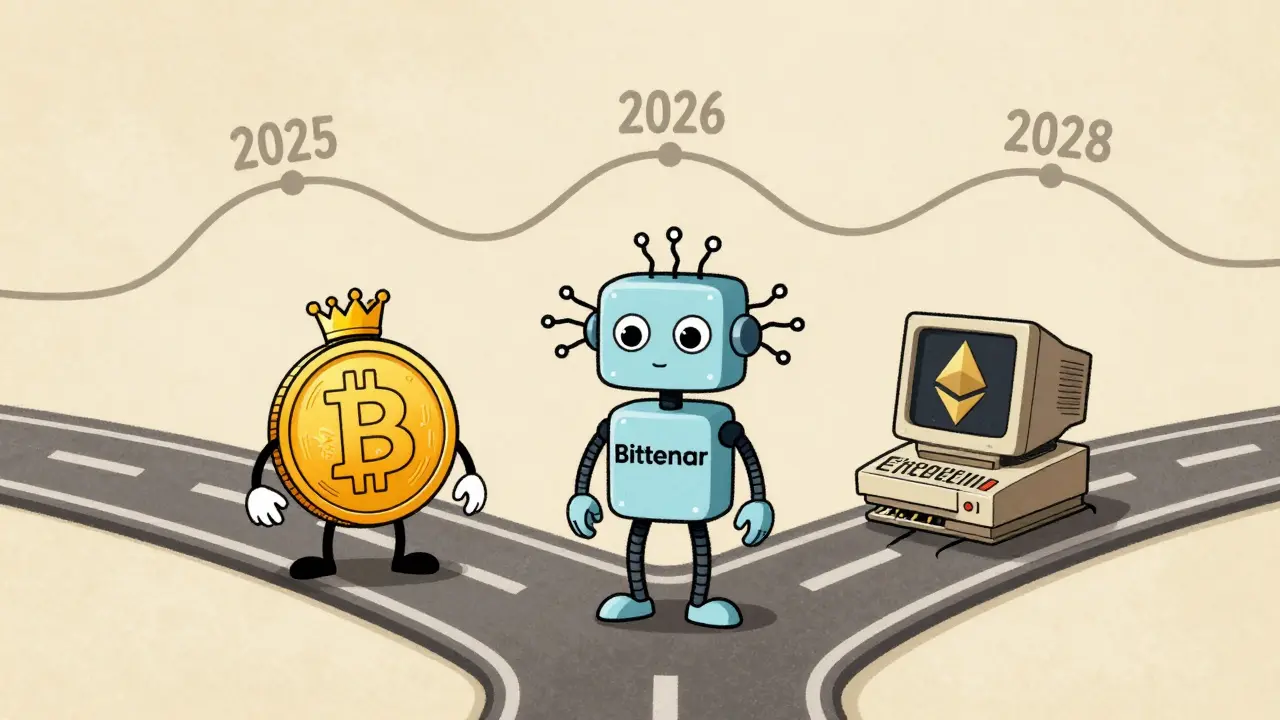
We are standing at a unique crossroads in the history of digital assets. For years, the narrative was simple: Bitcoin halves every four years, price goes up, repeat. But as we look toward the late 2020s, that script is changing. The next few years will see a convergence of major supply shocks across different blockchain ecosystems-Bitcoin, Bittensor, and Ethereum Classic-all within a tight three-year window. This isn't just about scarcity; it's about how mature markets absorb these events when institutional money, macroeconomic shifts, and complex multi-token economies collide.
If you're holding crypto or planning to enter the market, understanding these future halvings is no longer optional. It’s essential for positioning your portfolio correctly. Let’s break down what’s coming, who it affects, and why the old rules might not apply anymore.
The Upcoming Halving Calendar
To understand the long-term impact, we first need to map out the immediate timeline. We aren't looking at isolated events anymore. We are looking at a sequence of supply reductions that could ripple through the entire cryptocurrency market.
| Asset | Estimated Date | Block Height / Trigger | Reward Change |
|---|---|---|---|
| Bittensor (TAO) | Dec 2025 - Feb 2026 | 9.4M Circulating Supply Threshold | Issuance Reduction + Alpha Dilution Shift |
| Ethereum Classic (ETC) | July 23, 2026 | Block 25,000,001 | Proof-of-Work Block Reward Cut |
| Bitcoin (BTC) | April 2028 | Block 1,050,000 | 3.125 BTC → 1.5625 BTC |
This clustering is unprecedented. Historically, Bitcoin moved the needle alone. Now, we have decentralized AI networks and legacy proof-of-work chains undergoing similar economic pressure tests simultaneously.
Bittensor (TAO): The Complex First Mover
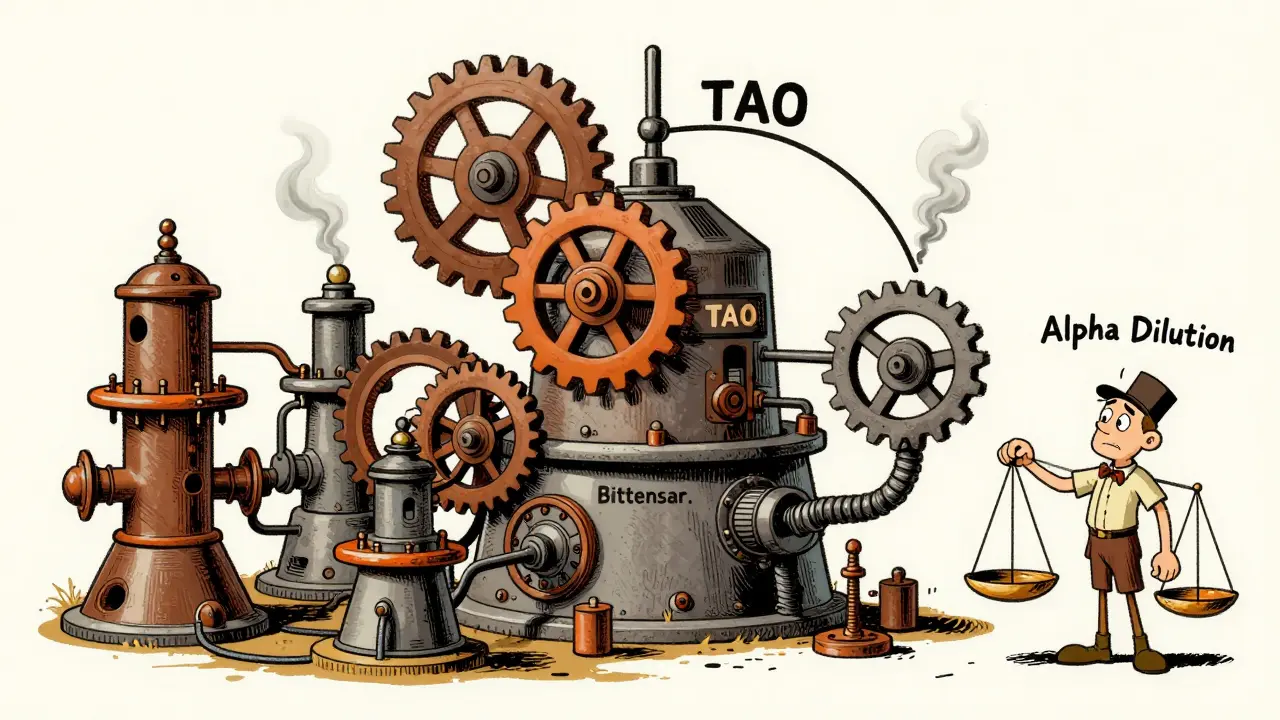
The most imminent event is the inaugural halving of Bittensor (TAO). Unlike Bitcoin’s straightforward block reward cut, Bittensor’s mechanism is intricate. The network triggers its halving when circulating supply hits approximately 10.5 million tokens. Currently, with around 9.4 million TAO in circulation, data from Taostats projects this threshold will be reached between December 2025 and February 2026.
Why is this complicated? Bittensor operates on a subnet architecture. When the main TAO issuance slows, the relative dilution of native Alpha tokens (used by individual subnets) increases. This creates a delicate balance. If TAO liquidity dries up too quickly, it could destabilize the incentive structures of dozens of independent subnets. Miners and validators might face unexpected sell pressure as they try to maintain profitability across this multi-token ecosystem.
For investors, this means watching more than just the TAO price. You need to monitor subnet health, Alpha token stability, and miner deregistration rates. Bittensor’s halving is a stress test for decentralized AI economics. If it holds together, it sets a precedent for complex tokenomics. If it fractures, it reveals the vulnerabilities of layered incentive models.
Ethereum Classic (ETC): The PoW Holdout
Scheduled for July 23, 2026, at block 25,000,001, Ethereum Classic (ETC) represents a different narrative. While Ethereum moved to Proof-of-Stake, ETC remains one of the largest Proof-of-Work networks. Its halving reduces the block reward, directly impacting miners’ revenue.
In a mature market, ETC’s halving serves as a barometer for the viability of Proof-of-Work outside of Bitcoin. With energy costs and hardware depreciation constant, miners must rely on either rising token prices or increased transaction fees to stay profitable. If ETC’s price doesn’t adjust upward post-halving, we may see significant hash rate drops, leading to centralization risks or network security concerns. Conversely, if demand holds, it proves that PoW can still compete in a niche but dedicated segment of the crypto economy.
Bitcoin’s Fifth Halving: Institutional Reality Check
By April 2028, Bitcoin will undergo its fifth halving, cutting rewards from 3.125 BTC to 1.5625 BTC per block. This is the big one. Historically, Bitcoin’s price action has followed a predictable pattern: muted reaction immediately after the halving, followed by a massive rally 6-12 months later. The 2024 halving saw Bitcoin rise from roughly $49,000 to an all-time high near $110,000 by early 2025.
However, the 2028 cycle will be different. Why? Because the market is no longer driven solely by retail FOMO. Institutional adoption has changed the game. Companies like ARK Invest, led by Cathie Wood, continue to accumulate Bitcoin, viewing it as a strategic reserve asset rather than a speculative trade. Data from CryptoQuant shows exchange reserves declining at accelerating rates, indicating long-term holding behavior.
Analysts suggest that traditional four-year cycles may be extending. Macroeconomic factors such as interest rates, global debt maturities, and liquidity injections (global M2 money supply) now play a larger role than pure tokenomics. Some models project Bitcoin reaching $175,000 in 2025 and potentially $900,000 by 2030, but these numbers depend heavily on sustained institutional inflows and favorable regulatory environments.

Long-Term Implications: Beyond Price Charts
The long-term impact of these halvings extends far beyond short-term price spikes. They force fundamental changes in mining economics and network sustainability.
- Mining Profitability Shift: As block rewards shrink, miners must rely more on transaction fees. For Bitcoin, this means the network must generate enough fee revenue to secure the chain once issuance ceases entirely in 2140. Layer-2 solutions and rollups may become critical for generating this fee volume without congesting the base layer.
- Network Security Risks: If token prices don’t rise sufficiently to offset reduced rewards, miners may shut down operations. This leads to lower hash rates, making networks more vulnerable to attacks. Bittensor’s multi-subnet structure makes it particularly sensitive to this risk.
- Market Maturation: Halvings may have diminishing individual impacts as markets grow larger. A 50% supply cut matters less when daily trading volumes are in the billions. Instead, halvings become background events, overshadowed by broader financial trends.
Furthermore, the convergence of these events creates synchronized supply shocks. If Bitcoin, TAO, and ETC all experience reduced issuance within a short timeframe, it could amplify volatility across the entire crypto sector. Traders accustomed to smooth transitions should prepare for erratic price swings as algorithms and institutions rebalance portfolios.
Strategic Takeaways for Investors
So, what should you do with this information? Here are practical steps to navigate the upcoming halving cycle:
- Diversify Across Mechanisms: Don’t put all your eggs in the Bitcoin basket. Consider exposure to decentralized AI (like TAO) and legacy PoW (like ETC) to hedge against single-narrative risks.
- Monitor On-Chain Metrics: Watch exchange reserves, miner hash rates, and subnet activity. These indicators often precede price movements by weeks or months.
- Expect Extended Cycles: Be patient. The “buy the rumor, sell the news” mentality may give way to longer accumulation phases. Institutional investors hold for years, not days.
- Prepare for Volatility: Synchronized halvings mean correlated price movements. Use stop-losses and position sizing to manage risk during turbulent periods.
The future of cryptocurrency isn’t just about getting rich quick. It’s about understanding the underlying mechanics of digital scarcity and how they interact with a maturing financial system. By staying informed and adapting your strategy, you can turn these halving events from unpredictable shocks into calculated opportunities.
When is the next Bitcoin halving?
The next Bitcoin halving is expected in April 2028 at block 1,050,000. It will reduce the mining reward from 3.125 BTC to 1.5625 BTC per block.
How does Bittensor's halving differ from Bitcoin's?
Bittensor's halving is triggered by circulating supply thresholds rather than fixed block intervals. It also involves complex interactions with subnet-specific Alpha tokens, creating potential liquidity and incentive challenges not present in Bitcoin's simpler model.
Will Ethereum Classic's halving affect its price?
Historically, halvings create supply shocks that can drive prices up if demand remains constant. However, ETC's price movement will depend heavily on miner retention and overall market sentiment toward Proof-of-Work assets.
Are four-year crypto cycles still valid?
Many analysts believe traditional four-year cycles are extending due to institutional adoption and macroeconomic factors. Price peaks may occur later than historical patterns suggest, requiring longer investment horizons.
What happens to miners when block rewards decrease?
Miners must rely more on transaction fees to remain profitable. If fees don't cover operational costs, some miners may shut down, reducing network hash rate and potentially impacting security until prices adjust or efficiency improves.



Comments (13)
Heather Austin
hey guys just wanted to drop a quick note about the TAO subnet dynamics. its actually pretty wild how the alpha token dilution works when the main issuance slows down. most people miss that part of the article but its crucial for understanding why miners might sell pressure even if tao price goes up. basically if you dont watch the subnet health metrics you are flying blind. i have been tracking this since early 2024 and the data shows clear signs of instability in smaller subnets whenever liquidity drops. so yeah keep an eye on those deregistration rates they are telling.
Michelle Walker
You are completely missing the point. This is basic economics 101. Supply shock does not equal price increase if demand evaporates. The market is saturated with narrative-driven assets that have no fundamental utility. Bittensor is a vaporware scheme wrapped in AI buzzwords. Ethereum Classic is a zombie chain clinging to life because some stubborn PoW maximalists refuse to accept reality. Bitcoin is the only one that matters and even that is overvalued due to institutional FOMO. Stop listening to these hype men who want you to buy their bags. The halving effect is diminishing rapidly as market cap grows. It is mathematically impossible for these small caps to replicate BTC's historical performance. Wake up.
Ran Tao
Oh please 🙄 another day another boring take on halvings. Everyone acts like they discovered fire but really they are just recycling old blog posts from 2017. I bet half of you here don't even understand what Proof-of-Work means 😂. You think ETC going to zero is bad? Wait till you see what happens to your precious AI coins when the real institutions dump them. Drama is my middle name but honestly this community is too sleepwalking. Woke up, checked charts, realized we are all just NPCs waiting for the next pump 💀. Enjoy the rug pull when it comes.
Lisa Chong
I have always known that the central bankers were planning this convergence of digital assets to control our minds through blockchain technology. It is not coincidence that these dates align so perfectly. They want us to believe in scarcity while they print infinite fiat currency behind closed doors. The elites are using these 'halvings' as a distraction from the real theft happening in traditional finance. Do not trust the algorithms. Do not trust the institutions. They are watching every transaction you make. This is a trap set by the deep state to monitor dissenters. Stay vigilant and do not let them tokenize your soul. The truth is hidden in plain sight but most are too blinded by greed to see it.
Kat Barr
Wow!! This is such an insightful breakdown!! 🌟 I really appreciate how you explained the difference between the simple Bitcoin model and the complex Bittensor structure. It makes me feel so much more confident about my portfolio now! 😊 I was worried about the ETC halving but reading about the miner profitability shift helps me understand the risks better. Thank you for sharing this valuable information with the community! Let's keep learning and growing together! 🚀💖
Logan Edmison
the nature of value is subjective yet we anchor ourselves to arbitrary block heights. is the halving a physical event or merely a psychological construct imposed upon decentralized ledgers? perhaps the true scarcity lies not in the tokens themselves but in the attention economy that surrounds them. we chase supply shocks while ignoring the abundance of noise. consider the void beneath the chart. silence speaks louder than volume. the market is a mirror reflecting our collective anxiety. what are we truly mining? gold or fear?
Drew M
Ah, the quaint notion that retail investors can predict macroeconomic shifts based on a table of dates. How adorable. 🎭 One must possess a certain level of sophistication to navigate these waters, something clearly lacking in the majority of comment sections. The interplay between institutional accumulation and retail panic is a delicate dance, best observed from a distance with a glass of vintage wine. 🍷 Those who understand the nuances of multi-token economies will thrive; the rest will serve as liquidity for the smart money. Truly fascinating to watch the uninitiated scramble. 👏
DJ Maleko
Let's get real here. You're all focusing on the wrong metrics. I've been analyzing the hash rate distribution for ETC and it's looking grim. If energy costs spike again, those miners are gone. Period. And don't get me started on TAO. The subnet architecture is a house of cards. One major validator exits and the whole thing collapses. I'm not saying this to scare you, I'm saying this because I care about your financial survival. Check your stop-losses. Seriously. Your portfolio is exposed. 📉🔥
Deep Rahman
When we look at the concept of time in relation to blockchain events we must consider that the human perception of cycles is linear whereas the technological evolution is exponential. The halving is not just a reduction of reward but a philosophical statement on the finite nature of resources in a digital realm. As the supply shrinks the value proposition shifts from speculation to preservation. This is a journey of understanding how scarcity creates meaning. We must walk this path with patience and wisdom. The future is not written in stone but in code. And code can be changed. But the intent remains. To secure the network. To preserve the history. To protect the value. This is the essence of the halving. It is a test of faith in the system. A test of belief in the decentralized ideal. We must remain steadfast in our convictions. For the sake of freedom. For the sake of transparency. For the sake of truth.
Melissa Beckwith
It is fundamentally flawed to assume that historical patterns will repeat themselves in a market that has undergone such significant structural changes. The introduction of institutional players has altered the elasticity of demand, rendering previous cycle analyses obsolete. Furthermore, the correlation between Bitcoin and altcoins is strengthening, which means that any volatility in the flagship asset will disproportionately affect smaller networks like Bittensor and Ethereum Classic. Investors who fail to recognize this shifting dynamic are exposing themselves to unnecessary risk. The complexity of Bittensor's tokenomics introduces additional variables that are difficult to model accurately, making it a highly speculative asset rather than a reliable investment vehicle. One must approach these narratives with extreme skepticism and rigorous due diligence.
Josephine Finlayson
I find this analysis incredibly helpful!!! It is so important to stay informed about these upcoming events. I really appreciate the detailed breakdown of each asset. It gives me a clearer picture of what to expect. Please continue to share such valuable insights. It helps the community so much. Thank you for taking the time to write this. 🌸
Tuan Nguyen
The sheer ignorance displayed in this thread is staggering. You discuss 'diversification' as if it mitigates systemic risk in a correlated market. It does not. Bittensor is a Ponzi scheme disguised as AI infrastructure. Ethereum Classic is a relic. Bitcoin is a casino chip. The entire premise of this post is built on the fallacy that supply shocks drive price in a liquid market. They do not. Demand drives price. And demand is driven by narrative and liquidity. When liquidity dries up, your 'strategic takeaways' are worthless. Educate yourselves before you throw money into the abyss.
Shay Thomson
My heart sinks when I read comments like Michelle's and Tuan's. We are all in this together, friends. Crypto is supposed to be about empowerment and decentralization, not tearing each other down. Yes, there are risks, yes, the markets are volatile, but let us support one another through this journey. Let us learn from our mistakes and grow stronger. Instead of attacking, let us ask questions. Let us share knowledge. Let us build a community based on respect and understanding. The road ahead is uncertain, but we do not have to walk it alone. Together, we can navigate these turbulent times. Peace and love to everyone here. 🕊️❤️