Have you ever stumbled upon a cryptocurrency with a tiny market cap and wondered if it’s a hidden gem or a digital ghost town? That’s exactly where Indexed Finance, known by its ticker NDX, sits in 2026. If you are looking at this project today, you probably have two questions: What was it supposed to do, and why does it seem so quiet?
This article cuts through the noise. We will look at what Indexed Finance actually built, how the NDX token works, and the hard truth about its current status. Whether you hold some NDX or just found it on a chart, understanding the reality behind the code is crucial for your wallet.
The Quick Summary
- Core Concept: Indexed Finance aimed to create dynamic, self-rebalancing index funds on Ethereum using smart contracts.
- Token Utility: The NDX token is strictly for governance; it has no staking rewards or revenue-sharing features.
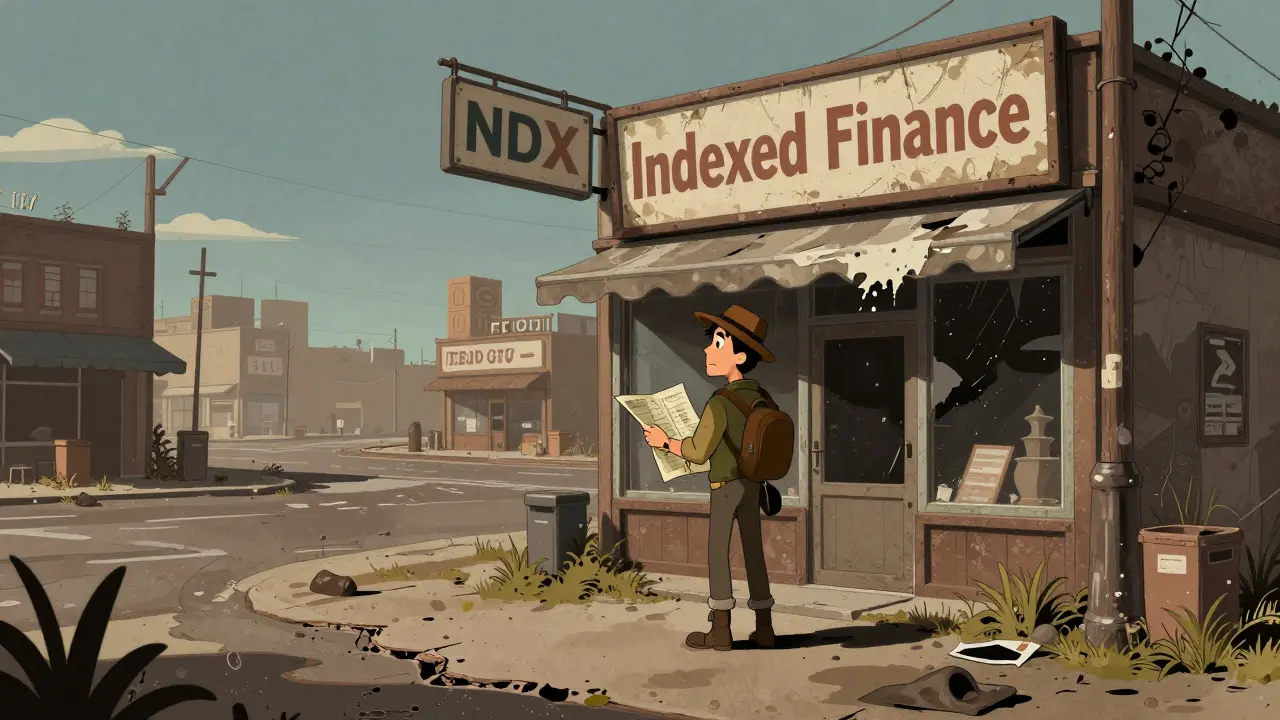
- Current Status: As of 2026, the project shows signs of being dormant or abandoned, with negligible trading volume and minimal community activity.
- Risk Level: Extremely High. The lack of liquidity and development updates makes it risky for new investors.
- Alternatives: Established protocols like Index Coop (DPI) or PieDAO offer more robust, liquid, and active index fund solutions.
What Was Indexed Finance Supposed to Do?
To understand where NDX stands today, we first need to look at its original promise. Launched in 2020 by Dillion Kellar and an anonymous developer known as PR0, Indexed Finance was a decentralized finance protocol designed to automate portfolio management on the Ethereum network. The goal was simple but ambitious: bring the convenience of traditional index funds into the volatile world of crypto.
In the traditional financial world, an index fund tracks a basket of assets, like the S&P 500. You buy one share, and you own a slice of all those companies. Indexed Finance wanted to replicate this using ERC-20 tokens. Instead of manually buying Bitcoin, Ethereum, and Chainlink separately, users could deposit these assets into an "Index Pool" and receive a single token representing that diversified portfolio.
The technical twist here was significant. Most early DeFi pools were static. If the price of one asset in the pool changed drastically, the balance would be off until someone manually rebalanced it. Indexed Finance’s core innovation was a modified Automated Market Maker (AMM) contract. This allowed the pool to dynamically adjust its asset composition without needing external liquidity providers to step in constantly. In theory, this made the index funds more efficient and less prone to impermanent loss for the underlying holders.
How the NDX Token Works
The native currency of this ecosystem is the NDX token. It is essential to understand that NDX is not a payment method, nor is it a store of value in the traditional sense. Its primary function is Governance.
Holders of NDX get to vote on critical protocol decisions. These include:
- Defining which market sectors the protocol should track.
- Approving new index strategies.
- Voting on technical upgrades to the smart contracts.
When the project launched, there was a maximum supply of 10,000,000 NDX tokens. The governance system used a governor contract with voting periods that were initially short (around 12 hours in block time) but were planned to extend to three days to allow for more thoughtful deliberation. However, unlike many other DeFi projects, NDX did not come with yield farming incentives, staking rewards, or fee-sharing mechanisms. This meant the only reason to hold NDX was to influence the direction of the protocol-a feature that becomes much less valuable if the protocol itself isn't growing.
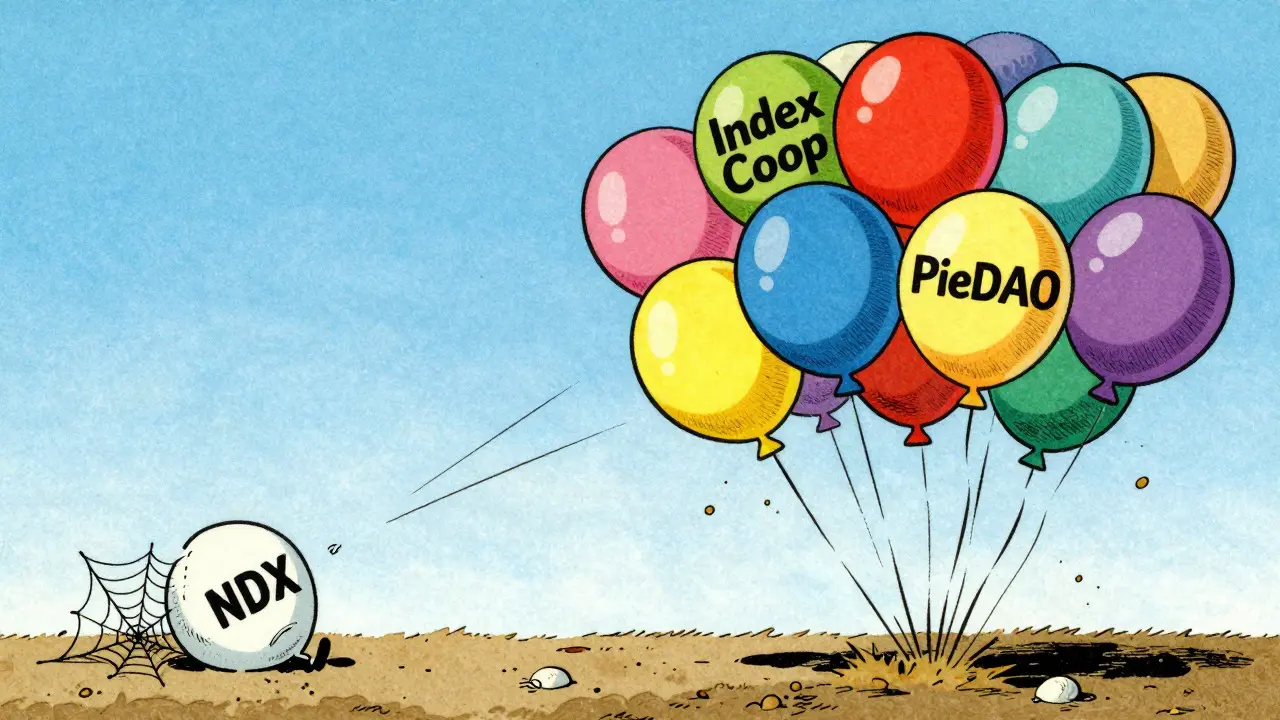
The Harsh Reality: Market Data and Liquidity
Let’s talk numbers, because they tell a stark story. By mid-2023, data from trackers like CryptoSlate and Holder.io showed NDX trading at roughly $0.004. But the price is only half the picture. The market capitalization hovered between $3,450 and $14,000 depending on the source. To put that in perspective, major competitors in the same space had market caps exceeding $100 million.
More concerning than the low valuation was the Trading Volume. Daily volumes were often under $30. In the crypto world, liquidity is king. If you try to sell a large amount of NDX, you might crash the price simply because there aren’t enough buyers on the order book. The token was listed on minor decentralized exchanges like Bancor V2 and SushiSwap, but even there, activity was virtually nonexistent.
As of 2026, the situation hasn’t improved significantly. The circulating supply varies widely across different data aggregators (ranging from ~850k to ~3.4 million tokens), which often indicates fragmented liquidity or inaccurate tracking due to low activity. For a retail investor, this creates a high risk of getting stuck with tokens that are difficult to sell at a fair price.
| Feature | Indexed Finance (NDX) | Index Coop (DPI) | PieDAO |
|---|---|---|---|
| Market Cap Range | $3k - $14k | $100M+ (Historical Peak) | $10M+ |
| Daily Volume | < $30 | $1M+ | $500k+ |
| Token Utility | Governance Only | Governance + Ecosystem Access | Governance + Staking Rewards |
| Liquidity Depth | Very Low | High | Medium-High |
| Community Activity | Negligible | Active | Active |
Technical Architecture and Security Concerns
From a technical standpoint, Indexed Finance relied on a forked AMM model with custom modifications to handle dynamic rebalancing. While innovative on paper, the execution faced hurdles. The protocol operated exclusively on the Ethereum Network, meaning users had to pay gas fees for every interaction-minting, burning, or swapping tokens.
A critical aspect of any DeFi project is security audits. Reputable projects undergo rigorous third-party audits by firms like CertiK or OpenZeppelin to ensure their smart contracts don’t have vulnerabilities. For Indexed Finance, public records of comprehensive, recent security audits are scarce. Without transparent audit reports, users are left wondering if the code is safe from exploits. Given the low Total Value Locked (TVL), the incentive for hackers to target it is lower, but the risk remains if the code hasn’t been updated to patch emerging threats in the Ethereum ecosystem.

Is Indexed Finance Dead?
This is the question everyone wants answered. In the fast-moving world of crypto, "dead" can mean different things. It doesn’t necessarily mean the servers are off, but rather that development and community engagement have stalled.
Several red flags suggest the project is dormant:
- Lack of Recent Updates: The last significant technical reference dates back to governance parameter adjustments in early 2021. There is no evidence of new features, partnerships, or roadmap milestones in 2024, 2025, or 2026.
- Silent Social Channels: Official social media accounts, including Twitter (@ndxfi), show little to no engagement. There are no regular newsletters, Discord chats, or Telegram announcements.
- No Institutional Interest: Major DeFi dashboards and analytics platforms barely track the project anymore, indicating a lack of institutional or whale interest.
- Governance Paralysis: With such a small number of active token holders, the governance mechanism likely functions without meaningful debate or participation, rendering the "decentralized" aspect theoretical at best.
If you are holding NDX, you are essentially holding a governance ticket for a theater that stopped producing plays years ago. If you are considering buying, ask yourself: Why invest in a project with zero growth trajectory when dozens of vibrant alternatives exist?
Better Alternatives for DeFi Index Investing
If you liked the idea of automated, diversified crypto portfolios, you don’t need to stick with Indexed Finance. The DeFi index sector has matured, and several robust alternatives offer better security, liquidity, and utility.
Index Coop (DPI): This is the giant in the room. The Defi Pulse Index (DPI) tracks the top DeFi tokens by market cap. It has deep liquidity, strong brand recognition, and an active governance community. While it also focuses on governance, the sheer size of the ecosystem means your vote carries weight in a larger, more impactful context.
PieDAO: PieDAO offers customizable crypto pies. You can choose from pre-set baskets (like a "Tech Giants Pie" or a "DeFi Blue Chip Pie") or create your own. Unlike NDX, PieDAO tokens often accrue yield from the underlying assets, giving you a passive income stream alongside diversification.
Token Sets: Another strong contender that allows for programmable investment strategies. They offer both passive and active sets, managed by professional fund managers or algorithms, providing a layer of expertise that purely automated systems sometimes lack.
Conclusion: Proceed with Extreme Caution
Indexed Finance was an interesting experiment in dynamic portfolio management. However, in the brutal survival-of-the-fittest environment of DeFi, it failed to gain traction. As of 2026, the NDX token serves as a cautionary tale. It highlights the importance of looking beyond the whitepaper and checking for ongoing development, community health, and liquidity depth.
If you find yourself holding NDX, consider whether the emotional attachment to the token outweighs the opportunity cost of moving those funds to a more active ecosystem. For new investors, the advice is clear: look elsewhere. The DeFi index space is crowded with better-funded, better-supported, and more liquid options that actually deliver on the promise of passive crypto investing.
Is Indexed Finance (NDX) a scam?
Not necessarily a scam in the traditional sense of a rug pull where founders stole funds immediately. However, it appears to be an abandoned project. The founders launched it, but development and marketing ceased, leaving holders with a token that has little to no utility or liquidity. This is often referred to as a "slow fade" rather than a malicious exit.
Where can I buy NDX tokens?
NDX is primarily available on decentralized exchanges like SushiSwap and Bancor V2. However, due to extremely low liquidity, buying or selling may result in high slippage (you get fewer tokens than expected for your money). It is rarely listed on major centralized exchanges like Binance or Coinbase.
Does NDX have any staking rewards?
No. The NDX token is designed solely for governance. Holding it does not generate yield, dividends, or staking rewards. Its value is derived entirely from speculative demand or its ability to vote on protocol changes, which currently have minimal impact due to the project's dormancy.
Why is the market cap of NDX so low?
The low market cap reflects a lack of user adoption and trust. Over time, as the project failed to update or grow, users moved their funds to more active DeFi protocols. With few people buying or holding the token, the total value locked in the ecosystem shrank to a fraction of its initial potential.
What happened to the Indexed Finance team?
There is no public information regarding the current activities of the founders, Dillion Kellar and PR0. Their social media presence has gone silent, and there are no recent GitHub commits or official announcements, suggesting they have moved on to other ventures or left the crypto space entirely.