Bitcoin hash rate: What it is, why it matters, and how it shapes crypto security
When you hear Bitcoin hash rate, the total computational power being used to mine Bitcoin and secure its network. Also known as network hash rate, it tells you how hard miners are working to validate transactions and add new blocks to the blockchain. Think of it like the heartbeat of Bitcoin—higher hash rate means more miners competing, which makes the network stronger and harder to attack.
The Bitcoin mining, the process where specialized hardware solves complex math problems to earn new Bitcoin. Also known as proof-of-work mining, it’s the engine behind the entire system. Every time a miner finds a block, they get rewarded in Bitcoin. But as more miners join, the network automatically adjusts the difficulty so that a new block is found roughly every 10 minutes. That’s where mining difficulty, the measure of how hard it is to find a valid block, adjusted every 2,016 blocks based on total network power. Also known as network difficulty, it’s the balancing mechanism that keeps Bitcoin running smoothly. comes in. If hash rate spikes, difficulty rises. If miners shut down, difficulty drops. It’s not random—it’s coded into Bitcoin’s DNA.
Why does this matter to you? A rising hash rate means more trust. More machines working = harder for anyone to take over the network. A sudden drop? That’s a red flag. In 2021, when China banned mining, Bitcoin’s hash rate crashed by over 50% overnight. The network didn’t break—it adapted. But prices reacted. People panicked. And that’s when you see how deeply crypto security, the resilience of a blockchain against attacks, fraud, or manipulation. Also known as blockchain integrity, it’s what keeps your coins safe even when the market gets wild. ties into real-world events. Countries like Iceland and Kazakhstan used to be mining hubs because of cheap power. Now, energy limits and policy shifts change who’s mining and where. The blockchain network, a decentralized digital ledger maintained by a global network of computers. Also known as distributed ledger, it’s the foundation that makes all this possible. doesn’t care about politics—but it reacts to power outages, regulations, and hardware costs.
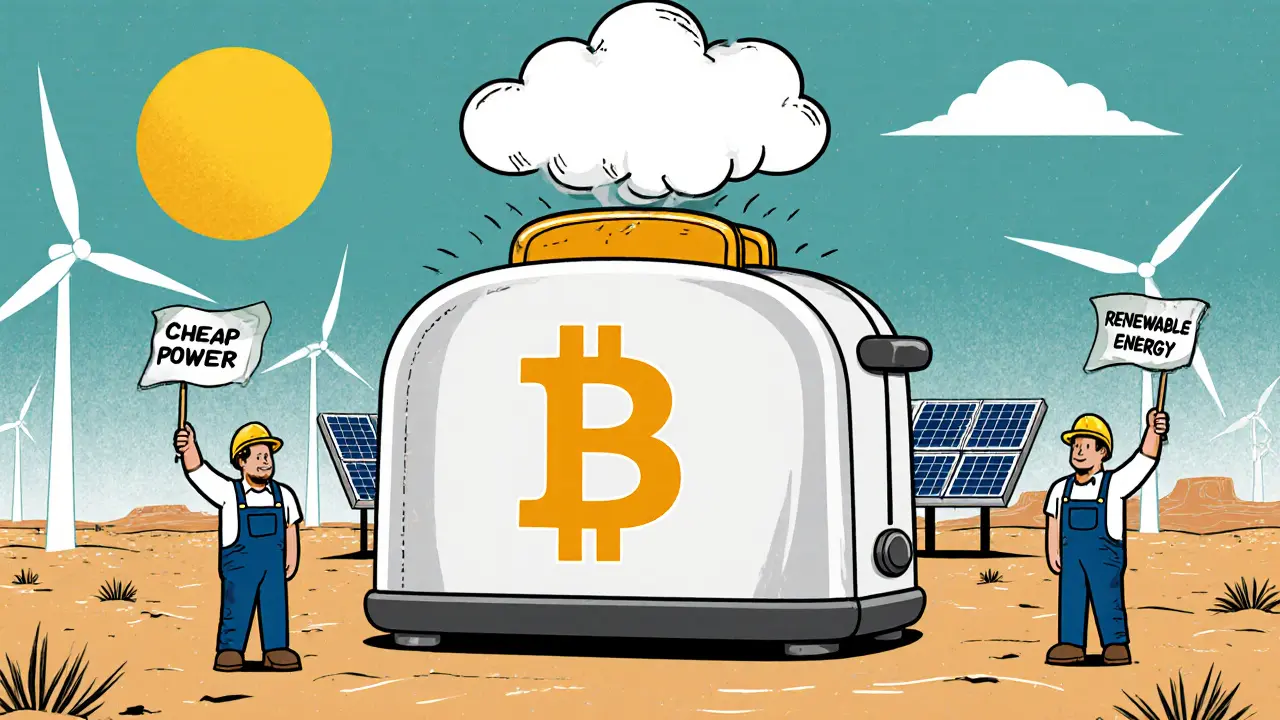
You won’t find Bitcoin’s hash rate on your exchange app. But if you understand it, you’ll see why price swings aren’t just about FOMO or news. They’re tied to real, physical infrastructure—silicon chips running 24/7, using electricity, generating heat, and earning Bitcoin. When miners turn off machines because electricity costs more than the reward, the network gets weaker. When new ASICs flood the market, it gets stronger. This isn’t theory. It’s happening right now.
Below, you’ll find real posts that dig into how mining affects everything—from energy use in Iceland to the rise and fall of obscure tokens tied to mining hype. Some are about scams pretending to be mining pools. Others explain why Bitcoin’s security isn’t just a tech feature—it’s its biggest selling point. Whether you’re holding Bitcoin or just curious, knowing what the hash rate is telling you gives you an edge no chart ever could.
As of 2025, the U.S. leads global Bitcoin mining with 44% of the hash rate, followed by Kazakhstan, Russia, and Canada. Learn where mining power is concentrated, why geography matters for security, and how renewable energy is reshaping the industry.
Continue reading