BAMP Token: What It Is, Why It’s Missing, and What to Watch For
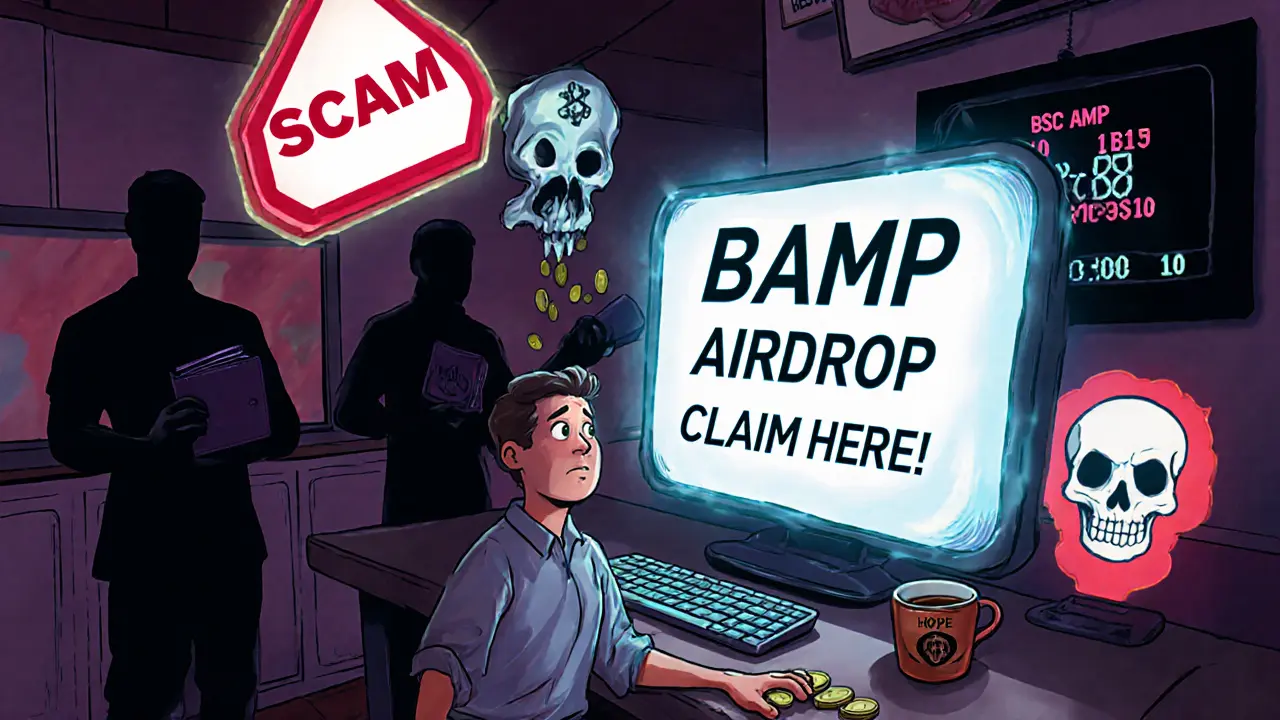
When you hear about BAMP token, a crypto asset with no public record, no whitepaper, and no exchange listing. Also known as BAMP coin, it’s one of many names that pop up in Telegram groups and Twitter threads — promising quick gains but delivering nothing but confusion. Unlike real tokens backed by teams, code, or use cases, BAMP token doesn’t exist as a working project. There’s no website, no GitHub repo, no community forum. No exchange lists it. No wallet supports it. And no one can tell you who created it.
This isn’t an isolated case. You’ll see the same pattern with SCIX airdrop, a token that never launched, or SecretSky.finance, a fake platform claiming to give away SSF tokens. These aren’t bugs in the system — they’re features of the wild west of crypto. Scammers rely on FOMO. They copy names from real projects, tweak a letter or two, and flood social media with fake airdrop links. If you’re asked to connect your wallet, send a small fee, or sign a contract to claim BAMP, you’re being targeted. There is no BAMP token to claim.
Real tokens — like the SAKE airdrop, a legitimate DeFi reward tied to active trading on SakePerp — leave a trail. They have documentation. They have transaction history. They have users who can explain how they got the tokens and what they’re for. BAMP doesn’t. Neither do xSuter, Legion SuperApp (if you’re not on the official list), or any other name that shows up out of nowhere with a promise of free money.
Why do these fake tokens keep appearing? Because they’re cheap to make and easy to spread. A single person can spin up a fake website in an hour. A bot can post it to 10,000 groups. And all it takes is one person clicking a link to make it profitable. The crypto space is full of projects that faded — like SOS, GEO, or NextEarth — but those had at least some real activity behind them. BAMP has nothing. Not even a whisper of a team, a roadmap, or a purpose.
So what should you do when you see BAMP token pop up? Don’t click. Don’t search for it. Don’t ask others if it’s real. Just ignore it. And if someone tells you it’s a "hidden gem" or "limited-time opportunity," they’re either scamming you or they’ve been scammed themselves. The crypto world is full of real opportunities — like the Base token airdrop, or the SPIN token from Spintop Network — but they don’t hide in shady DMs. They’re announced on official channels, with clear rules, and verifiable steps.
Below, you’ll find real stories of tokens that looked promising but vanished, airdrops that actually paid out, and exchanges that turned out to be traps. You’ll learn how to tell the difference between something that’s broken and something that was never real. And you’ll walk away knowing exactly what to look for — and what to walk away from — before you lose your crypto to a name that doesn’t exist.
BSC AMP (BAMP) has no confirmed airdrop as of 2025. With zero trading volume and 99.6% of tokens still locked, rumors are dangerous. Learn what’s real, what’s fake, and how to avoid scams.
Continue reading