Remember the panic of checking your wallet balance at 8:00 PM UTC on Christmas Eve 2021? If you held Sologenic or XRP, you probably did. That specific moment marked one of the most critical snapshots in the platform's history, rewarding early adopters who kept their assets off exchanges. But airdrops aren't just about holding coins; they're about timing, technical setup, and knowing exactly where your tokens live. Today, we’re breaking down everything you need to know about Sologenic airdrops, from the foundational SOLO distributions to the recent Coreum partnership.
What Is Sologenic and Why Do They Airdrop?
Sologenic is an asset tokenization platform built on the XRP Ledger that enables users to trade stocks, ETFs, and commodities as digital tokens. Unlike generic blockchain projects, Sologenic focuses heavily on institutional adoption, partnering with banks and brokerages. This focus shapes their airdrop strategy. They don’t just spray tokens to anyone with a Twitter account. Their distributions target two main groups: existing XRP holders (to build community loyalty) and active SOLO token holders (to reward long-term commitment).
The primary goal here isn't just marketing hype. By distributing SOLO tokens, Sologenic decentralizes ownership of its ecosystem. More holders mean more validators, more liquidity providers, and a stronger network effect. When you receive an airdrop, you aren't just getting free money; you're being invited into a governance structure that influences how the platform evolves.
The Historical Context: The December 2021 Snapshot
If you missed the big event in late 2021, you learned a hard lesson about exchange custody. The snapshot for this major distribution occurred on December 24, 2021, at 8:00 PM UTC. The catch? You had to hold XRP in a self-custody wallet, not on an exchange like Zondacrypto or Coinbase. Exchanges explicitly stated they would not support the claim process for this specific drop.
This requirement tripped up thousands of users. Many assumed holding XRP anywhere counted. It didn’t. To qualify, participants needed to withdraw XRP to compatible wallets like Xumm or Ledger before the snapshot time. Distribution followed later, on January 20, 2022. The payout was modest-around 40 SOLO tokens per eligible address-but it set the precedent for how future drops would work: strict timing, self-custody requirements, and clear communication channels.
The Current Opportunity: Coreum (CORE) Token Distribution
Fast forward to September 2025. The landscape has shifted. The latest major initiative involves the Coreum project, which allocated 100 million CORE tokens specifically for the Sologenic community. This wasn't a general public airdrop. It targeted existing SOLO holders, creating a tiered loyalty system.
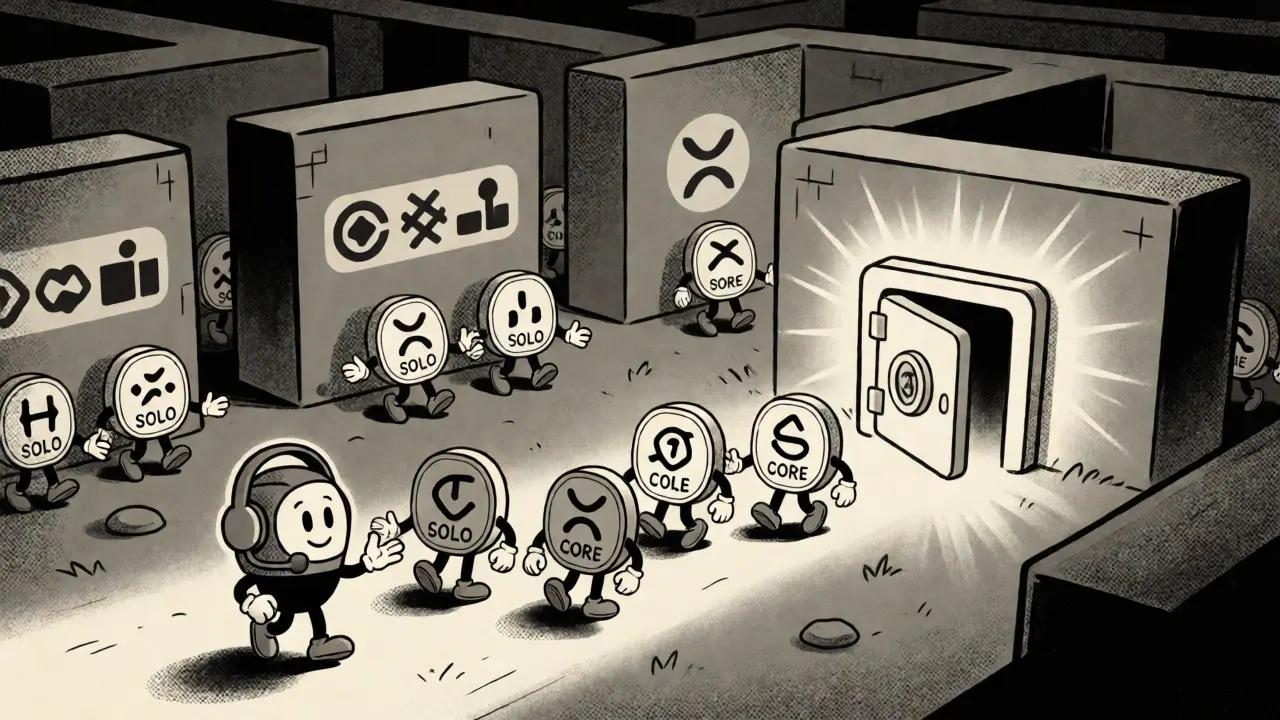
The window for this specific program ran from September 18 to September 26, 2025. Here’s where it gets technical: you couldn't just wait for the tokens to appear. You had to establish a trustline with the Coreum gateway on the XRP Ledger. Without that trustline, your tokens had nowhere to land. Think of a trustline as opening a bank account for a specific currency on the XRPL. If you didn't open that account, the deposit bounced.
| Program Name | Target Audience | Key Requirement | Distribution Delay |
|---|---|---|---|
| Foundational SOLO Drop | General Community | Account Verification | Immediate upon verification |
| XRP Holder Snapshot (2021) | XRP Holders | Self-Custody Wallet at Snapshot | ~4 Weeks post-snapshot |
| Coreum Partnership (2025) | SOLO Holders | Trustline Establishment | 6-8 Weeks post-snapshot |
Technical Requirements: Trustlines and Wallets
Let’s talk about the tech stack because this is where most people fail. Sologenic operates on the XRP Ledger. This means your wallet must support XRPL-specific features. Standard Ethereum wallets won’t cut it here. You need tools like Xumm or hardware wallets like Ledger Nano X configured for XRPL.
Why are trustlines so important? On the XRP Ledger, you can't receive a new token type unless you explicitly tell the ledger you want to accept it. This prevents spam. For the Coreum drop, you had to add a trustline to the Coreum issuer address. If you skipped this step, your 100 million share of CORE tokens simply wouldn't show up in your balance. Always check the official Sologenic Discord or Telegram for the exact issuer address during these windows. Don't guess.
Exchange Support vs. Self-Custody
A recurring theme in Sologenic airdrops is the exchange problem. Centralized exchanges (CEXs) often do not participate in complex snapshot mechanisms. During the 2021 drop, Zondacrypto explicitly warned users to withdraw funds. Why? Because tracking individual user balances across millions of customers at a precise second is technically difficult and costly for CEXs.
If you keep your crypto on Binance or Kraken, you might miss out. Unless the exchange announces specific support, assume you need to move your assets to a personal wallet. Yes, this carries risk. You become responsible for your private keys. But the reward-often significant value in tokens like SOLO or CORE-usually outweighs the hassle of moving funds temporarily. Pro tip: Move your funds 48 hours before the snapshot. Network congestion can delay transactions, and missing the snapshot by even one minute means zero rewards.

Market Impact and Token Value
How much are these airdrops actually worth? Prices fluctuate wildly. In October 2025, SOLO traded around $0.2849. Early airdrops valued the token higher relative to market cap, but volume was lower. The Coreum CORE allocation represents substantial value, though its price depends entirely on post-distribution market performance.
Don't expect instant riches. Airdrops are dilutive events. When 100 million new tokens hit the market, supply increases. If demand doesn't rise simultaneously, prices dip. Smart players sell a portion immediately to cover gas fees and taxes, then hold the rest for potential upside. Remember, Sologenic’s institutional partnerships could drive long-term utility, potentially raising the floor price over time. But short-term volatility is guaranteed.
Tax Implications and Compliance
Here’s the part nobody likes: taxes. In many jurisdictions, including Ireland and the US, airdropped tokens are treated as income at their fair market value when received. Since distribution delays can span months, calculating this value requires careful record-keeping.
For the Coreum program, the delay between snapshot and delivery creates complexity. Did you receive the tokens in 2025 or 2026? Your tax year matters. Keep screenshots of your wallet balances at the moment of receipt. Consult a local tax professional if the amount is significant. Ignoring this can lead to penalties during audit season, turning a "free" token into a liability.
Future Outlook: What’s Next for Sologenic?
Sologenic continues to expand its footprint. Recent developments highlight advocacy for blockchain-based inheritance solutions and wealth transfer systems. These institutional services suggest future airdrops might target specific user behaviors rather than passive holding. For example, using the SOLONEX brokerage solution or providing liquidity on the Sologenic DEX could unlock exclusive rewards.
Keep an eye on partnership announcements. The Coreum collaboration proved that cross-chain integrations yield high-value drops. Expect similar moves with other Layer 1 blockchains seeking access to the XRPL community. Stay active in the community channels. Information travels fast, and early notice often means better preparation time.
Do I need to pay fees to claim Sologenic airdrops?
Yes, typically small transaction fees apply. On the XRP Ledger, establishing a trustline costs a small amount of XRP (currently less than $0.01). Additionally, sending tokens to your wallet incurs standard network fees. These are negligible compared to the value of most airdrops, but you must have some XRP in your wallet to cover them.
Can I claim airdrops if my tokens are on an exchange?
It depends on the specific program. Historically, major Sologenic airdrops required self-custody. Exchange support is inconsistent. Always check the official announcement. If unsure, withdrawing to a personal wallet is the safest bet to ensure eligibility, provided you do it before the snapshot time.
What happens if I miss the trustline setup for Coreum?
If you failed to establish the required trustline within the specified window, you likely forfeited your claim for that specific distribution cycle. Some projects offer recovery periods, but these are rare. For future drops, set calendar reminders for both the snapshot date and the trustline deadline.
Are Sologenic airdrops taxable?
In most countries, yes. Airdrops are generally considered ordinary income at the market value on the day you gain control of the tokens. Later, when you sell, you may also owe capital gains tax on any profit above that initial value. Keep detailed records of dates and values.
Which wallets support Sologenic tokens?
Wallets compatible with the XRP Ledger are required. Popular options include Xumm (formerly XUMM), Ledger Nano devices, and the Sologenic Wallet app for iOS and Android. Ensure your wallet supports adding custom tokens and managing trustlines.