
The $4.68 billion fine that shook crypto
In 2024, the U.S. Securities and Exchange Commission slapped a $4.68 billion fine on Terraform Labs and its founder Do Kwon. That’s not a typo. It wasn’t just the biggest crypto fine ever-it was more than 30 times what the SEC collected the year before. And it wasn’t an isolated case. That single penalty made up nearly all of the $4.68 billion in total fines the SEC handed out that year, turning 2024 into the most aggressive enforcement year in crypto history.
What did Terraform Labs do? They raised over $40 billion from investors by selling tokens tied to the UST stablecoin and LUNA cryptocurrency, promising high returns and claiming the system was backed by real assets. It wasn’t. When UST lost its peg to the dollar in May 2022, the whole system collapsed, wiping out $40 billion in market value and leaving millions of retail investors with nothing. The SEC said this wasn’t just a failed experiment-it was an unregistered securities offering built on lies. And they proved it in court.
How the SEC went from quiet to crushing
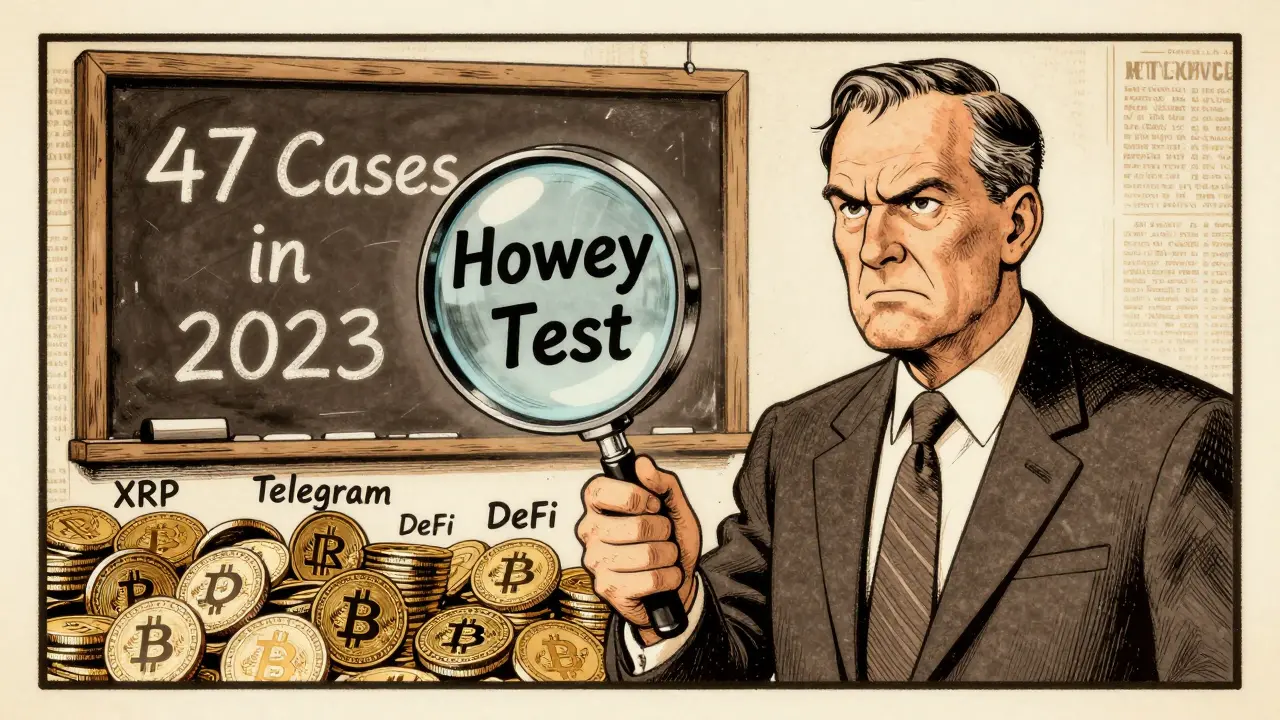
Before Gary Gensler became SEC chair in April 2022, crypto enforcement was slow and scattered. Between 2013 and 2022, the SEC collected about $1.5 billion in total fines from crypto companies. Then came Gensler’s era. Under his leadership, the SEC filed 47 enforcement actions in 2023 and 33 in 2024. That’s fewer cases than the year before, but the penalties exploded. Why? Because they stopped going after small players and started targeting the biggest names with the deepest pockets.
The SEC didn’t just go after Terraform. They fined Ripple $125 million for selling XRP as an unregistered security. They hit Telegram with a $1.24 billion penalty for its 2018 token sale-even though the company had already shut down. They went after individuals too: John and JonAtina Barksdale paid over $100 million for running a fake ICO that promised fake blockchain tech. The message was clear: if you raised money from the public using tokens and didn’t register, you were breaking the law.
Behind the scenes, the SEC’s Crypto Assets and Cyber Unit grew into a full-blown enforcement machine. They used the Howey Test-a 80-year-old legal standard for identifying investment contracts-to argue that almost every token sold to the public was a security. That meant every exchange, every staking platform, every DeFi protocol had to register with the SEC or risk being sued. It wasn’t about fraud. It was about regulation by lawsuit.
The sudden shift: What changed in January 2025
Gensler left the SEC on January 20, 2025. One day later, Acting Chairman Mark Uyeda announced the formation of the Crypto Task Force. The message was unmistakable: the old way was over.
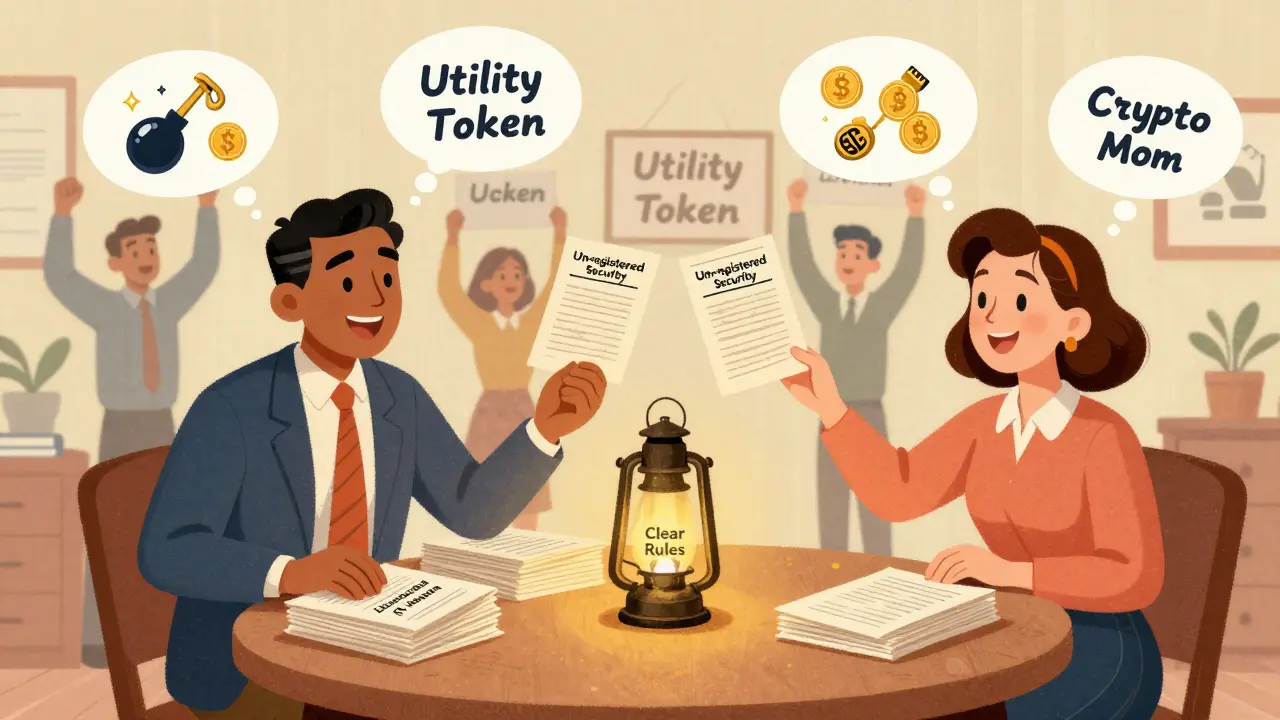
Under Gensler, the SEC treated registration violations like crimes. Under the new team, they started treating them as regulatory gaps. The task force, led by Republican Commissioner Hester Pierce-known in crypto circles as “Crypto Mom”-was given one mission: stop fighting every company and start building clear rules. They didn’t just change tone. They changed strategy.
By February 2025, the SEC shut down the Crypto Assets and Cyber Unit and replaced it with the Cyber and Emerging Technologies Unit (CETU). The new unit had fewer lawyers assigned to crypto cases. Their mandate? Use enforcement resources more carefully. That meant dropping cases that didn’t involve clear fraud.
The first big sign came in June 2025. The SEC voluntarily dismissed its lawsuit against Coinbase. Coinbase had sued the SEC back in 2023, calling their approach “regulation by enforcement.” The SEC didn’t fight back. They walked away. That was a massive win for the industry. It wasn’t a victory for Coinbase alone-it was a signal that the SEC no longer saw unregistered token sales as the top threat.
Who’s still getting targeted?
The SEC didn’t disappear. They just narrowed their focus. In April 2025, they sued Ramil and PGI Global for a $198 million crypto and forex scam. In May, they went after Unicoin Inc. for allegedly running a fake cryptocurrency project. These weren’t registration cases. These were fraud cases. People lost money. People were lied to. That’s what the new SEC cares about.
They also dropped three lawsuits against firms accused of being unregistered “dealers.” Those cases were based on the idea that any platform letting users trade crypto was acting like a broker. The new team decided that wasn’t a clear violation. They’re now asking: Do people actually get ripped off? Or are we just punishing companies for not filling out the right paperwork?
What’s clear now: the SEC isn’t trying to shut down crypto. They’re trying to stop criminals from using it. The days of suing every DeFi protocol for not registering are over. The days of going after founders for selling tokens without a prospectus? Also over.
What this means for crypto users and businesses
If you’re a regular investor, the shift is good news. The SEC is no longer going to punish you for holding a token that might be classified as a security. They’re not going to shut down exchanges just because they don’t have SEC approval. Instead, they’re going after the scammers, the fraudsters, the people who promise guaranteed returns with no real product.
For crypto companies, the path forward is clearer. You still need to be honest. You still need to avoid misleading investors. But you don’t need to register your token with the SEC unless you’re selling it like a stock. The new leadership is open to dialogue. They’re talking to industry groups. They’re asking for feedback. They’re even considering new rules that would define what makes a token a security versus a commodity.
That’s a big deal. For years, crypto companies had no idea if their product was legal. Now, they have a fighting chance to get clarity. The SEC isn’t giving them a free pass-but they’re no longer trying to force them into a box that doesn’t fit.
The bigger picture: Why this matters beyond the U.S.
The SEC’s crackdown didn’t just affect American companies. It pushed crypto businesses out of the U.S. and into places like Singapore, Switzerland, and the UAE. The $4.68 billion in fines didn’t make crypto safer-it made it harder for innovation to grow in America. Many startups packed up and left because they didn’t want to risk a lawsuit over something that wasn’t even illegal.
Now, with the shift in policy, the U.S. might be able to win some of that talent back. Countries that welcomed crypto with open arms are now watching to see if the SEC can deliver real rules-not just threats. If the Crypto Task Force delivers clear guidelines by the end of 2025, the U.S. could become a hub again. Not because it’s the most lenient, but because it’s the most predictable.
Meanwhile, global regulators are watching closely. The European Union’s MiCA rules, Canada’s crypto framework, and Japan’s financial watchdog are all adjusting their own policies based on what the SEC does next. The U.S. may not lead crypto regulation anymore-but it still sets the tone.
What’s next? The road ahead in 2025 and beyond
The SEC’s new approach is still young. The Crypto Task Force has only been working for six months. But the signs are strong: fewer lawsuits, more dialogue, less fear. The dismissal of the Coinbase case wasn’t a fluke. It was a turning point.
What’s coming next? Look for formal guidance on token classification. Look for a registration pathway for exchanges that want to play by the rules. Look for the SEC to stop calling every token a security and start distinguishing between utility tokens, payment tokens, and investment tokens.
One thing is certain: the $4.68 billion fine was the peak of an era. It wasn’t the end of regulation. It was the end of a bad kind of regulation. The next chapter won’t be about fines. It’ll be about frameworks. And that’s something the entire crypto industry can actually work with.



Comments (22)
chris yusunas
finally someone gets it. the SEC wasn't fighting fraud, they were fighting innovation with a sledgehammer. now we might actually build something without fearing a lawsuit tomorrow.
Naman Modi
lol the SEC just gave up. they thought they could scare us into compliance. we just moved on. 🤷♂️
Brian Martitsch
This is why you don't let bureaucrats run markets. They don't understand technology, only power. And now they're embarrassed they overplayed their hand. 😏
Ashley Lewis
The dismissal of the Coinbase case was not a victory for market integrity. It was a capitulation to regulatory arbitrage and a failure of fiduciary duty.
Melissa Black
The Howey Test was never meant for decentralized networks. Applying it to tokens like ETH or SOL was like using a typewriter to debug quantum code. The old regime didn't just misapply law-they weaponized ignorance. Now the task force has a chance to rebuild trust with clarity, not coercion. This isn't a retreat. It's recalibration.
vaibhav pushilkar
Big win for transparency. The SEC finally realized that not every token is a stock. If you're selling a utility, don't treat it like a bond. Let devs build, let users decide.
SHEFFIN ANTONY
Oh so now it's 'regulatory gaps'?? Last year you were calling every dev a criminal. This is pure hypocrisy. You want to be loved now? Too late. The damage is done. 🤭
Vyas Koduvayur
Let me break this down for the uninitiated. The SEC's previous strategy was essentially regulatory terrorism. They didn't care if you were honest or not-they just wanted to extract settlements. The $4.68B wasn't justice, it was a tax on ambition. The new task force? They're finally asking the right question: did someone get scammed? Or did someone forget to file Form D? The difference is everything. And yes, this is the first time since 2017 that I feel like the U.S. might actually lead in crypto again-not by banning, but by building.
Jake Mepham
I've been in crypto since 2014. I've seen regulators come and go. But this shift? This is the first time the U.S. government is acting like a partner, not a predator. The SEC used to be the elephant in the room. Now they're handing out blueprints. That's not weakness. That's maturity. And it's why I'm bringing my team back from Singapore. America can still win this.
Craig Fraser
I find it deeply concerning that the U.S. is abandoning its role as the global standard-setter in financial regulation. This is a dangerous precedent. We are no longer enforcing the rule of law-we are accommodating chaos.
Jacob Lawrenson
YES!! Finally someone with a brain in charge 😍 The SEC was acting like a 1990s ISP trying to shut down Napster. Now they're learning how to stream. Let's go!
Zavier McGuire
they were just scared of losing control. now they're pretending they always wanted this. whatever. the market won anyway
Sybille Wernheim
This is so refreshing. For once, the regulators aren't trying to shut us down-they're asking how they can help. I actually feel hopeful for the first time in years.
Alison Fenske
i just cried reading this. after all the fear and uncertainty… this feels like a second chance. not for the big guys. for the little devs. the ones who just wanna build something real
Grace Simmons
This is a betrayal of American financial sovereignty. We are ceding global leadership to authoritarian regimes that don't care about investor protection. Shame on the new leadership.
Collin Crawford
The Howey Test is the only legal framework that has ever worked. Abandoning it is not innovation-it is legal nihilism. The SEC has surrendered its mandate.
Kevin Karpiak
So now fraud is the only thing that matters? What about the 1000s of projects that lied without stealing? Are they just ghosts now? This isn't progress. It's selective blindness.
Helen Pieracacos
Oh wow, the SEC finally realized they can't regulate what they don't understand. Took them long enough. 🙃
Dustin Bright
finally someone gets it 💙 the real criminals were never the devs… they were the ones selling fear as policy
Mmathapelo Ndlovu
This is the kind of shift that changes history. Not because it's perfect, but because it's honest. For the first time, the U.S. is trying to understand crypto instead of punishing it. That’s the foundation for real innovation.
Lloyd Yang
Let’s be real-the SEC’s old approach didn’t just hurt startups, it scared off institutional capital. Hedge funds and pension funds wouldn’t touch crypto because the rules were a mystery. Now? They’re lining up. The task force isn’t softening the rules-they’re making them legible. That’s not surrender. That’s statecraft. And it’s why I’m seeing more VC deals in Q3 than in the last five years combined. The U.S. isn’t losing crypto. It’s finally learning how to host it.
Sophia Wade
The philosophical shift here is profound. The SEC moved from a model of control to one of discernment. This is not deregulation-it is differentiation. It recognizes that tokens are not monolithic. A payment token is not a security. A governance token is not a bond. This is jurisprudence evolving with technology. The Howey Test was a tool for the industrial age. We are now in the digital age. To insist on the same framework is not fidelity to law-it is intellectual stagnation.