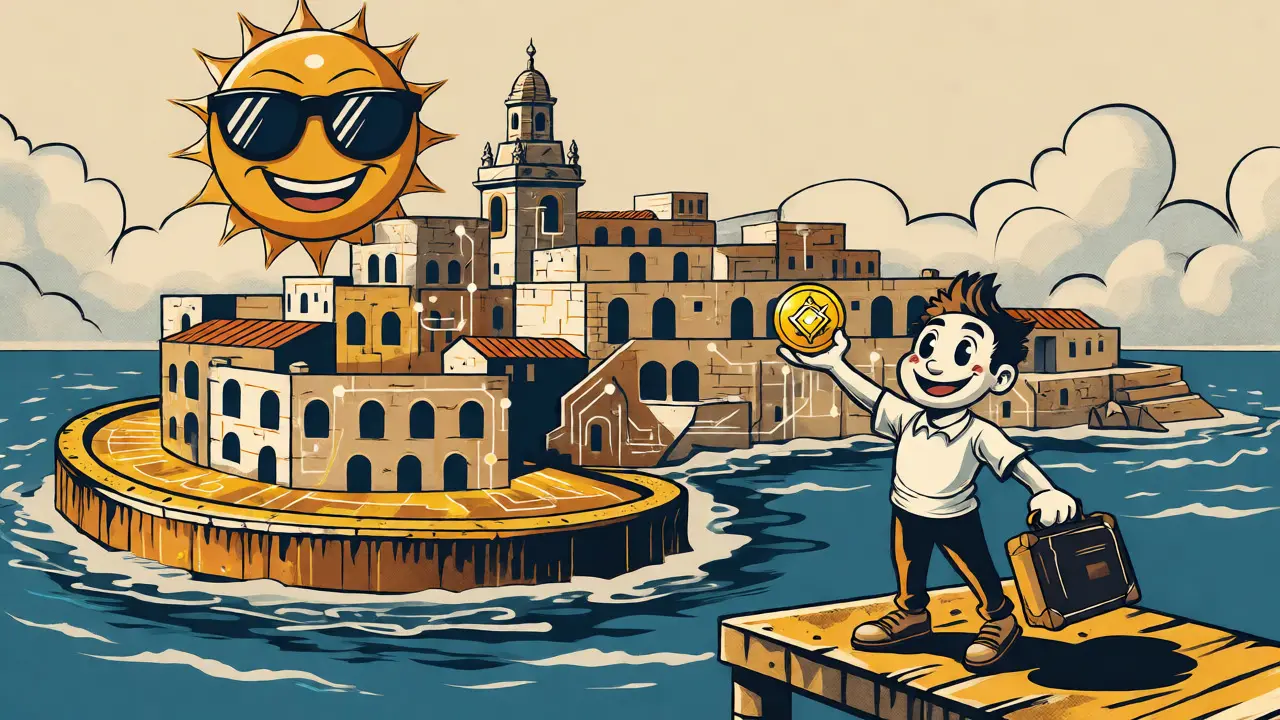
Everyone talks about the "blockchain island," but few explain how you actually keep your profits. You might have heard that moving to Malta is a magic ticket to zero taxes. It isn't magic; it's math and residency rules. As of late 2026, with global tax transparency tightening, understanding the specific mechanics of Maltese taxation is no longer optional-it's essential for survival in the crypto market.
The core promise is simple: pay 0% tax on cryptocurrency gains if you structure your life correctly. But here is the catch that most influencers skip: this only works if you are not domiciled in Malta and you do not remit those specific funds into the country. If you just fly in, buy a bagel, and declare yourself a resident, the Commissioner for Revenue will likely send you a bill that hurts more than a bad trade. Let’s break down exactly how this framework operates, who qualifies, and where the hidden traps lie.
Why Malta Became the Blockchain Island
Malta didn’t stumble into this reputation by accident. In 2018, the government passed three groundbreaking bills-the Virtual Financial Assets Act, the Malta Digital Innovation Authority Act, and the Innovative Technology Arrangements and Services Act. These laws created one of the first comprehensive legal frameworks for digital assets globally. Today, major exchanges like Binance operate under strict supervision from the Malta Financial Services Authority (MFSA). This regulatory clarity provides stability that many other jurisdictions lack.
Unlike countries that ban crypto or treat it as an afterthought, Malta recognizes digital assets as both a medium of exchange and a store of value. This recognition matters because it defines how transactions are taxed. The country also aligns with the EU’s Markets in Crypto-Assets (MiCA) regulation, ensuring that while you enjoy local benefits, you remain compliant with broader European standards. For investors, this means banking relationships are easier to maintain compared to offshore havens that banks often shun.
The Non-Dom Status: Your Path to 0% Tax
The holy grail of Maltese tax planning is the non-domiciled (non-dom) resident status. To understand why this is powerful, you must distinguish between residence and domicile. Residence is where you live physically; domicile is where you intend to permanently return or where you were born. Malta uses a remittance-based tax system for non-doms.
| Income Source | Tax Rate if Remitted to Malta | Tax Rate if Not Remitted |
|---|---|---|
| Foreign Income (e.g., Crypto Gains) | 15% | 0% |
| Malta-Sourced Income | 35% | N/A (Taxed at source) |
| Capital Gains (Long-term) | 0% | 0% |
Here is the logic: If you earn money outside Malta (like selling Bitcoin held abroad) and leave that money in a foreign bank account, you pay 0% tax. If you transfer that money to a Maltese bank account to buy groceries or pay rent, you trigger a 15% tax on the remitted amount. However, long-term capital gains on financial assets, including cryptocurrencies, are generally exempt from tax regardless of remittance, provided they are not considered trading income. This distinction is critical.
Residency Requirements: More Than Just Showing Up
You cannot just claim non-dom status. You must establish tax residency. The standard rule is spending at least 183 days per year in Malta. But there are other ways to qualify, such as obtaining a Global Residence Program permit. Regardless of the method, you must prove that your center of vital interests is in Malta.
- Physical Presence: Keep detailed logs of your travel. Border stamps aren't enough; you need proof of daily presence.
- Domicile Declaration: You must legally confirm your domicile remains outside Malta. This often involves providing birth certificates and evidence of permanent home abroad.
- Financial Commitments: Depending on the visa route, you may need to invest €220,000 in property or pay an annual fee of €8,750 for rental permits.
Many beginners fail here. They assume renting an Airbnb for six months counts. It doesn't. You need a structured approach. Furthermore, the Commissioner for Revenue scrutinizes applications heavily. If you spend 182 days in Malta and 183 in another country, you might end up a tax resident in two places, triggering double taxation issues despite treaties.

Trading vs. Investing: The Critical Distinction
This is where most people get burned. Malta does not tax passive investment gains for non-doms. But if you are deemed a professional trader, your profits become business income, taxed at up to 35%. How does the tax authority decide? They look at frequency, volume, and intent.
If you buy Bitcoin once a year and hold it, you are an investor. If you day-trade altcoins, use leverage, and execute hundreds of trades monthly, you are running a business. The line is blurry. There is no bright-line test in Maltese law. Instead, it relies on case-by-case assessment. To protect yourself, document your strategy. Show that your primary goal was wealth preservation, not active speculation. If you are unsure, consider setting up a corporate entity. A limited liability company (LLC) in Malta pays a flat 5% effective tax rate on distributed profits, which can be more predictable than personal income tax rates.
Mining, Staking, and DeFi Rewards
Not all crypto activities are treated equally. Mining and staking are generally classified as trade or business activities. This means the rewards you receive are taxable as ordinary income at the time of receipt. Later, when you sell those tokens, you might face capital gains tax on any appreciation above the value at receipt.
DeFi yields add another layer of complexity. Are liquidity provider fees interest? Are they dividends? Currently, Malta tends to view these as miscellaneous income. The key takeaway is timing. You owe tax when the reward hits your wallet, even if you don't sell it immediately. Many investors forget this and face a cash-flow crunch when their tax bill arrives before they liquidate positions. Meticulous record-keeping is non-negotiable here. Every transaction, every gas fee, and every reward distribution needs a timestamp and a valuation in Euros at the moment of the event.

Common Pitfalls and Hidden Costs
Before packing your bags, consider the downsides. First, the cost of living. While lower than London or Zurich, Malta is not cheap. Renting a decent apartment in Sliema or St. Julian’s costs significantly more than in rural Europe. Second, healthcare and insurance. While public healthcare is good, private coverage adds to your overhead.
Third, compliance fatigue. You must file annual tax returns, maintain accounting records, and potentially submit reports to the FIAU (Financial Intelligence Analysis Unit). Ignoring these obligations leads to heavy fines. Finally, exit taxes. If you leave Malta, ensure you haven't triggered any unexpected liabilities. The rules around what constitutes a "remittance" can change, and relying on outdated advice from 2024 might cost you in 2026.
Malta vs. Other Jurisdictions
How does Malta stack up against competitors? Portugal removed its blanket exemption for crypto gains in 2023, making it less attractive for pure traders. Dubai offers 0% personal income tax but lacks the deep EU banking integration that Malta provides. Switzerland has favorable cantonal rates but high cost of entry.
| Jurisdiction | Crypto Capital Gains | Residency Requirement | EU Access |
|---|---|---|---|
| Malta | 0% (Non-dom, non-remit) | 183 days + Domicile test | Yes |
| Dubai | 0% | Visa renewal (no strict day count) | No |
| Portugal | 28% (Short-term), Exempt (Long-term) | 183 days | Yes |
| Germany | Exempt if held >1 year | Center of life | Yes |
Malta wins on regulatory clarity and EU access. If you need to interact with European clients or banks seamlessly, Malta is superior to offshore options. If you want absolute simplicity and don't care about EU banking, Dubai might be easier. But for serious investors wanting a stable, regulated environment within the EU, Malta remains the top choice.
Action Plan for Moving to Malta
Ready to make the move? Follow these steps to minimize risk:
- Consult a Local Expert: Do not rely on generic online calculators. Hire a Maltese tax advisor specializing in crypto.
- Establish Residency Properly: Secure housing and register with local authorities immediately upon arrival.
- Separate Accounts: Keep foreign earnings in foreign accounts until you decide to remit them.
- Track Everything: Use software that integrates with Maltese reporting standards.
- Review Annually: Laws change. What worked last year might need adjustment this year.
Does Malta tax cryptocurrency losses?
Generally, no. Because capital gains on crypto are often not taxed for non-doms, losses usually cannot be offset against other income unless you are classified as a professional trader. Always check your specific classification with a tax advisor.
Do I need to pay tax on crypto-to-crypto swaps in Malta?
Currently, crypto-to-crypto swaps are often treated similarly to disposals. If you are a non-dom and do not remit the proceeds, you typically avoid immediate tax. However, the valuation at the time of swap matters for future calculations. Legislation is evolving, so monitor updates from the MFSA.
Can I work remotely for a US company while living in Malta?
Yes. Under the non-dom regime, if your employer is outside Malta and you do not remit the salary to Malta, you may pay 0% tax on that income. If you remit it, it is taxed at 15%. This makes Malta attractive for remote workers.
What happens if I spend less than 183 days in Malta?
You may not qualify as a tax resident. If you are not a tax resident, you are generally only taxed on income sourced within Malta. However, you lose the ability to use the non-dom remittance basis effectively if you don't establish proper residency status through other means like the Global Residence Program.
Is mining taxed differently than buying crypto?
Yes. Mining rewards are considered business income and are taxed at progressive rates (up to 35%) when received. Buying crypto is an investment activity, which may be tax-exempt for non-doms if gains are not remitted.