
You might think that if the Central Bank banned banks from touching Bitcoin in 2021, crypto was dead in Nigeria. But here is the twist: Nigeria didn't just survive that ban; it became a global leader in peer-to-peer trading volume. So, what actually changed? Everything. As of late 2025 and into 2026, the legal landscape for digital assets in Africa's largest economy has shifted from "gray area" to "strictly regulated." If you are holding Bitcoin, running an exchange, or just curious about where your money stands, you need to know that cryptocurrency is no longer illegal, but it is definitely not free-roaming anymore.
The Big Shift: From Ban to Regulation
For years, Nigerian regulators played a game of cat and mouse with digital assets. In February 2021, the Central Bank of Nigeria (CBN) issued a directive prohibiting banks from facilitating cryptocurrency transactions. This wasn't a total ban on owning crypto, but it cut off the on-ramps and off-ramps. Startups scrambled to find offshore banking partners, and users flocked to peer-to-peer (P2P) platforms like Binance P2P or local apps because they couldn't easily move naira through traditional bank channels.
Then came March 25, 2025. President Bola Ahmed Tinubu signed the Investments and Securities Act (ISA 2025) into law. This 226-page document replaced the outdated 2007 version and explicitly recognized digital assets as securities under Nigerian law. This is the single most important fact for any investor or business owner today: crypto is now part of the capital market framework. It’s not just a tech toy; it’s a financial instrument with rules, penalties, and oversight.
Who Calls the Shots? The New Regulatory Map
Before 2025, regulatory authority was fragmented. The CBN handled banking, the SEC handled stocks, and everyone else kind of guessed. Now, the Securities and Exchange Commission (SEC) is the primary regulator for digital assets. The ISA 2025 grants the SEC comprehensive authority over the issuance, trading, and promotion of crypto assets.
But the SEC doesn’t work alone. The new framework establishes a unified oversight system involving three other key players:
- The Central Bank of Nigeria (CBN): Still oversees monetary policy and ensures crypto activities don’t destabilize the naira. They also manage banking relationships with licensed Virtual Asset Service Providers (VASPs).
- The Economic and Financial Crimes Commission (EFCC): Handles fraud, Ponzi schemes, and criminal enforcement.
- The Nigerian Financial Intelligence Unit (NFIU): Monitors anti-money laundering (AML) and counter-terrorism financing (CFT) compliance.
This multi-agency approach means that if you run a crypto exchange, you aren’t just filing paperwork with one office. You are subject to audits by the SEC, financial monitoring by the NFIU, and potential criminal investigation by the EFCC if things go south.
| Agency | Primary Responsibility | Key Powers Under ISA 2025 |
|---|---|---|
| SEC | Digital asset issuance, trading, and promotion | Licensing VASPs, suspending operations, removing executives, imposing fines |
| CBN | Monetary stability and banking access | Regulating bank accounts for licensed VASPs, ensuring alignment with national financial goals |
| NFIU | Anti-Money Laundering (AML) compliance | Monitoring transaction patterns, enforcing KYC/CFT standards |
| EFCC | Fraud and criminal enforcement | Investigating Ponzi schemes, accessing telecom records, prosecuting financial crimes |
What Counts as a Crypto Asset?
The ISA 2025 provides a clear definition: a crypto asset is "a digital representation of value that can be transferred, digitally traded and used for payment or investment purposes." Notice what’s missing? Digital versions of fiat money (like a central bank digital currency, should Nigeria launch one soon) are excluded from this specific classification. This distinction matters because it separates stablecoins backed by the naira from speculative assets like Bitcoin or Ethereum.
However, not all NFTs are treated equally. The legislation draws a sharp line between artistic NFTs and investment-focused NFTs. If you buy an NFT purely for art collection, you’re likely outside the heavy regulatory scope. But if that NFT is marketed as a financial product-meaning you expect a return on investment-it falls under SEC scrutiny. This prevents marketers from dressing up complex derivatives as simple digital collectibles to avoid regulation.
Licensing and Compliance: The Cost of Doing Business
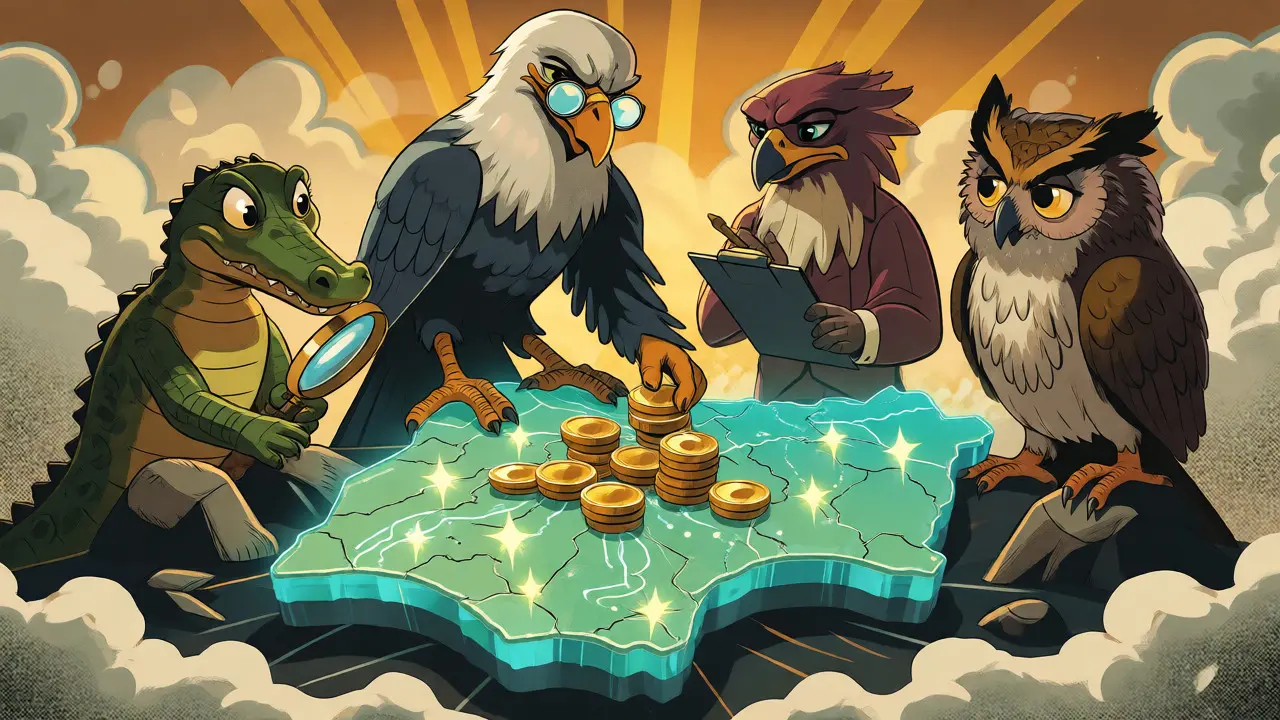
If you want to operate a crypto exchange in Nigeria today, you can’t just set up a website and start trading. All Virtual Asset Service Providers (VASPs) must register with the SEC. Platforms like Quidax and Busha have received early approvals, but the process is rigorous. The SEC conducts thorough vetting, which has caused some delays in licensing new entrants.
Why the delay? Because the stakes are high. The SEC now has the power to suspend company operations and even remove executives from their positions if they fail to comply. This isn’t a slap-on-the-wrist situation. Non-compliance carries heavy penalties, especially when combined with the new tax laws.
Taxation: The Silent Enforcer
While the ISA 2025 handles the operational side, the Nigeria Tax Administration Act (NTAA) 2025, signed in June 2025 and effective in 2026, handles the money. This act places the burden of compliance squarely on VASPs. You don’t just pay tax on profits; you must report transactions accurately.
The penalty structure is designed to hurt. If a VASP fails to comply with tax obligations, they face an initial penalty of ₦10 million ($6,693) in the first month. Every additional month of delay adds another ₦1 million ($669). For smaller startups, this could be fatal. For larger exchanges, it’s a significant operational cost that gets passed down to users through fees.
Why is the government so aggressive? Look at the numbers. Between July 2024 and June 2025, Nigeria received an estimated $92.1 billion in crypto value. That’s nearly double South Africa’s activity. The government realized that ignoring this flow meant losing billions in potential tax revenue. By regulating it, they capture it.

Is Crypto Legal Tender?
Here is a common misconception: Just because crypto is legal and regulated doesn’t mean it’s legal tender. You cannot walk into a supermarket in Lagos and demand to pay for your groceries in Bitcoin. The Nigerian naira remains the only legal tender. Crypto is recognized as a security or an asset, similar to how you hold shares in a company. You can trade it, invest in it, and use it in peer-to-peer agreements, but merchants are not obligated to accept it as official payment.
This status protects the CBN’s control over monetary policy. If every shop accepted Bitcoin, the CBN would lose its ability to influence inflation and interest rates effectively. So, while you can legally own and trade crypto, using it as everyday currency requires mutual agreement between buyer and seller, not statutory backing.
Practical Implications for Investors and Users
So, what does this mean for you? If you are a retail investor, your assets are safer than before. The requirement for VASPs to register with the SEC means these platforms must adhere to stricter consumer protection rules. The explicit ban on Ponzi schemes gives the EFCC more teeth to shut down fraudulent projects that promise unrealistic returns.
However, increased regulation also means increased surveillance. Your transactions are monitored for AML compliance. Large movements of funds may trigger reports to the NFIU. Privacy is lower than in unregulated markets, but legitimacy is higher. If you are planning to invest internationally, the ISA 2025 also provides guidelines for Nigerians investing in offshore securities, making it easier to diversify without falling afoul of local capital controls.
Looking Ahead: Stability or Stagnation?
Nigeria’s approach serves as a model for other African nations. By moving from prohibition to structured regulation, the country acknowledges that crypto is too big to ignore. The challenge now is implementation. Will the SEC’s licensing backlog clear up quickly? Will tax enforcement stifle innovation or fund infrastructure? These questions will define the next two years.
For now, the message is clear: The wild west era of Nigerian crypto is over. The rules are written, the referees are hired, and the field is marked. Whether you are trading, building, or investing, playing by the new rules is the only way to win.
Is cryptocurrency illegal in Nigeria in 2026?
No, cryptocurrency is not illegal in Nigeria. Since the signing of the Investments and Securities Act (ISA) 2025, digital assets are legally recognized as securities. However, they are not legal tender, meaning they cannot be used as official currency for settling debts, though private peer-to-peer trading is fully permitted.
Which agency regulates cryptocurrencies in Nigeria?
The Securities and Exchange Commission (SEC) is the primary regulator for cryptocurrency issuance, trading, and promotion. They work in coordination with the Central Bank of Nigeria (CBN), the Economic and Financial Crimes Commission (EFCC), and the Nigerian Financial Intelligence Unit (NFIU) to ensure comprehensive oversight.
Do I have to pay taxes on crypto profits in Nigeria?
Yes. The Nigeria Tax Administration Act (NTAA) 2025, effective in 2026, mandates taxation on cryptocurrency activities. Virtual Asset Service Providers (VASPs) are responsible for compliance, and failure to meet tax obligations results in significant penalties, starting at ₦10 million for the first month of non-compliance.
Can banks in Nigeria open accounts for crypto exchanges?
Yes, but only for licensed entities. Following regulatory updates in 2023 and reinforced by the ISA 2025, banks are allowed to provide accounts to Virtual Asset Service Providers (VASPs) that are registered and approved by the SEC. Unlicensed exchanges may still struggle to maintain formal banking relationships.
Are NFTs regulated in Nigeria?
It depends on their function. Artistic NFTs are generally not heavily regulated. However, NFTs marketed as financial products or investments fall under the SEC’s jurisdiction and must comply with securities regulations, including registration and disclosure requirements.

Comments (23)
musa farid
Finally someone gets it right!! 🇳🇬 The ban was a joke from day one and we all knew it. P2P volume went through the roof because Nigerians are hustlers. We don't need banks to tell us how to hold our money. Now with SEC stepping in, at least the scams get caught. But seriously, why so many agencies? EFCC, SEC, CBN, NFIU... too much noise for one asset class. Hope they don't kill the vibe with paperwork. 🙄
Mark Riquelme
The transition from prohibition to regulation is indeed complex but necessary for market maturity. It is worth noting that the ISA 2025 aligns Nigeria with international standards such as the FATF recommendations, which should facilitate cross-border transactions. However, the multi-agency oversight model requires careful coordination to avoid regulatory arbitrage or conflicting directives. Investors must remain vigilant regarding compliance requirements, particularly concerning AML/CFT protocols enforced by the NFIU.
Kyle Whitehead
bro the tax penalty is insane
10 million naira just for being late??
thats like 6k dollars
small startups gonna die
i mean good luck with that
regulation is fine but this feels like a cash grab honestly
why not phase it in
just saying
Dominic Hird
I appreciate the nuance here about NFTs. It’s refreshing to see a distinction between artistic value and financial speculation. That kind of clarity helps protect creators while keeping investors safe. It feels like a balanced approach, even if the implementation will be tricky. We have to remember that every jurisdiction is figuring this out in real time. Nigeria taking a structured step forward is encouraging for the whole continent.
Sagan Bogda
You missed the point about stablecoins. They aren't securities. They are payment instruments. Calling them digital assets under the same umbrella as Bitcoin is technically wrong. The CBN will handle those separately. Also, the table is misleading. SEC doesn't license exchanges alone; CBN approves the banking relationships first. You can't separate them like you did. Simple mistake but important for anyone actually running a business there.
Janine John
The legal distinction between 'legal tender' and 'regulated asset' is crucial for understanding monetary policy implications. While private peer-to-peer trading remains permissible, merchants retain the right to refuse cryptocurrency payments. This preserves the Central Bank's ability to manage inflation through interest rates and reserve requirements. Without this distinction, the naira would lose its sovereignty in everyday commerce.
Manish Pahuja
Love seeing Africa take the lead on this! 🌍 The energy in Lagos crypto scene is unmatched. Even during the ban, people were finding ways. Now with rules, it might slow down the wild growth but adds safety. Keep pushing forward!
Charlotte Owen
Regulation always lags behind innovation. By the time these laws are fully implemented, the technology will have moved on again. The focus on licensing VASPs creates barriers to entry that favor incumbents. New entrants will struggle to meet the ₦10 million penalty threshold for minor infractions. This isn't protection; it's consolidation.
Marc Kennedy
This is exactly what needed to happen! Clarity brings confidence. I know a few guys trading on Quidax who were terrified of doing something illegal. Now they can sleep better knowing there are actual rules. It’s going to attract more institutional money too. Big win for legitimacy! 🚀
Harmony Davidson
they're watching everything...
NFIU monitoring every transaction?
privacy is dead.
they want to track your wallet,
your IP,
your name.
it's not freedom anymore.
it's surveillance capitalism with extra steps.
don't believe the hype about safety.
safety means control.
control means they own your money.
mark my words.
one day they freeze accounts without notice.
and you'll have no recourse.
because the law says so.
the law written by people who hate decentralization.
we are just data points now.
sleep tight. 😶
Alexis Riggle
the tax administration act is the real driver here
not the sec
govt needs revenue
crypto is easy to tax if centralized
p2p is harder
so they force p2p onto licensed platforms
smart move financially
bad move for decentralization
simple economics
Tiffany Ngo
Look, I get it, regulation is needed, but let's be real. The government is trying to squeeze blood from a stone. $92 billion in inflows sounds great until you realize most of it is remittances disguised as crypto trades. If you tax that heavily, people just go back to informal channels or use USDT via WhatsApp groups. You can't regulate shadow economies with heavy-handed fines. It just drives activity underground. And please, stop calling it a 'securities framework.' Most retail users don't care about securities law; they care about sending money home cheaply. This guide is too academic for the average user.
HUDSON AKINO
Great breakdown! 👍 Just wanted to add that the KYC process on some local exchanges is still pretty rough. Even with licenses, user experience matters. If it's too hard to onboard, people leave. Hope the SEC focuses on consumer education too, not just penalties. Education reduces fraud faster than enforcement does. Good post though! 🙂
Joseph Brink
We confuse legality with morality. Is it moral to tax a tool that liberates people from failing state currencies? Regulation is often just a mechanism for the powerful to maintain status quo. By labeling crypto as a security, you strip it of its utility as money. You make it an investment vehicle for the wealthy, not a currency for the poor. The soul of crypto is dying under the weight of bureaucracy. We traded freedom for paper trails.
Heather Butcher
I love how this highlights the safety aspect for regular folks! My mom sends money using crypto sometimes and she was so scared before. Knowing there are rules makes her feel secure. It’s nice to see progress that actually helps families connect. ❤️
Ervin Kery
Wait... wait... wait!!!
Did they really say 10 MILLION NAIRA PENALTY???
That's not a fine, that's a ransom!
Who pays that???
Not me!!!
No way!!!
It's gonna bankrupt everyone!!!
Every single small trader!!!
And the delays???
Licensing backlog???
We're stuck in limbo!!!
Chaos!!!
Absolute chaos!!!
😱😱😱
Kelsey Hartwig
One must consider the epistemological implications of defining value through state-sanctioned frameworks. When the state asserts authority over digital representations of value, it reclaims the ontological ground of currency. Yet, this assertion creates a paradox: the medium intended to bypass central authority becomes dependent upon it for legitimacy. Thus, the regulated crypto asset ceases to be purely decentralized, becoming instead a hybrid entity subject to both code and statute. This duality may ultimately undermine the very ethos of blockchain technology.
Adam Barrett
It’s good to see balance. Some fear regulation kills innovation, others fear lack of regulation kills trust. This seems like a middle path. It takes courage to admit the old system failed and build a new one. Respect to the regulators for trying to keep up. Let’s hope it works for everyone involved. Peace. ✌️
Samantha Du-Cell
Good for them. Finally cleaning house. Too many charlatans selling air. If you can't comply with basic AML laws, you shouldn't be touching Nigerian money. Stop crying about privacy when you're probably hiding dirty money anyway. Get in line or get out. The rest of the world regulates their markets; why should Nigeria be different?
Jennifer Phipps
Super helpful guide! 🌟 Especially the part about NFTs. I was confused about whether my art pieces counted as investments. Glad to know artists are mostly safe. The tax info is scary but fair. Time to clean up my records! 💪
Tish Dalton
Hey, has anyone else noticed the delay in getting bank accounts approved? My friend applied months ago and still waiting. Seems like the bottleneck is real. Maybe start with smaller exchanges while the big ones sort out their paperwork? Don't give up though, the landscape is changing fast.
Manoj Ramachandran
Thank you for sharing this comprehensive overview. It provides valuable insight into the evolving regulatory environment. As an observer from India, I find the parallels interesting. Our RBI also took a cautious approach initially. Nigeria's shift towards structured regulation could serve as a case study for other emerging markets. Best wishes to the Nigerian crypto community.
Emily Sue
omg the tax thing is crazy
but i guess its better than being banned
at least we can trade legally now
hope it doesnt cost too much in fees tho
anyone know if binance is still working well there?