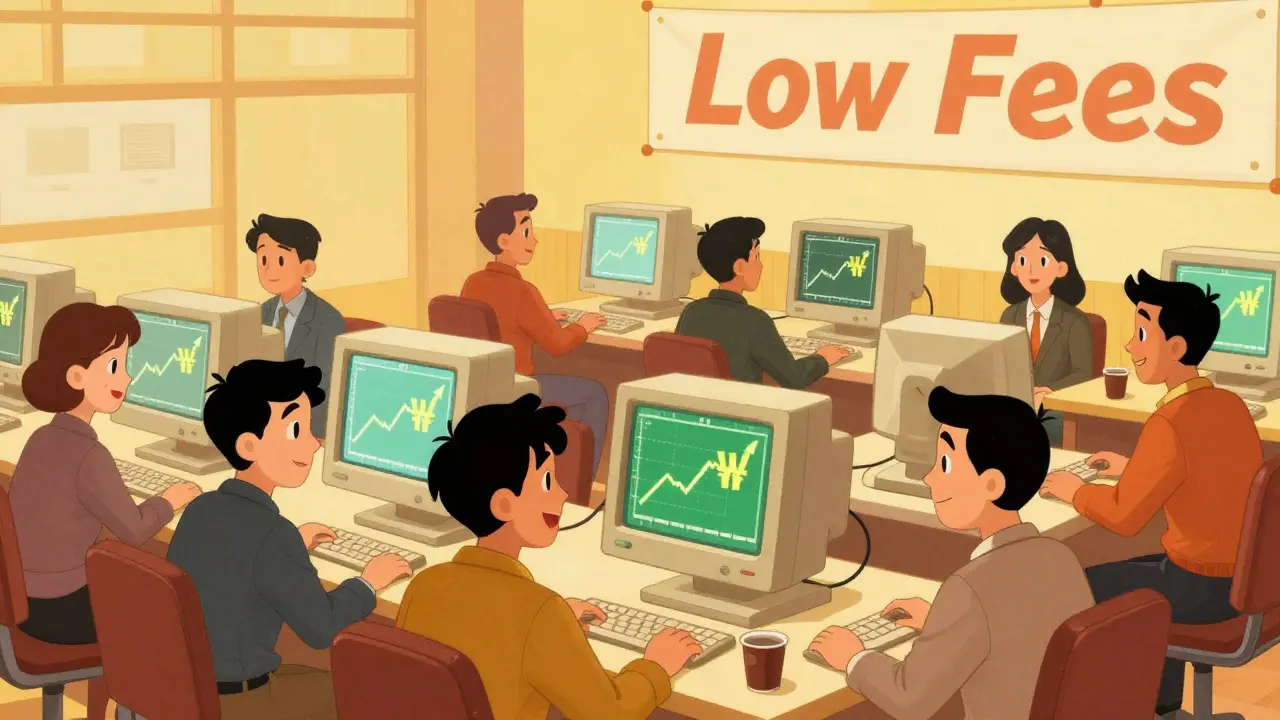
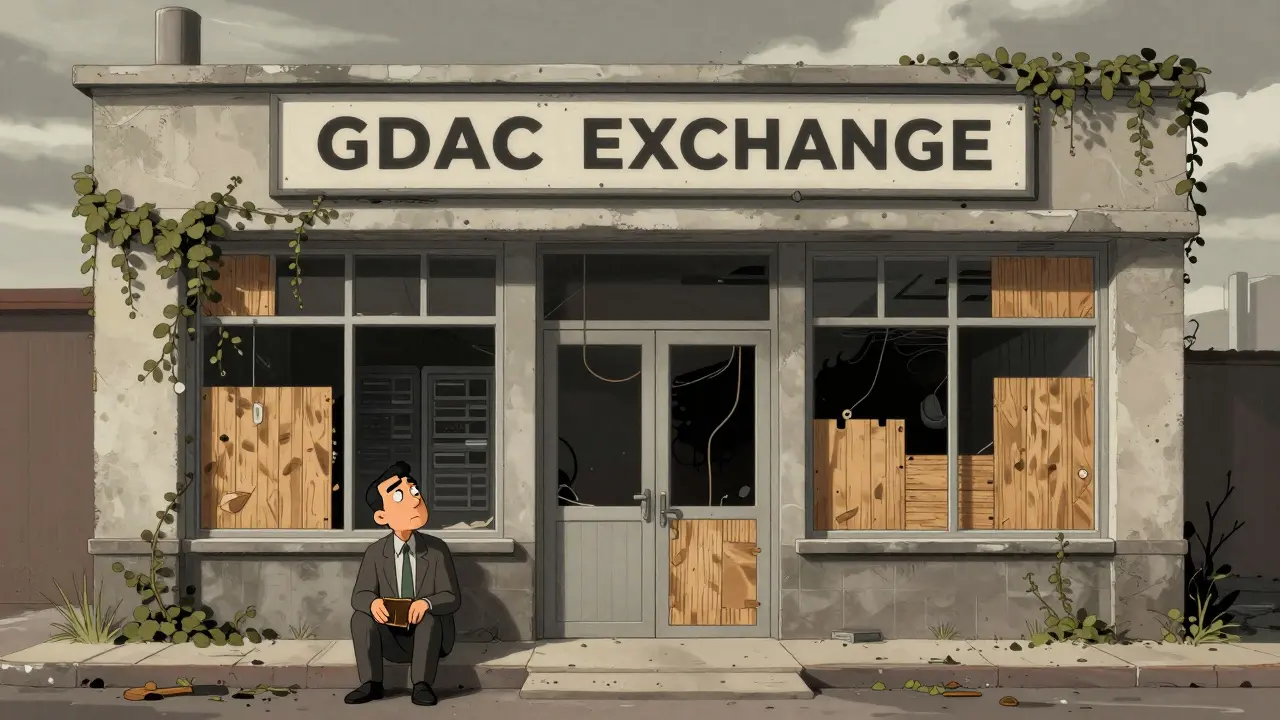
You might be searching for GDAC because you saw an old forum post praising its low fees, or perhaps you are one of the unfortunate traders still hoping to recover funds lost in April 2023. Here is the hard truth you need to hear immediately: GDAC is a permanently defunct cryptocurrency exchange that ceased all operations following a catastrophic security breach. You cannot sign up, you cannot trade, and you certainly cannot withdraw any assets that were sitting in their hot wallets at the time of the collapse. If you are looking for a place to park your Bitcoin today, look elsewhere. If you are looking for answers about what went wrong, keep reading.
The Short Answer: Is GDAC Safe?
No. Not anymore, and arguably not even before. The exchange, which operated primarily in South Korea from 2018 until its abrupt shutdown in 2023, serves now as a cautionary tale rather than a viable trading platform. While it once boasted competitive fees and a user-friendly interface built on TradingView infrastructure, its failure to implement robust security protocols led to the loss of nearly $13 million in user funds. This wasn't just a technical glitch; it was a systemic collapse driven by social engineering and poor risk management.
What Was GDAC? A Brief History
To understand why this matters, we have to look back at what GDAC tried to be. Founded in 2018, GDAC positioned itself as a legitimate, transparent player in the South Korean crypto market. Unlike many shady offshore platforms, they published their registered address and company details openly. They aimed to compete with giants like Coinbase but focused exclusively on the domestic KRW (Korean Won) market.
For a few years, it seemed to work. By 2021, reports indicated GDAC was among the leaders in the local market. They offered trading for approximately 27 cryptocurrencies-a small selection compared to global behemoths, but enough for retail investors. Their main selling point was cost. With maker and taker fees fixed at a flat 0.20%, they undercut competitors significantly. For context, Coinbase charged around 2.00% during similar periods. That 90% difference in fees attracted a steady stream of traders who wanted to maximize their margins on smaller trades.
The April 2023 Breach: How It Happened
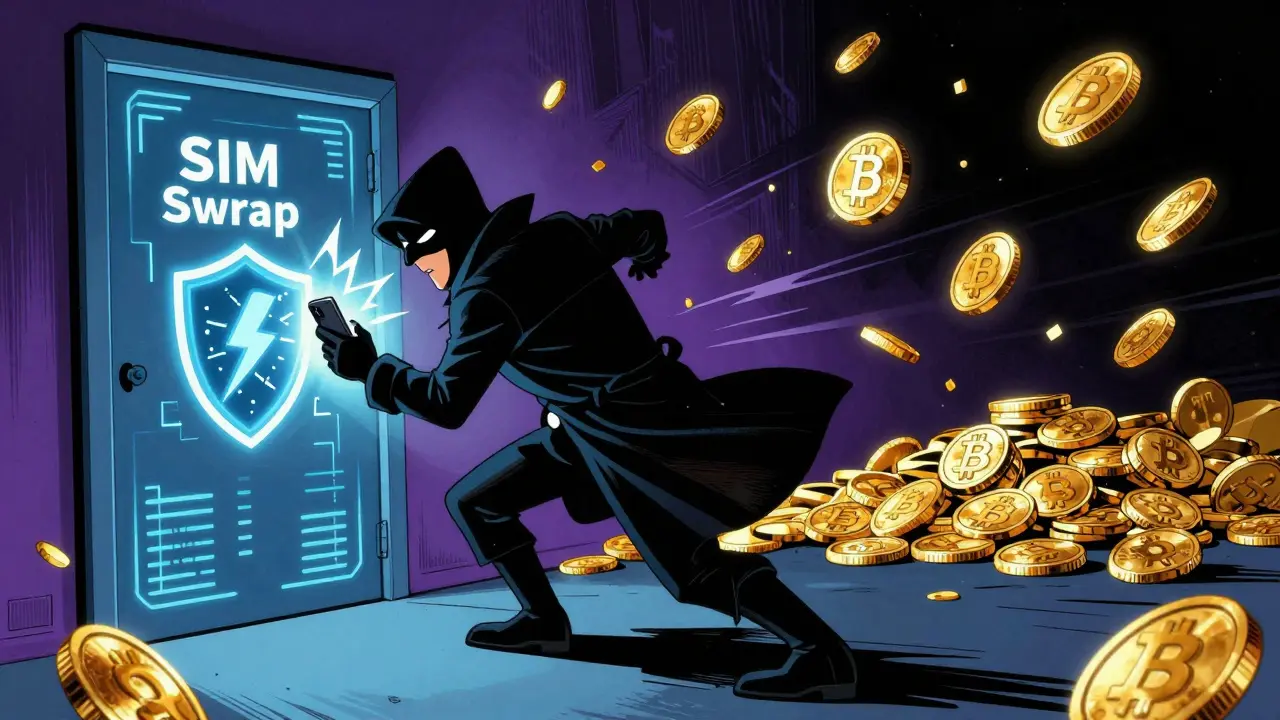
The downfall of GDAC wasn't caused by a complex quantum computing attack or a flaw in blockchain cryptography. It was caused by something much more human: social engineering and SIM swapping. In April 2023, hackers targeted both employees and high-value users. They didn't break into the code; they broke into the people managing the code.
According to reports from CoinDesk and subsequent security analyses, attackers used SIM swapping techniques to hijack phone numbers linked to two-factor authentication (2FA). Once they controlled the phone lines, they bypassed security layers designed to protect accounts. The result was devastating. Attackers gained access to GDAC's internal systems and drained nearly $13 million worth of cryptocurrency from the exchange's hot wallet. To put that in perspective, that represented roughly 23% of GDAC's total custodial assets.
Security experts later pointed out a critical mistake in GDAC's risk management: keeping such a large percentage of assets in a hot wallet (connected to the internet) instead of cold storage (offline). While some hot wallet balance is necessary for liquidity, 23% is dangerously high for an exchange handling millions in volume. When the door was kicked in, there was no vault to protect the bulk of the money.
Why GDAC Failed Where Others Succeeded
If you compare GDAC to other South Korean exchanges like Upbit or Bithumb, the differences become stark. Those platforms survived the same turbulent market conditions because they invested heavily in multi-layered security, regular audits, and strict compliance with the Financial Services Commission's regulations. GDAC, despite operating under these same laws, failed to meet the basic standards of employee training and password management.
| Feature | GDAC | Coinbase (Global Benchmark) | Upbit (Local Leader) |
|---|---|---|---|
| Status | Defunct (Shut Down) | Active | Active |
| Trading Fees | 0.20% | ~2.00% | Variable (~0.05-0.15%) |
| Fiat Support | KRW Only | USD, EUR, GBP, etc. | KRW |
| Crypto Listings | ~27 | 136+ | 400+ |
| Security Outcome | $13M Stolen, Closed | Multiple Audits, Active | Strict Compliance, Active |
The table above highlights the trade-off GDAC made. They offered lower fees and a simpler interface, but they lacked the depth of listings and, crucially, the security infrastructure of their peers. Their withdrawal fees were also higher (0.001 BTC equivalent vs Coinbase's lower rates), creating a confusing value proposition for advanced traders.
What Happened to User Funds?
This is the question that keeps former users awake at night. The short answer is grim: most funds were likely lost forever. After the hack, GDAC suspended operations and initiated an investigation with law enforcement. However, the exchange ultimately shut down permanently. There has been no announcement of corporate restructuring, no insurance payout, and no compensation plan for users.
Reports indicate that estimates of the stolen amount ranged from $10 million to $25 million across various cryptocurrencies. Because the funds were moved to unidentified wallets shortly after the breach, tracking them has proven difficult. While blockchain analysis firms can trace transactions, recovering the actual coins requires cooperation from other exchanges where the criminals might try to cash out-a process that is slow, uncertain, and rarely results in full repayment for victims.
User feedback archived from Reddit and Trustpilot prior to the platform's removal shows profound frustration. Users reported holdings ranging from $500 to $50,000 evaporating without recourse. Even before the hack, satisfaction scores were mixed, with some users citing stability issues and lack of a referral program. The final blow rendered all those complaints moot, as the platform simply vanished.
Lessons Learned: Protecting Yourself in 2026
The collapse of GDAC reinforces a core principle in cryptocurrency: "Not your keys, not your coins." Relying on a centralized exchange to hold your assets carries inherent risk, regardless of how reputable the company seems. Here is how you can avoid falling victim to a similar situation:
- Use Hardware Wallets: For long-term holdings, move your crypto off exchanges entirely. Devices like Ledger or Trezor give you sole control over your private keys.
- Verify Security Protocols: Before depositing funds, check if an exchange uses cold storage for the majority of assets. Look for proof of reserves and regular third-party security audits.
- Beware of SIM Swapping: Enable hardware-based 2FA (like YubiKey) rather than relying solely on SMS codes, which are vulnerable to the very attacks that doomed GDAC.
- Diversify Exchanges: Never keep all your eggs in one basket. Spread your assets across multiple reputable platforms to mitigate the risk of a single point of failure.
- Check Regulatory Status: Ensure the exchange is compliant with local financial regulations. In South Korea, this means checking registration with the Financial Services Commission.
Current Alternatives for South Korean Traders
If you were a GDAC user looking for a new home for your KRW-trading needs, several robust alternatives remain active. Upbit and Bithumb continue to dominate the local market with deep liquidity and stricter security measures. Korbit and Coinone also offer reliable services with extensive coin listings. Globally, Binance and Kraken provide options for those who can navigate international fiat on-ramps, though regulatory restrictions may apply depending on your residency.
When choosing a new exchange, do not just look at fees. A 0.20% fee is meaningless if the platform goes bankrupt tomorrow. Prioritize security history, transparency, and user support responsiveness. The GDAC incident proves that cheap trading costs are a poor substitute for safe custody.
Final Thoughts on the GDAC Collapse
GDAC started with good intentions, offering transparency and low costs in a crowded market. But in the crypto world, security is not a feature; it is the foundation. Without it, everything else crumbles. The exchange's inability to protect against sophisticated social engineering attacks exposed a fatal flaw in its operational model. For anyone still holding onto hope that GDAC will reopen, the reality is clear: the doors are closed, the funds are gone, and the lesson is learned. Move your assets to secure, regulated platforms, and never trust an exchange with more than you can afford to lose.
Is GDAC crypto exchange still operational in 2026?
No, GDAC permanently ceased operations in April 2023 following a major security breach. The platform is defunct, and no trading or account recovery services are available.
How much money was stolen from GDAC?
Approximately $13 million worth of cryptocurrency was stolen, representing about 23% of the exchange's total custodial assets. Estimates range between $10 million and $25 million depending on asset valuation at the time.
Will GDAC compensate users for lost funds?
There is no information indicating that GDAC will compensate users. The exchange shut down permanently, and law enforcement efforts to recover funds have had minimal success as of 2025.
What caused the GDAC hack?
The hack was primarily caused by social engineering and SIM swapping attacks that allowed hackers to bypass two-factor authentication. Poor employee training and inadequate password management protocols also contributed to the breach.
Are there safer alternatives to GDAC in South Korea?
Yes, major exchanges like Upbit, Bithumb, Korbit, and Coinone remain active and generally adhere to stricter security and regulatory standards in the South Korean market.
Did GDAC support US dollars?
No, GDAC exclusively supported the Korean Won (KRW) as its fiat currency, limiting its appeal to international traders outside of South Korea.

Comments (23)
JEVON HALL
man this is exactly why i keep telling people to use hardware wallets 😤 you cant trust these centralized exchanges with your life savings they are just glorified casinos with worse security than a screen door
Dr Lynea LaVoy
I completely agree with JEVON HALL here. It is heartbreaking to see how many retail investors lose everything because they don't understand the fundamental risk of custodial services. The 'not your keys, not your coins' mantra isn't just hype; it's survival advice in this space. We need to educate ourselves better before putting money into any platform that doesn't offer self-custody options.
Matthew Malone
Typical foreign exchange failure. If they followed US regulations and SEC guidelines, none of this would have happened. South Korea needs to step up their game instead of letting shady operators run wild while American investors stay safe on Coinbase and Kraken. 🇺🇸
aaliyah zahid
Oh please, Matthew Malone, as if US exchanges are immune to hacks or regulatory capture? Just because something happens overseas doesn't mean our local platforms are perfect utopias. Let's focus on the actual security failures like SIM swapping rather than playing nationalistic blame games. It's pretty childish honestly.
dan kaffeman
You're all missing the bigger picture here. This isn't about bad luck or simple hacks. This is what happens when you let unregulated entities handle real money without proper oversight. The elites who run these exchanges know exactly what they are doing-they skim off the top and leave the little guys holding the bag when things go south. Wake up sheeple.
Meg Gran
oh my god stop with the conspiracy theories already dan kaffeman its so exhausting. it was literally sim swapping which is a known vulnerability for sms 2fa. nobody is skimming off the top in secret its just incompetence and poor security practices. get over yourself and read the article next time before typing nonsense
Alexander DeVries
Meg Gran has a point. While skepticism is healthy, attributing every failure to a grand conspiracy ignores the mundane reality of human error and technical debt. GDAC failed because they kept too much in hot wallets and didn't train their staff. That is a preventable operational failure, not a shadowy plot. Let's learn from the facts presented in the review.
Mark Corpuz
The comparison table in the article is quite illuminating. It clearly shows that GDAC was competing on price rather than security infrastructure. In the financial sector, especially crypto, security should always be the primary differentiator, not fee structures. A 0.20% fee is irrelevant if the platform ceases to exist overnight.
Steven Jacobowitz
i think we need to talk more about the social engineering aspect because that is where most people fail personally too. hackers dont need to break encryption they just need to trick you into giving them your codes. i lost some funds once because i clicked a phishing link thinking it was from support. education is key here folks
Yogendra Dwivedi
Steven Jacobowitz raises an important point about personal responsibility in digital security. Many users underestimate how vulnerable SMS-based two-factor authentication is to SIM swapping attacks. Transitioning to hardware keys like YubiKey or using authenticator apps can significantly reduce this risk. It is a small step that makes a huge difference.
Sylvia Mossman
Everyone is acting like this is a tragedy but really it is just capitalism working as intended. Weak companies die. Strong ones survive. GDAC was weak. They had poor security. They got hacked. End of story. Stop crying about it and move on to better platforms. The market corrects itself.
Alexis Abster
Sylvia Mossman, that is incredibly callous. These are real people who lost their life savings, retirement funds, or tuition money. Saying 'stop crying' ignores the human impact of financial fraud. Yes, the market corrects itself, but the victims do not bounce back easily. Empathy costs nothing and should be standard in these discussions.
Brad Ranks
I remember when GDAC was still around. I used it for a bit because the fees were low but I always felt uneasy about the interface. It looked cheap compared to Upbit. I moved my funds out a month before the hack by pure instinct. Lucky guess or good intuition? Who knows but glad I am not one of the victims now.
Lee Paige
Brad Ranks, your luck is suspicious. Coincidence? Or did you have inside information? The timing of your exit suggests you knew something others didn't. The fact that no one else saw the signs until after the collapse makes me wonder if there was insider trading involved in the final days. Transparency is key.
Caitlin Donahue
honestly im just tired of seeing these articles every few months. another exchange goes down another group of people lose money. its like we never learn. why do we keep trusting these platforms with our assets? its basic common sense to use cold storage but ppl just want easy buttons and end up getting screwed
Karthikeyan S
Caitlin Donahue you are so naive 😡 the system is designed to screw you. exchanges are fronted by criminals who steal from you slowly through fees and then take the rest in a big hack. you think moving to a hardware wallet saves you? no you will just lose your seed phrase and cry harder. enjoy your losses 🤡
Dinesh Pattigilli
Karthikeyan S is being toxic as usual. Hardware wallets are secure IF you follow best practices. Losing a seed phrase is user error, not a flaw in the technology. Blaming the tool for the user's incompetence is lazy analysis. GDAC failed because of corporate negligence, not because crypto is inherently evil. Learn to distinguish between the two.
Madhu Menon
The philosophical implication here is profound. We place our trust in digital abstractions that have no physical form. When that trust is broken, we realize the fragility of our modern financial systems. GDAC represents the hubris of believing technology can eliminate human greed and error. It cannot. We must remain vigilant. 🤔
Narendra Kulkarni
Madhu Menon makes a deep point. Its scary how much we rely on these apps without understanding whats happening behind the scenes. I wish more people would read articles like this before signing up. Better safe than sorry right? Hope everyone stays safe out there.
verna kennedy
This article is well written but it feels a bit late to the party. Most serious traders already knew GDAC was risky. The ones who got burned were likely newbies chasing low fees without reading the fine print. It is unfortunate but ultimately a lesson in due diligence. Always check the regulatory status first.
Caralee Robertson
verna kennedy you sound so smug about it. these werent just newbies some were long term users who trusted the platform. its not fair to victim blame like that. sure due diligence is important but even experienced people can be caught off guard by sophisticated attacks like sim swapping. lets be kinder ok?
Greg Lewis
Caralee Robertson you are too sensitive. Life is hard. You lose money you learn. Why are we coddling people? If you cant handle losing your investment in crypto maybe you shouldnt be in crypto. It is a high risk environment. Deal with it. No one owes you anything.
Erik Kirana
GREG LEWIS IS AN IDIOT 😡 He thinks he is so tough but he probably keeps his Bitcoin on Binance and wonders why he cant withdraw during volatility. Real power comes from self custody. Use a Ledger. Write down your seed phrase on steel. Hide it in a safe. Then come back and tell me about risk tolerance.