Remember the early days of Play-to-Earn (P2E) gaming? Players rushed in, minted assets, earned tokens, and cashed out. For a few months, it looked like a golden age. Then, the music stopped. Prices crashed, new players vanished, and servers went quiet. Why? Because the economic engine behind those games was broken from day one.
This isn't just bad luck. It's a failure of Tokenomics, specifically how developers designed the flow of value within their ecosystems. In traditional gaming, money flows one way: you pay the developer, and they give you entertainment. In GameFi, that flow is circular, complex, and often fragile. If you want to build or invest in a blockchain game that lasts beyond six months, you need to understand the mechanics that keep an economy alive.
The Core Pillars of Gaming Tokenomics
At its heart, tokenomics is the study of how tokens are created, distributed, and destroyed. In a video game, this translates to three main asset classes that work together-or tear each other apart.
First, there are Utility Tokens. These are the fuel. You use them to buy potions, repair weapons, or enter tournaments. They have high velocity because they are constantly spent and re-entering circulation. Second, we have Governance Tokens. These act as shares in the company. Holders vote on future updates, fee structures, and treasury spending. They are meant for long-term holding, not daily transactions. Finally, there are Non-Fungible Tokens (NFTs). These represent unique ownership-your sword, your land plot, your avatar. Unlike utility tokens, NFTs are scarce by design. Their value comes from rarity and utility within the game world.
| Token Type | Primary Function | Supply Model | Risk Factor |
|---|---|---|---|
| Utility Token | In-game purchases, fees | Often inflationary (earned via gameplay) | High inflation if sinks are weak |
| Governance Token | Voting rights, staking rewards | Capped or deflationary | Price volatility affects confidence |
| NFT | Asset ownership, status, yield generation | Fixed or generative (minted slowly) | Liquidity traps during market downturns |
The magic happens when these three interact. A player uses their NFT (a farming robot) to generate Utility Tokens. They stake Governance Tokens to boost that yield. If the balance between earning (sources) and spending (sinks) is off, the whole system collapses.
The Inflation Trap: Why Most Games Fail
Let’s talk about the elephant in the room: inflation. In a fiat economy, central banks manage supply carefully. In most early GameFi projects, the "central bank" was the code itself, which printed money every time someone logged in.
Imagine a game where playing for an hour earns you $5 worth of tokens. Early adopters rush in. But what happens when 100,000 people join? Suddenly, the daily supply of tokens triples. If the demand doesn't triple at the same speed, the price per token crashes. Now, instead of earning $5, you earn $0.50. Players quit. The economy dies.
This is known as a Death Spiral. It occurs when the incentive to earn outweighs the cost to play. To fix this, developers must introduce friction. Friction sounds negative, but in economics, it’s necessary. It means making it harder to extract value without adding real effort or risk.
Strategies to combat inflation include:
- Durability Mechanics: Your tools break. You must spend tokens to repair them. This acts as a sink, removing tokens from circulation.
- Energy Systems: Limit how much you can farm per day. This caps the maximum daily emission of tokens.
- Off-Chain Resources: Not everything needs to be an NFT. Basic materials can exist off-chain, only upgrading to on-chain NFTs when rare enough. This reduces gas costs and prevents oversaturation of tradable assets.
Sinks vs. Sources: Balancing the Ledger
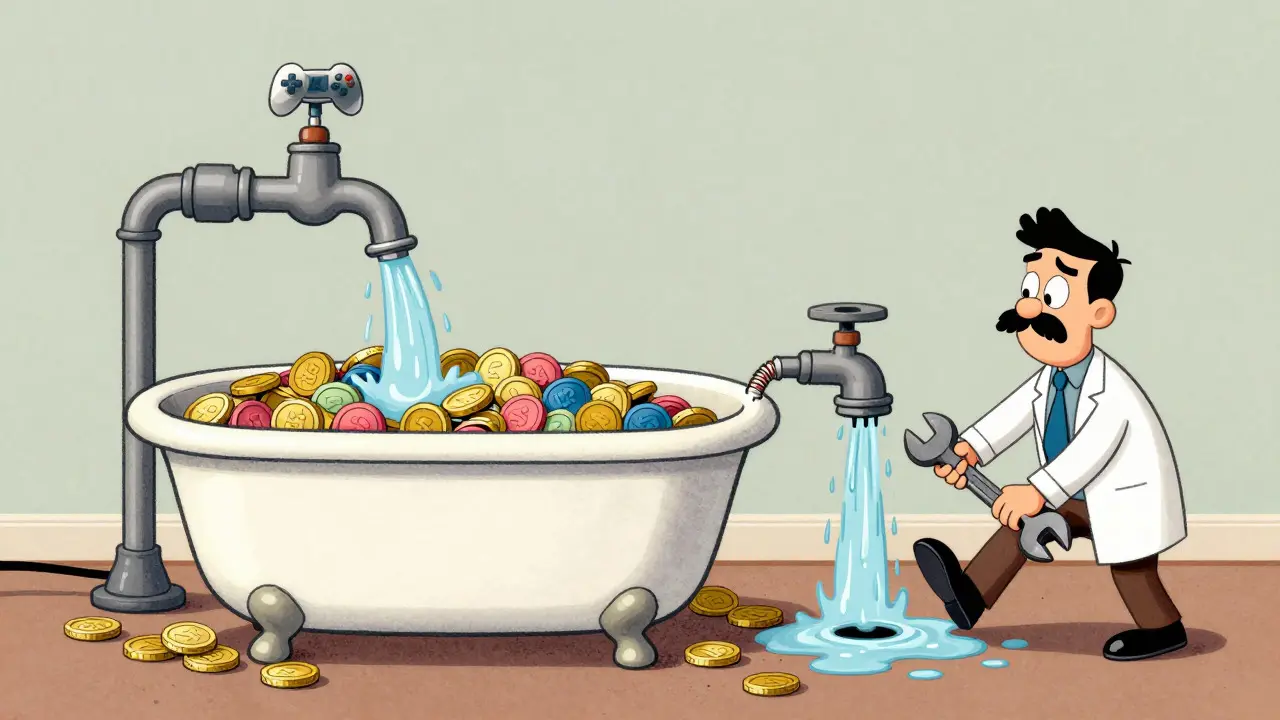
To maintain stability, every token emitted (source) must have a corresponding reason to be removed (sink). Think of it like a bathtub. The faucet is the source; the drain is the sink. If the faucet runs faster than the drain, the tub overflows (inflation). If the drain is too big, the tub stays empty (deflation, which kills engagement).
Common sources include quest rewards, staking yields, and airdrops. Common sinks include transaction fees, crafting costs, character upgrades, and marketplace taxes.
A sophisticated approach involves dynamic sinks. For example, if the token price drops below a certain threshold, the game automatically increases the cost of repairs or reduces quest rewards. This self-correcting mechanism helps stabilize the economy without requiring constant manual intervention from developers.
The Role of DeFi Mechanisms
Modern GameFi doesn't exist in a vacuum. It integrates deeply with Decentralized Finance (DeFi). This connection provides liquidity but also introduces external risks.
Staking is the most common bridge. By locking up tokens, players reduce the circulating supply, which can help support the price. In return, they receive rewards. However, staking must be designed carefully. If staking yields are higher than active gameplay earnings, everyone will just sit back and stake, leading to a ghost town in the actual game.
Liquidity Pools allow traders to provide pairs of tokens (e.g., USDC/GameToken) to facilitate trading. Healthy liquidity ensures that when a player wants to sell their earnings, they can do so without crashing the price. Low liquidity leads to high slippage, meaning players get less money than expected, which discourages participation.
Another emerging trend is Buyback-and-Burn. Here, the game treasury uses a portion of its revenue (from NFT sales or fees) to buy back utility tokens from the open market and destroy them. This permanently reduces supply, creating deflationary pressure that can increase token value over time.
Fractionalization and Accessibility
One barrier to entry in NFT games is the high cost of premium assets. A powerful sword might cost $500, pricing out casual players. This is where Fractional NFTs come in.
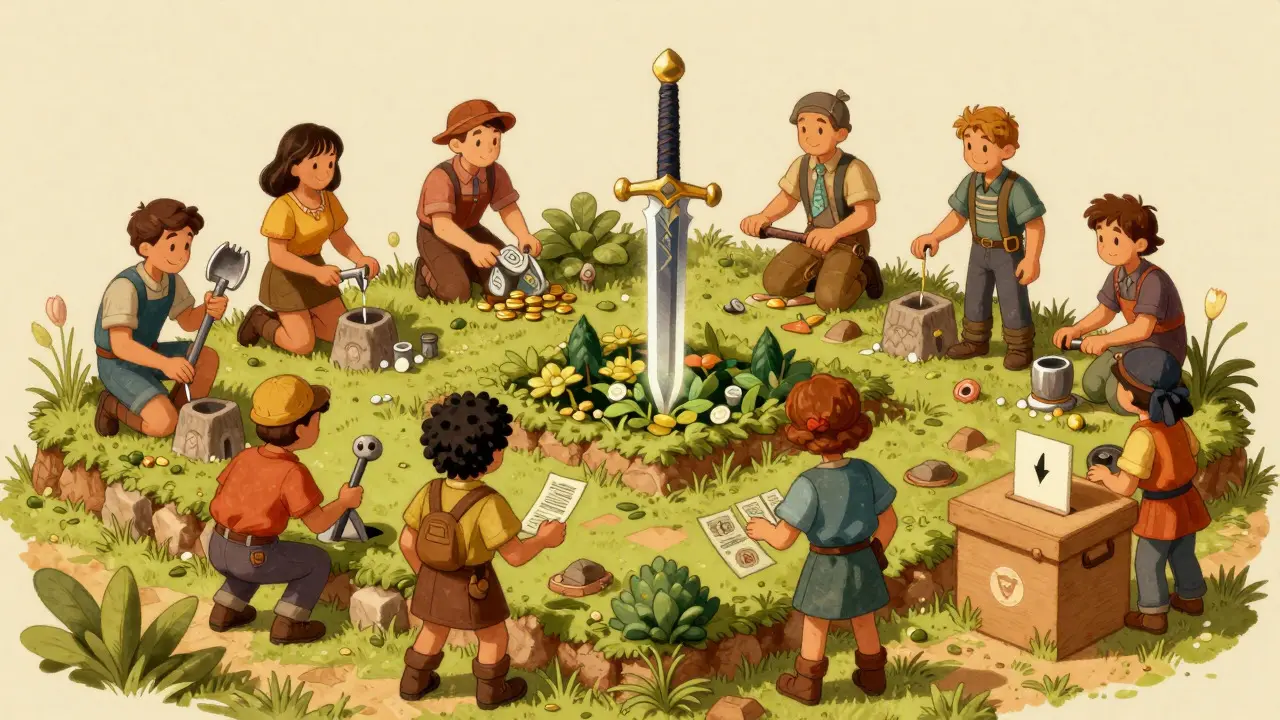
By splitting a single high-value NFT into 100 smaller shares, developers allow players to own a piece of the action. If that sword generates rental income, the owners share the profits. This democratizes access and creates a deeper market. More participants mean more liquidity, which stabilizes prices. It also allows for social investment groups, where communities pool resources to own top-tier assets together.
External Market Risks
No matter how perfect your internal tokenomics are, your game lives on a blockchain. That means you are exposed to Systemic Risk.
If the underlying chain (like Ethereum or Solana) sees a massive drop in value, or if the broader crypto market enters a bear cycle, your game’s token will likely follow. Player confidence is tied to perceived value. When prices drop, players panic-sell. This creates a feedback loop that can crush even well-designed economies.
To mitigate this, successful projects focus on utility over speculation. If a token is only valuable because people think it will go up, it will crash when sentiment shifts. If a token is valuable because it’s required to play the best game on the market, it retains intrinsic value regardless of market conditions.
Designing for Long-Term Sustainability
The goal of modern GameFi tokenomics is not to maximize short-term gains but to create a sustainable ecosystem. This requires a shift in mindset from "financial product" to "entertainment product with financial features."
Developers should prioritize fun first. If the game isn't enjoyable, no amount of token engineering will keep players engaged once the easy money dries up. The tokens should enhance the experience, not replace it. Governance should empower the community, giving them a real voice in the game's direction. And scarcity should feel earned, not arbitrary.
As we move further into 2026, the winners will be the studios that treat their economy as a living organism. They monitor metrics closely, adjust sinks and sources dynamically, and integrate DeFi tools wisely. They understand that trust is the most valuable currency of all.
What is the difference between utility and governance tokens in gaming?
Utility tokens are used for in-game actions like buying items or paying fees. They are consumed regularly. Governance tokens represent ownership stakes, allowing holders to vote on project decisions. They are typically held long-term and do not have direct in-game utility.
How do developers prevent hyperinflation in play-to-earn games?
Developers prevent inflation by creating strong "sinks"-mechanisms that remove tokens from circulation. Examples include durability costs for equipment, energy limits on farming, and buyback-and-burn programs using treasury funds. Balancing these sinks against reward sources is critical.
Why is liquidity important for a gaming NFT economy?
Liquidity allows players to easily buy and sell assets without drastic price changes. High liquidity ensures stable prices and encourages trading. Without it, players may struggle to exit positions, leading to lost confidence and reduced participation.
What are fractional NFTs and how do they help?
Fractional NFTs split a high-value asset into smaller, tradable shares. This lowers the barrier to entry, allowing more players to participate in owning premium assets and sharing in their rewards, thereby increasing overall market depth and accessibility.
Does the performance of Bitcoin affect GameFi tokens?
Yes. Most GameFi tokens are correlated with broader crypto market trends. A significant drop in Bitcoin or Ethereum prices often leads to decreased investor confidence and lower valuations for gaming tokens, regardless of the game's internal health.