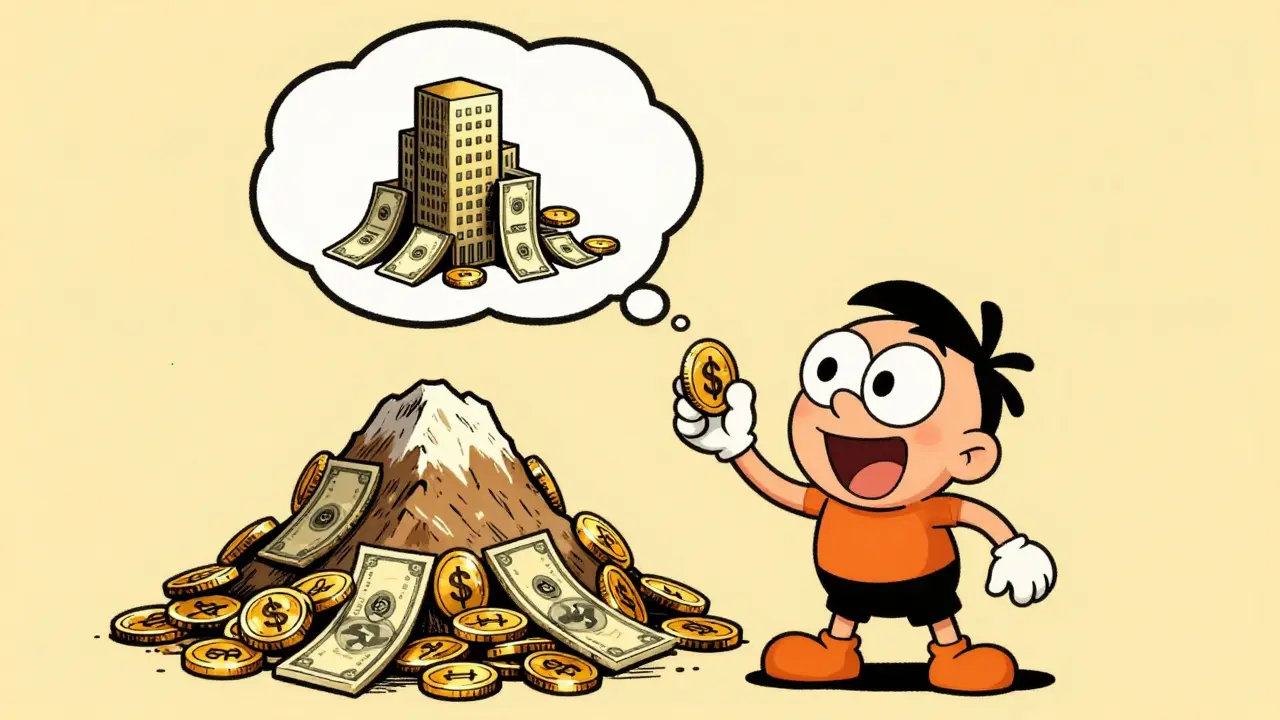
Imagine putting a single dollar into an account and waking up to find you've made over $3,800 in one day. That sounds like a dream, right? But in the world of crypto, when a promise sounds too good to be true, it usually is. Safuu (SAFUU) is a decentralized financial asset launched in February 2022 that claims to offer astronomical rewards through an automatic staking mechanism. While the name suggests safety (playing on the common crypto term "SAFU"), the actual data tells a much more cautionary story.
The Basics of the Safuu Autostaking Protocol
At its core, Safuu operates using the Safuu Autostaking Protocol (SAP). This is marketed as a DeFi 2.0 protocol, meaning it's part of a second wave of decentralized finance projects trying to fix the flaws of earlier versions. The main draw is "automatic staking." Instead of sending your coins to a third-party platform or locking them in a complex smart contract, the protocol claims to compound your rewards directly in your wallet.
To keep the economy balanced, the project introduced two main features:
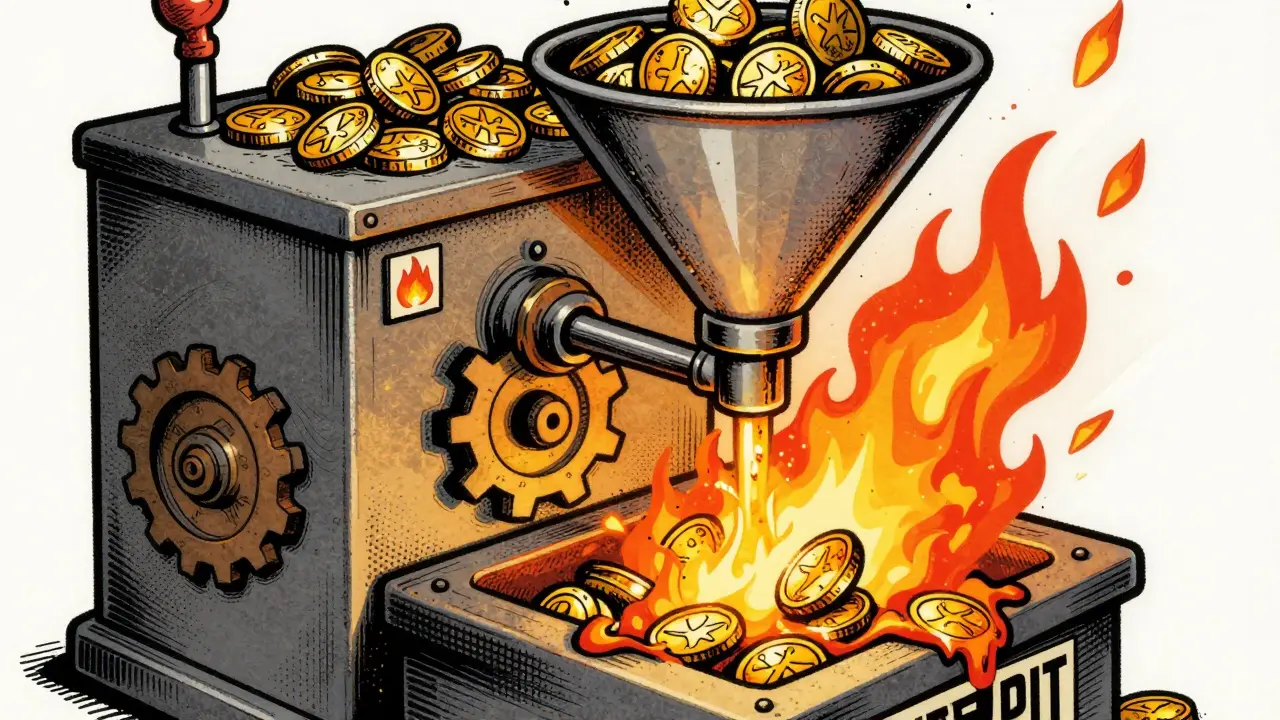
- The Fire Pit: An automatic token burn system that allegedly destroys 2.5% of all market sales to reduce supply and theoretically push the price up.
- Safuu Insurance Fund (SIF): A reserve designed to maintain value stability and ensure that the high staking rewards can actually be paid out.
The token lives on the BNB Chain, which allows for faster and cheaper transactions than the Ethereum network. However, while the technical setup is standard, the promises made by the anonymous team behind the project are where things get questionable.
The Math Behind the 382,945% APY
The most shocking part of the Safuu (SAFUU) pitch is the claimed 382,945% Annual Percentage Yield (APY). To put this in perspective, a typical high-yield savings account at a bank might give you 4% or 5% a year. Safuu claims to give you thousands of times that.
Let's do the math. A daily return of roughly 1,049% means that if you invested $1, you would theoretically have over $1.7 billion in just 30 days. In any legitimate financial system, this is mathematically impossible. When a project promises returns like this, it often signals a high-risk model where new investors' money is used to pay old ones-a classic red flag for fraud. Even industry veterans like Michael Saylor have warned that any project promising annual returns over 100% should be treated as a probable scam.
Price Performance and Market Reality
If you look at the charts, the life of SAFUU has been a rollercoaster that only went down. Shortly after its launch in early 2022, the token hit an all-time high of $213.72. For a brief moment, early speculators were making money. But then the crash happened. By December 2025, the price plummeted to around $0.16.
That is a 99.92% drop from its peak. For most people, this means their investment didn't just shrink; it essentially vanished. While the project has tried to pivot into a community-driven ecosystem called SAFUUX (SFX), there is very little evidence that this transition has brought any real value back to the holders.
| Feature | Safuu (SAFUU) | Lido / Rocket Pool |
|---|---|---|
| Typical APY | 382,945% (Claimed) | 3% - 8% (Realistic) |
| Transparency | Anonymous Team | Publicly Audited / DAO |
| Market Cap | Effectively $0 | Millions to Billions |
| Risk Level | Extreme / High Probability Scam | Moderate (Smart Contract Risk) |

Red Flags and User Warnings
The technical side of SAFUU is plagued by discrepancies. Some platforms report a max supply of 3.25 billion tokens, while others say it's only 431,224. When the basic numbers of a project don't match across major trackers like Binance or CoinStats, it's a sign of poor management or intentional deception.
Users have shared their nightmares on platforms like Reddit and the Binance Community Forum. Common complaints include:
- Phantom Rewards: Investors reporting they held tokens but never saw the promised "automatic" staking rewards.
- Liquidity Traps: Users claiming it is impossible to sell their tokens back into a usable currency.
- Broken Features: Reports that "The Fire Pit" burn mechanism doesn't actually work when checked on the blockchain.
The community is also shrinking. A Telegram channel that once had over 5,000 members has dwindled to around 1,200, and social media engagement is nearly dead. This usually happens when the "hype" phase of a project ends and people realize their money is gone.
Is it Worth the Risk?
For 99% of people, the answer is a hard no. Safuu fails every test of a legitimate investment. It lacks a transparent whitepaper, has no institutional backing, and its yield promises defy the laws of economics. A research study from UC Berkeley noted that over 92% of tokens promising APYs above 1,000% disappear within 18 months. Safuu fits this pattern perfectly.
If you are a professional gambler or a speculative trader who enjoys extreme volatility, you might see this as a game. But for anyone looking to preserve capital or generate a reliable income, this is a danger zone. The European Banking Authority has even listed it as a high-probability scam in its fraud monitor.
What exactly is the Safuu Autostaking Protocol?
It is a DeFi system on the BNB Chain that claims to automatically compound staking rewards for token holders directly in their wallets, eliminating the need for third-party staking platforms.
Is the 382,945% APY real?
Mathematically, no. Such a return would turn a tiny investment into billions of dollars in a month, which is impossible in any real financial system. It is widely considered a red flag for a scam.
Where can I trade SAFUU?
While some decentralized exchanges may list it, major platforms like Binance have explicitly stated that the coin is not listed for their trading services. Many users report difficulty selling the token.
What happened to the price of SAFUU?
After hitting a peak of $213.72 in April 2022, the price crashed by over 99.9%, falling to roughly $0.16 by late 2025.
What is the Safuu Insurance Fund (SIF)?
The SIF is marketed as a reserve to stabilize the token's value and support rewards. However, security experts warn that it lacks transparency and is likely a marketing gimmick.



Comments (14)
daniella davis
honestly its just embarrassing that ppl still fall for this stuff
like do you even know how basic economics works or are you just that desperate for a moonshot
total amateur hour
Prasanna Shembekar
omg i actually lost money on this and i am literally shaking right now
Jessie Tayaban
I totaly agree!!! It's just so wild how they can get away with these claims for so long... I mean seriously 300k percent?? Its just a totaly blatant scam and its heartbraking to see people lose thier savings over a trend!
Emily H
It is imperative to exercise extreme caution when encountering assets that promise returns of this magnitude. Such astronomical figures are fundamentally incompatible with sustainable financial growth and almost certainly indicate a Ponzi structure. I would strongly suggest that any individual seeking exposure to decentralized finance focus their efforts on audited protocols with proven track records and transparent governance models to ensure the preservation of their principal capital.
Stanly Hayes
Get a clue people! Only a moron thinks a 380k APY is legit. Use your brain for once and stop chasing these fake-ass coins before you end up broke!
Lela Singh
Absolute carnage! This is a textbook rug-pull with all the flashy bells and whistles to distract you from the void where the money should be!
Terrance Hausmann
I totally get why the allure of fast money is so strong, especially when you're just starting out in the crypto space and everything feels like it could explode overnight, but I've always found that a slower, more measured approach to investing usually pays off in the long run because it keeps you from making the kind of emotional decisions that lead to these kinds of traps.
Will Dixon
just dont buy it guys its a trap
Artavius Edmond
Yeah man, it's a rough lesson for some, but at least we're talking about it now so others don't make the same mistake. Just stay chill and stick to the basics.
Jason Davis
the bnb chain is grate for fees but thats exactly why scammers love it cuz they can deploy these junk tokens so cheaply. its basically a playground for bad actors these days.
Amanda Faust
basic liquidity trap 101 honestly no one who knows a thing about smart contracts would have touched this
Rebecca Violette
i feel so empty after reading this like why is the world so cruel and why do people keep lieing for money its just so sad
Swati Sharma
The lack of a transparent whitepaper is a huge red flag for anyone tracking the tokenomics and the systemic risk here is just too high. We should focus on high-conviction assets with actual utility instead of these inflationary tokens that just create a death spiral for the holders.
Agnessa Dale
Still hopeful that people will learn from this and find better projects!