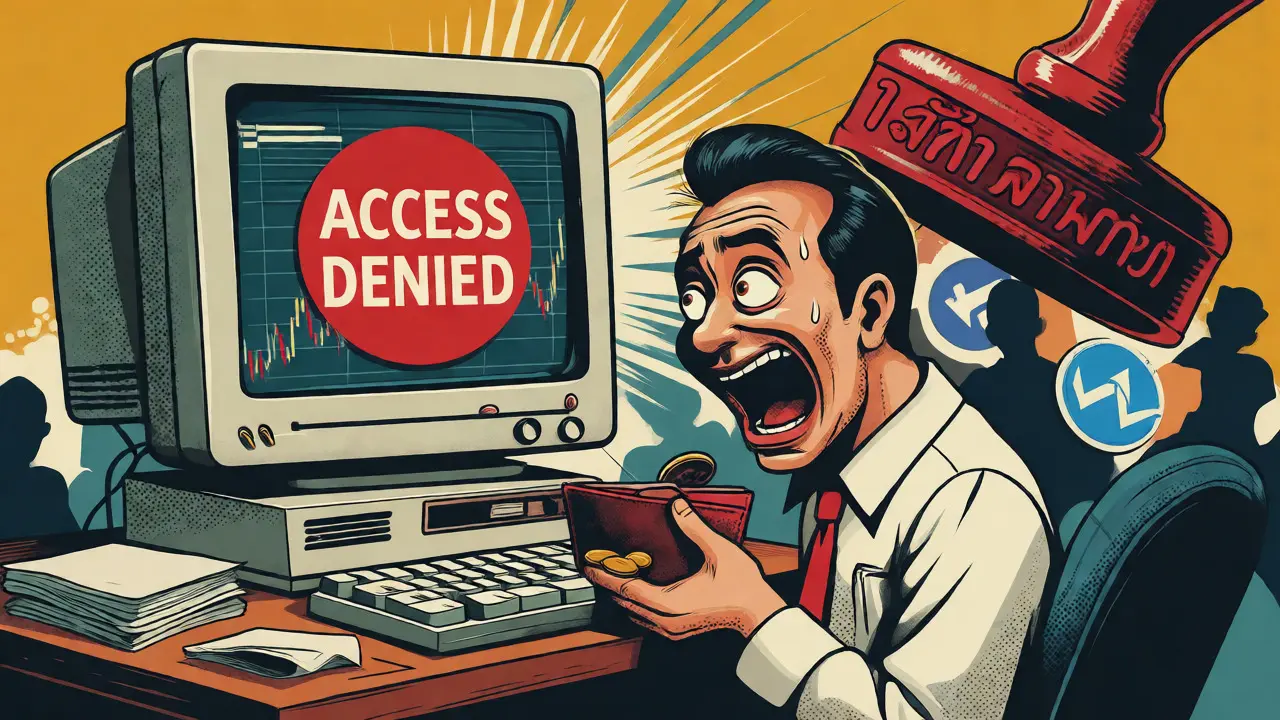
Imagine waking up to find your favorite crypto exchange suddenly inaccessible. No warning signs, just a blank screen or a message telling you the site is down for maintenance that never ends. For thousands of traders in Thailand, this became reality in mid-2025. The Thai Securities and Exchange Commission (SEC) cracked down hard on unlicensed foreign peer-to-peer (P2P) cryptocurrency platforms, effectively banning major players like Bybit, OKX, and CoinEx from operating within the country.
This wasn't just a minor regulatory tweak; it was a decisive move to tighten control over the digital asset market. If you're trading in Thailand or dealing with Thai counterparts, understanding these rules is no longer optional-it's essential for keeping your funds safe and your business legal. Let's break down exactly what happened, why it matters, and how you can navigate this new landscape without losing your mind or your money.
The Shockwave: When Major Exchanges Went Dark
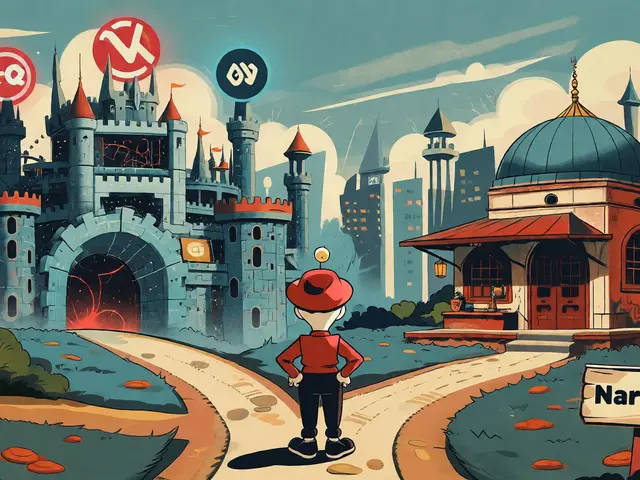
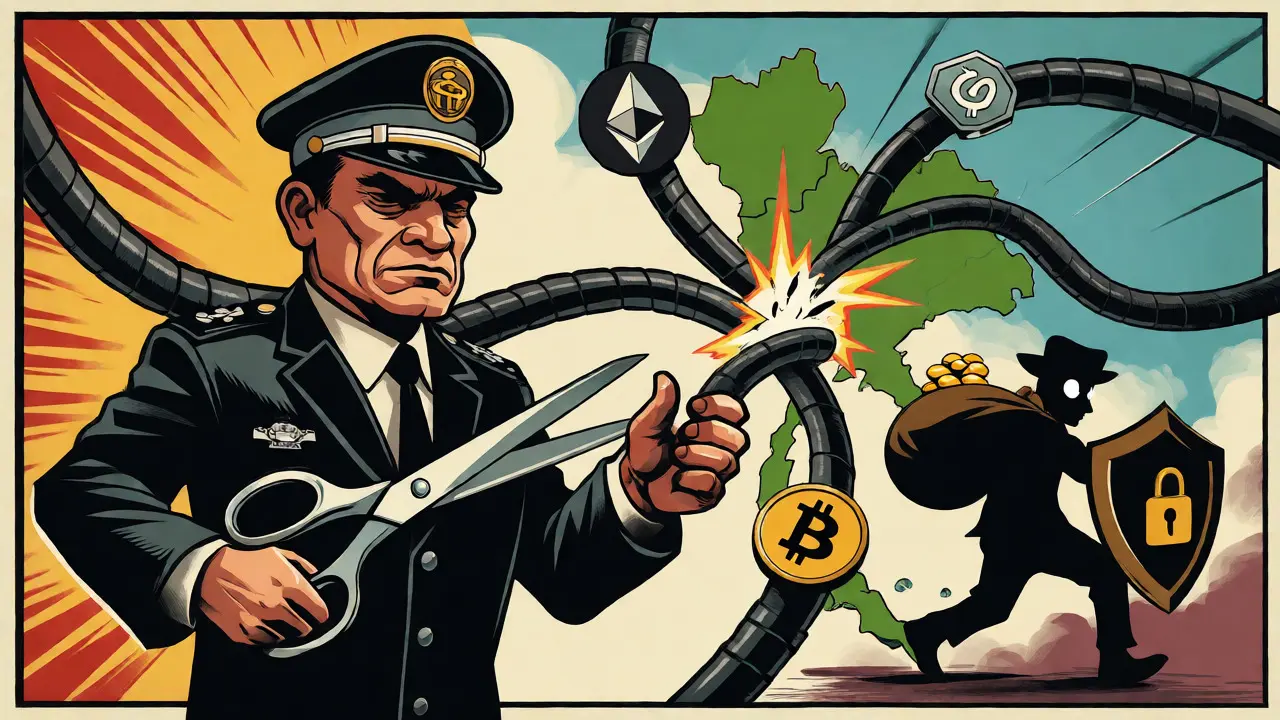
In June 2025, the dust settled after the Royal Decree on the Operation of Digital Asset Businesses mandated strict licensing for all crypto platforms targeting Thai users. The result? A nationwide block on five major exchanges: Bybit, 1000X, CoinEx, OKX, and XT.COM. These weren't small, obscure sites. They were giants in the Asian crypto scene, offering deep liquidity and diverse trading pairs that local exchanges often couldn't match.
The timing was brutal for many. The SEC announced the restrictions on May 29, giving investors barely a month to withdraw their assets before the shutdown date of June 28. One month. Think about that for a second. If you had significant holdings locked in staking contracts or pending withdrawals, you were scrambling against the clock. Many users reported delays and technical glitches during the final withdrawal rush, adding panic to an already stressful situation.
Why Did Thailand Pull the Trigger?
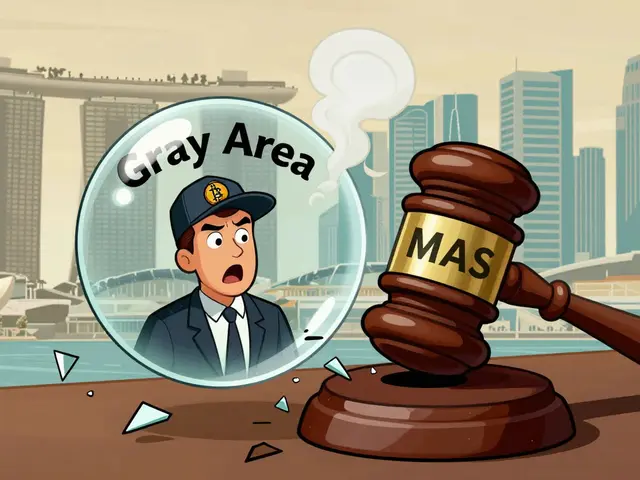
You might wonder why regulators would cut off access to such popular platforms. It boils down to two main concerns: money laundering and consumer protection. Before the ban, unlicensed foreign P2P platforms operated in a gray area. They served Thai customers but didn't always adhere to local Anti-Money Laundering (AML) and Know Your Customer (KYC) standards. This made them attractive targets for scammers and criminals looking to move dirty money quickly across borders.
Pornanong Budsaratragoon, Secretary-General of the Thai SEC, stated clearly that the primary aim was to reduce risks associated with online crimes. By forcing platforms to obtain a license, the government ensures they meet specific compliance requirements. This means stricter identity verification, transaction monitoring, and reporting duties. It’s less about stopping innovation and more about cleaning up the mess that comes with unchecked growth.
| Feature | Unlicensed Foreign P2P | Licensed Thai Exchange |
|---|---|---|
| Regulatory Oversight | Minimal to None | Strict SEC Compliance |
| KYC Requirements | Often Lenient | Mandatory & Rigorous |
| Fund Safety | High Risk (No Local Recourse) | Protected by Thai Law |
| Tax Reporting | Difficult to Track | Integrated with Revenue Dept |
The Legal Hammer: Penalties and Powers
Don't mistake this for a slap on the wrist. The penalties for violating the new rules are severe. Operators of unlicensed foreign P2P platforms face up to three years in prison and fines of 300,000 baht (roughly $8,700 USD). Or both. This applies not just to the big names but to any entity facilitating trades without proper authorization.
What makes this crackdown particularly powerful is the expanded authority given to the Ministry of Digital Economy and Society (MDES). Under the new Royal Decrees, MDES can block access to unauthorized digital platforms without needing a court order. This streamlines enforcement significantly. Previously, legal battles could drag on for months, allowing platforms to keep serving customers while under investigation. Now, if you're flagged as non-compliant, you can be shut down almost overnight.
But it's not just the exchanges feeling the heat. The law also assigns joint responsibility to traditional financial institutions. Banks, telecom companies, and even social media platforms can be held liable if they facilitate scams or fail to implement preventive measures. If a bank processes transactions linked to known fraudulent crypto activities without flagging them, they could face legal consequences too. This creates a network effect where every player in the ecosystem has skin in the game.
How This Affects Cross-Border Payments
If you run a business that sends or receives crypto payments involving Thailand, prepare for some friction. The requirement that all digital asset transactions occur on locally licensed platforms means international businesses can't send funds directly to Thai counterparts via global P2P networks anymore. You need a regulated domestic intermediary.
Consider a freelancer in Bangkok receiving payment from a client in India. Previously, they might have used a global P2P platform for lower fees and faster settlement. Now, that path is blocked or risky. The transaction must go through a licensed Thai exchange. This introduces extra steps: converting fiat to crypto on a licensed platform, transferring it, and then potentially converting back. Each step adds time, cost, and complexity.
Compliance overhead has skyrocketed. Navigating multiple sets of AML/KYC rules becomes a full-time job for finance teams. There's also the risk of payments being delayed or blocked entirely if the intermediary flags something as suspicious. While this protects consumers, it undeniably slows down the velocity of capital flow across borders.

Is Thailand Still Open for Business?
Despite the harsh stance on foreign P2P platforms, Thailand isn't closing its doors to blockchain technology. In fact, the government is actively promoting domestic innovation. Look at the plan to issue G Tokens, worth approximately 5 billion baht ($150 million), as part of public debt. These digital asset tokens signal a serious commitment to integrating blockchain into national finance.
There are also moves toward a blockchain-based trading platform for securities firms and discussions about a stablecoin backed by government bonds. The strategy is clear: restrict unregulated foreign entry while nurturing a controlled, compliant domestic ecosystem. This dual approach aims to capture the benefits of decentralization without sacrificing regulatory control.
For investors, this means opportunities still exist, but they are confined to licensed venues. Platforms like Bitkub, Satang Pro, and others remain operational and continue to innovate within the regulatory sandbox. The key takeaway? Adaptation is required. You can't trade like it's 2021 anymore. The wild west days of picking any app from the App Store are over.
Practical Steps for Traders and Investors
If you're caught in this transition, here’s what you should do right now:
- Audit Your Holdings: Check if you have assets sitting on any of the banned platforms. If so, initiate withdrawals immediately if you haven't already.
- Choose Licensed Partners: Move your trading activity to SEC-licensed exchanges. Verify their license status on the official SEC website to avoid surprises.
- Update Payment Flows: If you’re a merchant or service provider, update your invoicing and payment collection methods to ensure they route through compliant channels.
- Monitor Regulatory News: Rules may evolve further. Keep an eye on announcements from the SEC and MDES for any changes in enforcement priorities.
Remember, ignorance of the law won't protect your wallet. Taking proactive steps now saves headaches later.
Are cryptocurrencies illegal in Thailand?
No, cryptocurrencies are not illegal. However, they are not considered legal tender. Trading is permitted only through locally licensed and regulated exchanges under the supervision of the Thai SEC.
Which exchanges were banned in Thailand?
As of mid-2025, the Thai SEC blocked Bybit, 1000X, CoinEx, OKX, and XT.COM for operating without proper licenses. These platforms were targeted due to concerns over money laundering and lack of consumer protection.
Can I still use foreign P2P platforms for trading?
Using unlicensed foreign P2P platforms carries significant risk. While individual users aren't typically fined for using them, the platforms themselves face heavy penalties and blocking. Funds held on these platforms may become inaccessible, and there is little legal recourse if things go wrong.
What happens if I don't withdraw my assets in time?
If you failed to withdraw assets before the deadline, you may face difficulties accessing them. Some platforms allow limited withdrawal windows post-ban, but support can be slow. In worst-case scenarios, assets might be frozen until regulatory clarity is achieved or the platform secures a license.
Does this affect Bitcoin and Ethereum specifically?
The ban targets the platforms, not the underlying cryptocurrencies. You can still hold and trade Bitcoin and Ethereum, provided you do so on a licensed Thai exchange. The restriction is on the venue of trading, not the asset itself.