Crypto Mining Power Limits: What You Can and Can't Do With Mining Hardware
When you hear crypto mining power limits, the maximum amount of electricity a mining setup can legally or practically use to generate cryptocurrency. Also known as mining energy caps, it’s not just about your wall outlet—it’s about your wallet, your location, and whether your rig even makes sense in 2025. Most people think mining is about buying ASICs and plugging them in. But the real bottleneck isn’t the machine. It’s power.
ASIC miner profitability, how much profit you actually make after paying for electricity and hardware wear. Also known as mining ROI, it’s the number that kills most home miners. If your electricity costs $0.15 per kWh and your ASIC uses 3,200 watts, you’re spending $11.52 a day just to keep it running. That’s before the machine breaks, before cooling kicks in, before your local utility starts asking questions. In places like Texas or Kazakhstan, cheap power makes mining viable. In Germany or California? Not even close. And forget about it in countries like Vietnam or Pakistan, where using crypto for payments gets you fined—but running a mining rig? No one’s checking your meter.
electricity cost mining, the single biggest variable that determines if you break even or lose money. Also known as power expense, it’s why some miners move to abandoned warehouses with solar panels, and others just quit after one month. You can’t control Bitcoin’s price. You can’t control how fast new ASICs come out. But you can control your power source. If you’re paying retail rates, you’re already losing. The real miners? They’re the ones with access to stranded hydro, flared gas, or solar farms with leftover capacity. That’s not luck—it’s strategy.
And then there’s hash rate, how fast your miner solves cryptographic puzzles to earn rewards. Also known as mining speed, it’s what manufacturers hype up—but it means nothing if your power supply can’t keep up. A 110 TH/s ASIC sounds powerful until you realize it needs 3,500 watts and your circuit breaker trips at 2,400. Or worse—you’re in an apartment building, and the landlord notices your electric bill jumped 300% in two months. No one wants to explain that to a property manager.
That’s why the posts below don’t just talk about mining rigs. They talk about what happens when the power runs out—literally. You’ll find reviews of failed exchanges like BitUBU and LeetSwap, where people thought they could trade their way to mining profits. You’ll see how airdrops like SPIN and SOS faded because no one had the infrastructure to support them. You’ll read about Pakistan’s new crypto laws and Vietnam’s fines—not because they ban mining, but because they can’t control the power drain. Even Bitcoin halving matters here: less reward means you need even more power efficiency to stay alive.
There’s no magic fix. No secret algorithm. Just cold math: power cost vs. reward. If you’re still mining at home with a standard outlet, you’re probably losing money. The real question isn’t whether you can mine—it’s whether you can afford to.
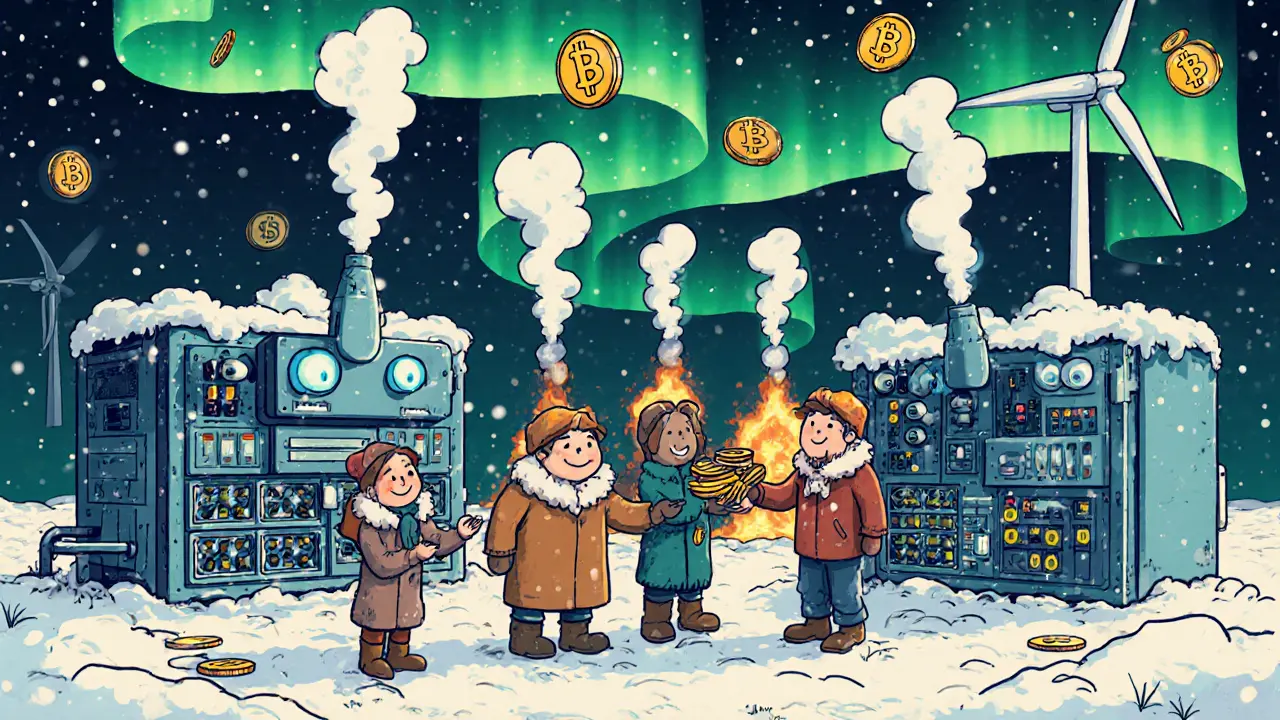
Iceland once led the world in crypto mining thanks to cheap renewable energy, but now energy limits and government policy have frozen expansion. Existing miners survive, but new ones can't get power.
Continue reading