Most people assume that if a crypto project has a candy theme, it's either a meme coin or a gimmick. Sugarverse is trying to prove them wrong. It’s not just a token; it’s an entire ecosystem built around mobile games where you earn rewards by playing. The native currency, CNDY, acts as the fuel for this economy. But before you buy in, you need to understand how it actually works, because the "play-to-earn" space is full of traps. This guide breaks down what Sugarverse is, how the CNDY token functions, and whether it holds up against the hype.
What Exactly Is Sugarverse?
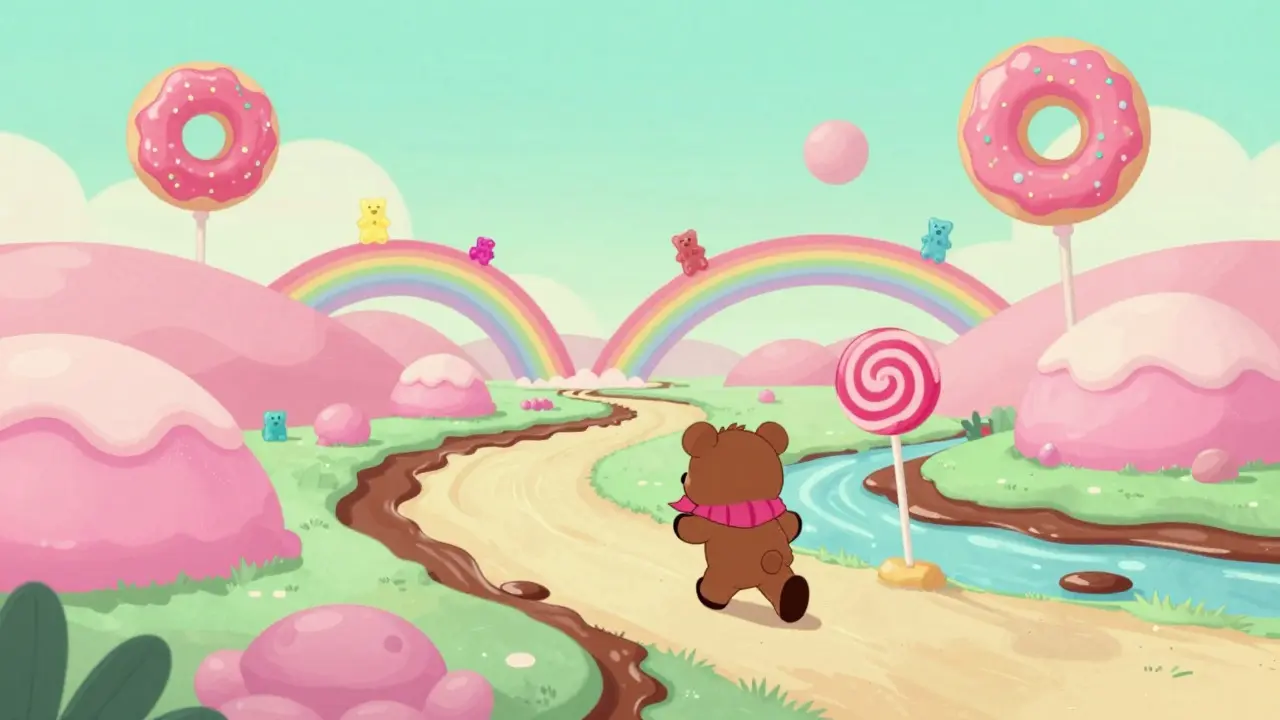
Sugarverse is a Web3 gaming studio and metaverse project that launched its first major game, Sugar Match PvP, on the Etherlink network in early 2026. Originally founded in Europe in early 2022, the project started with a big vision: seven planets, seven games, and a massive metaverse. However, like many ambitious blockchain projects, they scaled back. Today, the focus is tighter: a saga of five integrated casual mobile games. Think of it as a collection of familiar genres-match-3, endless runners, puzzle games-but wrapped in a candy-themed universe where your assets are NFTs you actually own.
The core idea is simple. You play mobile games on Android or iOS. Instead of just getting points that disappear when you close the app, you earn digital tokens and NFTs. These assets can be traded, sold, or used within the ecosystem. The team claims to have over 18 years of experience in traditional mobile gaming, having published more than 10 games before pivoting to Web3. This background is their main selling point: they know how to make fun games, not just complex blockchain interfaces.
Understanding the CNDY Token
CNDY is the native utility and governance token of the Sugarverse ecosystem. It’s the default currency for everything happening inside the platform. You use it to buy in-game items, pay for entry into competitive multiplayer modes, stake for rewards, and vote on future development decisions through a decentralized autonomous organization (DAO).
Here are the key specs for CNDY as of mid-2026:
- Total Supply: 1,000,000,000 CNDY
- Circulating Supply: Approximately 466,590,000 CNDY
- Network: Built on Etherlink, a Layer-2 solution for the Tezos blockchain.
- Price Range: As of May 2026, it trades in the micro-cap range, often under $0.00002 per token.
The low price might look scary, but that’s normal for micro-cap gaming tokens. What matters more is the utility. CNDY isn't just a speculative asset; it’s required to participate in the core gameplay loops. If you want to compete in the three-player match-3 battles in Sugar Match, you need CNDY (or its in-game counterpart, gCNDY) to enter the arena.
The Dual Economy: CNDY vs. gCNDY
This is where Sugarverse gets interesting. They don’t rely on a single token for everything. They use a dual-system involving CNDY and gCNDY.
gCNDY is an in-game point system. You earn gCNDY simply by playing the games. It’s the reward for your time and skill. However, gCNDY isn’t directly tradable on open exchanges. To turn your hard work into real value, you swap gCNDY for CNDY through a dedicated portal within the ecosystem.
Why do it this way? The team argues that it prevents inflation. In many older play-to-earn games, players could farm unlimited tokens, causing the price to crash. By capping daily rewards in single-player modes and using competitive buy-ins in multiplayer, Sugarverse tries to keep the supply stable. For example, in multiplayer matches, three players pay a fee to enter. Only one wins the prize pool. The losers lose their entry fee, which goes back into the treasury. This creates a circular flow of funds rather than a pure money printer.
How the Games Work
You don’t need to be a tech expert to play. The games are designed for regular mobile users. Here’s how the current lineup looks:
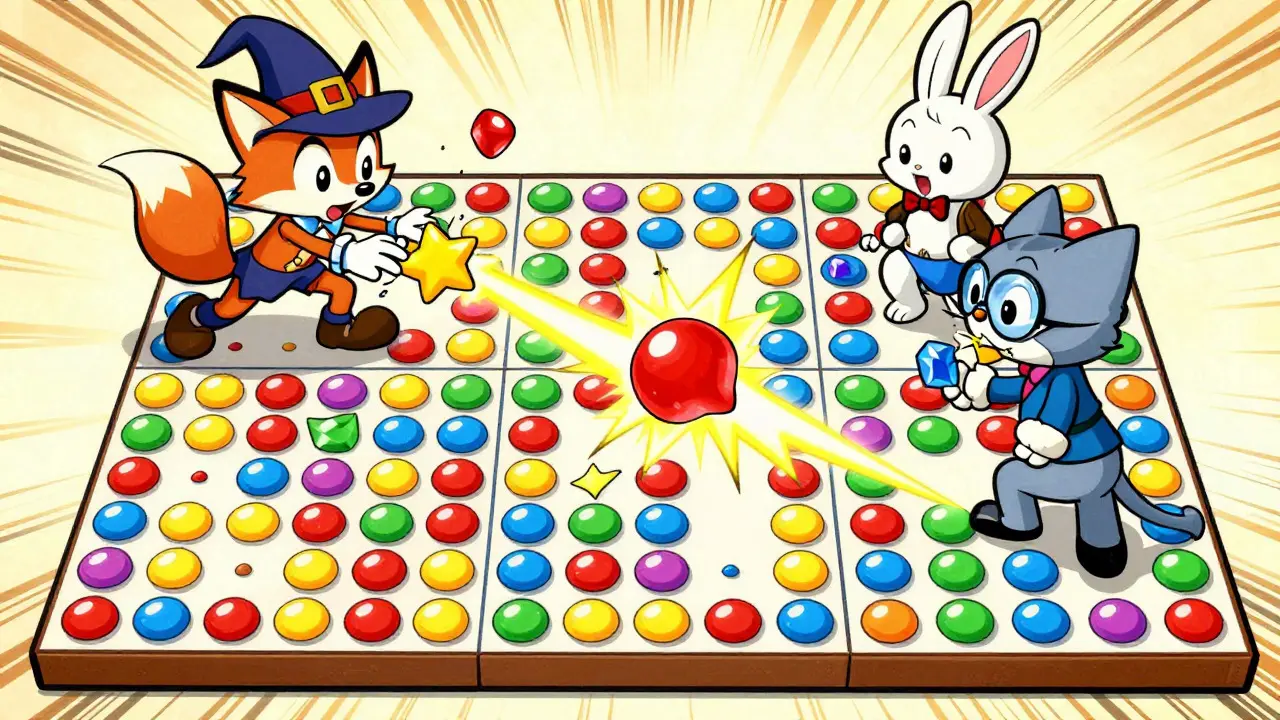
- Sugar Match PvP: The flagship title. It’s a real-time, three-player match-3 game. Imagine Candy Crush, but instead of just matching candies, you’re sabotaging two other players in real-time. You can block their moves, steal their power-ups, and race to clear the board first. It launched on Google Play in January 2026.
- SugarRush: An endless runner where you control NFT bears. You navigate obstacles in a world called Candytopia. It’s less about strategy and more about reflexes and collecting rewards along the way.
- Upcoming Titles: The roadmap includes three more games to complete the five-game saga. These will likely include other casual genres like puzzles and arcade shooters, all connected by the same CNDY economy.
All these games share a common feature: NFT ownership. Your avatars, land plots, and special items are non-fungible tokens. This means if you leave the game, you still own the digital asset. You can sell it on an open market to another player.
Technical Infrastructure: Why Etherlink?
Sugarverse runs on Etherlink, which is a Layer-2 network built on top of Tezos. If you’re new to this, here’s why it matters.
Mainstream blockchains like Ethereum are slow and expensive. Gas fees can eat up your earnings if you’re playing a casual mobile game. Layer-2 networks solve this by processing transactions off-chain and settling them on the main chain. This makes transactions faster and cheaper. For a mobile game where players might perform dozens of actions per minute, low fees are essential.
Using Tezos as the base layer also brings energy efficiency. Tezos uses a proof-of-stake consensus mechanism that consumes significantly less electricity than proof-of-work chains. For a project targeting global mobile users, this scalability and cost-efficiency are critical features.
Market Position and Risks
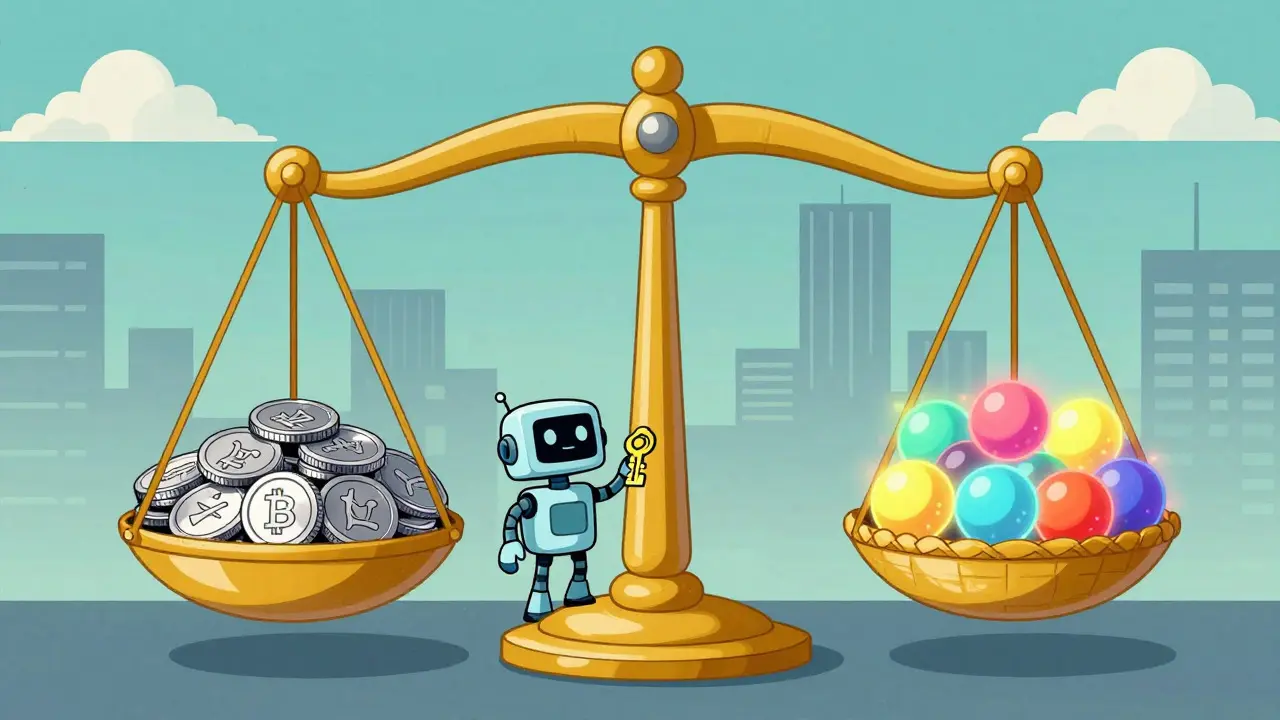
Let’s be honest: CNDY is a high-risk asset. It’s a micro-cap token with a circulating supply of roughly 466 million coins. Its market capitalization is tiny compared to giants like Bitcoin or even established gaming tokens like Axie Infinity’s SLP. This means volatility is extreme. A small amount of buying pressure can spike the price, and a little selling can crash it.
There are also conflicting reports about the initial token supply. Some sources listed a total supply of 6 billion during the planning phase, while others confirm the final cap at 1 billion. This kind of discrepancy is common in early-stage projects but adds to the uncertainty.
Furthermore, most public commentary comes from the project itself or partner media outlets. Independent, deep-dive technical audits are scarce. While the whitepaper was updated in February 2026, long-term sustainability depends on whether players stay engaged after the initial novelty wears off. If the games aren’t fun, the tokenomics won’t save them.
| Feature | Sugarverse (CNDY) | CANDY (Metaland) | Candy Pocket (CANDY) |
|---|---|---|---|
| Primary Use Case | Multi-game Web3 Saga & Governance | In-game currency for Cooking Adventure | Web3 Wallet & Dapp Store Payments |
| Total Supply | 1,000,000,000 | 800,000,000 | 2,100,000,000 |
| Network | Etherlink (Tezos L2) | BSC/Ethereum | Multi-chain |
| Economy Model | Dual CNDY/gCNDY Circular System | Standard Play-to-Earn | Utility/Payment Focus |
| Risk Level | High (Micro-cap) | Medium-High | Medium |
How to Get Started with CNDY
If you decide to try it out, here’s the practical path. First, you need to acquire CNDY. Since it’s a newer token, liquidity might be lower than major coins, so check spreads carefully on centralized exchanges or decentralized platforms where it’s listed.
Next, download the Sugar Match PvP app from the Google Play Store or Apple App Store. During setup, you’ll connect a compatible wallet. Don’t worry, the interface is designed to be user-friendly, guiding you through the process without requiring you to manage seed phrases manually unless you choose to.
Start with single-player modes to earn gCNDY. Pay attention to the daily caps mentioned in the game UI. Once you’ve accumulated enough gCNDY, use the in-app swap portal to convert it to CNDY. Keep in mind that swapping might have cooldowns or fees, so plan your sessions accordingly.
Frequently Asked Questions
Is Sugarverse a scam?
It is not definitively a scam, but it is high-risk. The team has a track record in traditional mobile gaming, and the project has secured funding rounds. However, like all micro-cap GameFi tokens, its success depends entirely on user retention and game quality. Always do your own research and only invest what you can afford to lose.
What is the difference between CNDY and gCNDY?
CNDY is the main cryptocurrency token used for trading, staking, and governance. gCNDY is an in-game point earned by playing. You cannot trade gCNDY directly on exchanges; you must swap it for CNDY within the Sugarverse ecosystem first.
Which blockchain does CNDY run on?
CNDY operates on Etherlink, which is a Layer-2 scaling solution built on the Tezos blockchain. This choice allows for low transaction fees and fast processing times suitable for mobile gaming.
Can I play Sugarverse games without buying CNDY?
Yes, you can start playing free-to-earn modes to collect gCNDY and NFTs. However, to participate in competitive multiplayer matches or purchase premium items, you will eventually need CNDY tokens.
How many games are in the Sugarverse saga?
The current roadmap focuses on a saga of five integrated casual mobile games. While earlier concepts mentioned seven planets, the active development scope has narrowed to five titles to ensure quality and sustainability.