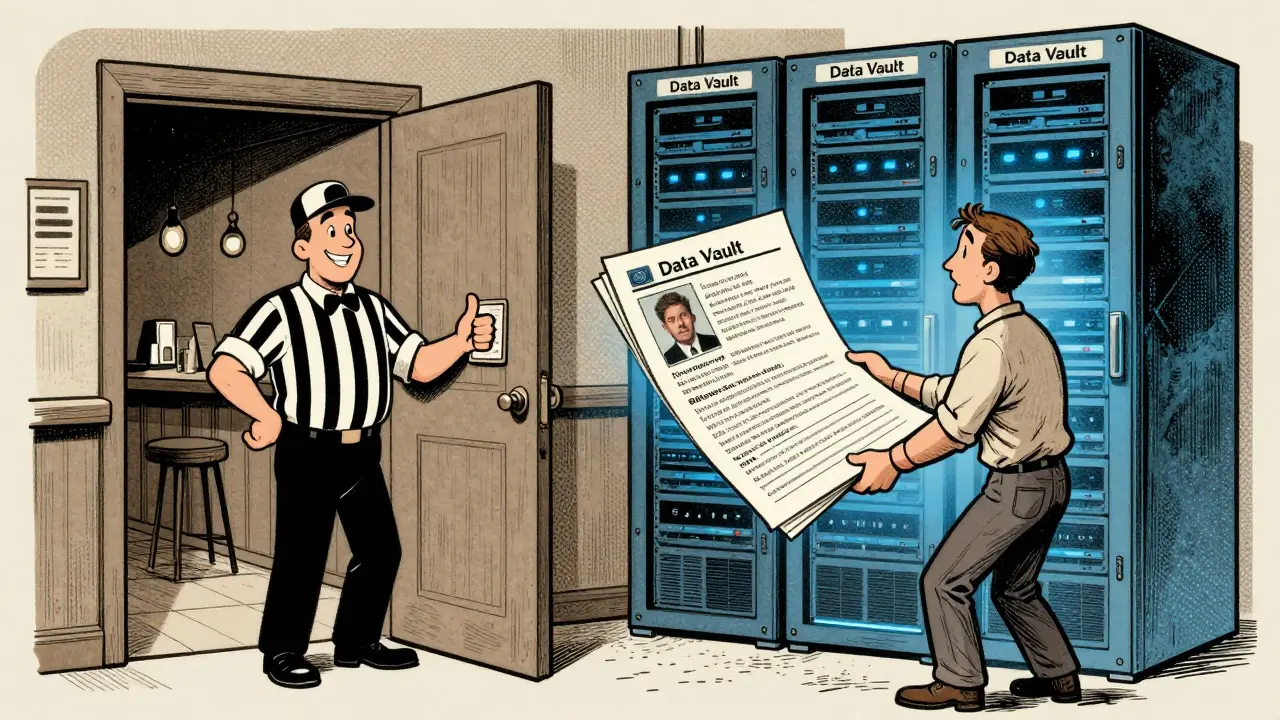
Imagine walking into a bar. You hand over your driver’s license to prove you’re over 21. The bouncer checks the date, nods, and hands it back. Simple, right? But in the digital world, that simple transaction is broken. When you sign up for a service online, you don’t just prove you’re old enough; you often have to surrender your full name, home address, date of birth, and sometimes even more sensitive data. That data sits on servers, vulnerable to breaches, hacks, and misuse.
This is where Privacy-Preserving Identity Verification is a revolutionary approach to digital identity management that enables individuals to prove specific aspects of their identity without revealing unnecessary personal information. It flips the script. Instead of handing over your entire life story to prove one fact, you prove only what is necessary. This technology is not just a nice-to-have feature; it is becoming the backbone of secure digital interactions, driven by blockchain knowledge and advanced cryptography.
The Problem with Traditional Identity Systems
For decades, we have relied on centralized databases. Governments hold our records, banks store our financial histories, and tech giants keep logs of our every click. These systems are convenient but dangerously fragile. They create single points of failure. If a large database is breached, millions of identities are exposed at once. We’ve seen this happen repeatedly with major corporations and government agencies.
Traditional verification also forces users to disclose excessive information. Think about applying for a loan. You might need to prove your income, but do the lender really need to know your entire employment history from ten years ago? Usually, no. Yet, that’s how most systems work. They collect everything, hoping something will be useful later. This lack of control over data sharing leaves users vulnerable. Privacy-preserving verification addresses these critical limitations by ensuring that verifiers only see what they strictly need to validate a claim.
Core Technologies Powering Privacy Preservation
To understand how this works, we need to look under the hood. Several key technologies come together to make privacy-preserving identity verification possible. None of them are magic; they are sophisticated mathematical tools that have been refined over years of research.
| Technology | Function | Real-World Example |
|---|---|---|
| Zero-Knowledge Proofs (ZKPs) | Proves validity without disclosing underlying data | Proving you are over 18 without revealing your exact birthdate |
| Decentralized Identifiers (DIDs) | Enables local identity management, reducing reliance on central databases | A user-controlled digital wallet holding verified credentials |
| Selective Disclosure | Allows users to choose which attributes to share | Sharing only your email from a professional profile, not your phone number |
| Secure Multi-Party Computation (SMPC) | Facilitates collaborative processing without exposing individual inputs | Multiple banks verifying creditworthiness without sharing raw financial data |
Zero-Knowledge Proofs (ZKPs) are perhaps the most famous component. Invented by cryptographers Silvio Micali, Shafi Goldwasser, and Charles Rackoff in the 1980s, ZKPs allow one party (the prover) to convince another party (the verifier) that a statement is true without revealing any information beyond the validity of the statement itself. It sounds like paradoxical magic, but it is grounded in solid mathematics. For instance, a ZKP can confirm that you have sufficient funds in your bank account without revealing your balance or transaction history.
Decentralized Identifiers (DIDs) take this further by changing how identities are structured. Instead of relying on a central authority like a social media platform or government agency to issue an ID, DIDs allow individuals to manage their identities locally. These identifiers are often anchored on a blockchain, providing a tamper-proof record of existence without storing personal data on-chain. This reduces the risk of massive data breaches because there is no central honeypot for hackers to target.
How It Works in Practice
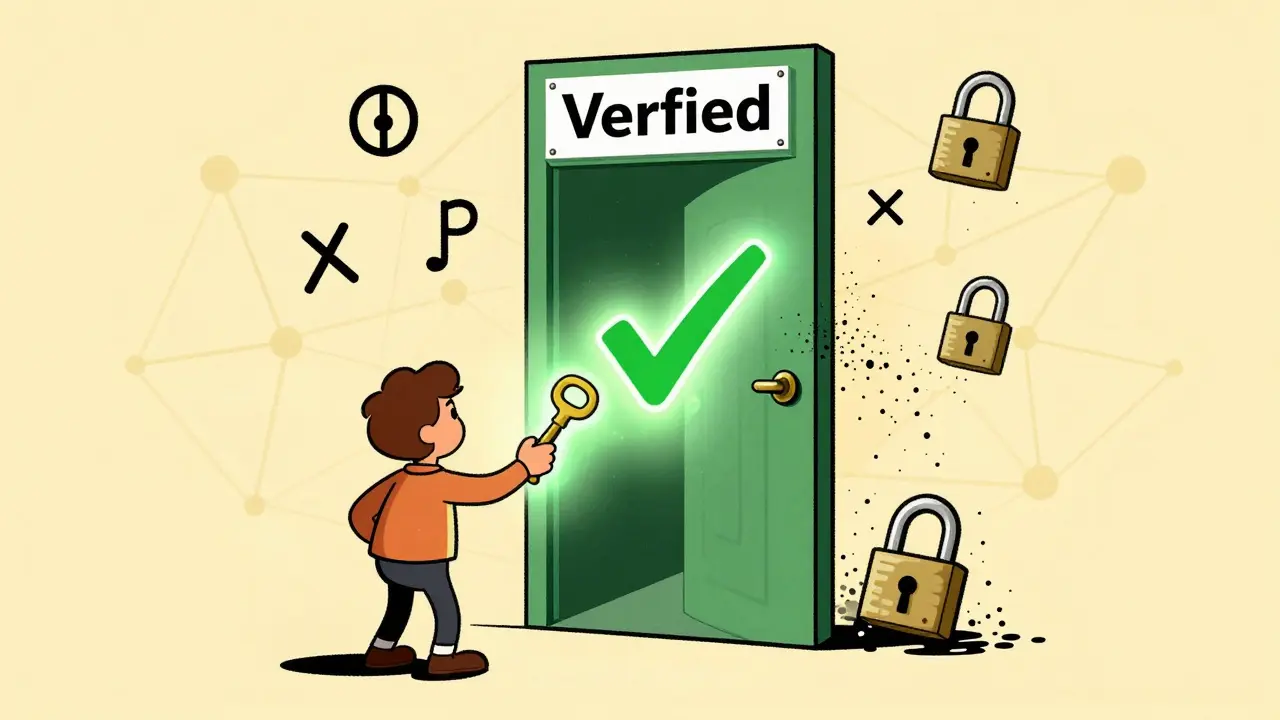
You might wonder how this translates to everyday use. Let’s walk through a scenario. Imagine you want to access a healthcare portal. Traditionally, you would create an account, upload a scan of your ID, and hope the hospital stores it securely. With privacy-preserving verification, the process looks different.
- You receive a Verifiable Credential from a trusted issuer, such as your national government or a certified medical board. This credential is stored in your digital wallet.
- When accessing the portal, the system asks for proof of citizenship and medical licensing.
- Your wallet uses Zero-Knowledge Proofs to generate a cryptographic signature. This signature proves you meet the criteria without sending your actual passport photo or license number to the hospital’s server.
- The hospital’s system verifies the signature against the public ledger. If valid, access is granted.
At no point did the hospital store your sensitive personal data. They only received a confirmation that you are who you say you are. This principle of data minimization is core to the design. It ensures that even if the hospital’s servers are compromised, your private identity details remain safe because they were never stored there in the first place.
Industry Adoption and Real-World Use Cases
This isn’t just theoretical anymore. Various industries are already integrating these solutions to build trust and comply with regulations. The financial sector leads the way. Banks and fintech firms use privacy-preserving identity verification for Know Your Customer (KYC) and Anti-Money Laundering (AML) compliance. Previously, every bank had to collect and store copies of customer IDs, creating redundant risks. Now, they can verify identity without hoarding data.
Government agencies are also adopting these systems. Countries are exploring digital ID programs that give citizens control over their data. Instead of a central database containing all citizen records, individuals hold their own credentials. This allows for secure access to public services, voting, and tax filing while maintaining privacy. Healthcare organizations utilize similar methods for telemedicine and medical records management, ensuring patient identity is verified without exposing sensitive health histories unnecessarily.
Even travel and transportation sectors are seeing benefits. Seamless airport experiences and ride-sharing safety protocols are being enhanced by these technologies. Passengers can prove they have a valid ticket and vaccination status without revealing their entire travel itinerary or medical history to the airline or driver.
Challenges and Implementation Hurdles
Despite the promise, implementing privacy-preserving identity verification is not without challenges. The primary hurdle is computational complexity. Cryptographic operations, especially Zero-Knowledge Proofs, require significant processing power. Generating and verifying these proofs can be slower than traditional database lookups. While hardware improvements and algorithmic optimizations are helping, efficiency remains a concern for high-volume applications.
User experience is another critical factor. Technology must be invisible to be effective. If proving your identity requires complex steps or specialized software, adoption will stall. Developers must balance robust security guarantees with intuitive interfaces. This means abstracting away the cryptographic complexity so users simply see a smooth login process.
Regulatory alignment is also evolving. Laws like the General Data Protection Regulation (GDPR) in Europe and the California Consumer Privacy Act (CCPA) in the US favor privacy-preserving approaches. However, legacy laws often assume centralized data storage. Legal frameworks need to catch up to recognize decentralized identities and cryptographic proofs as valid forms of documentation.
The Future of Digital Identity
As digital interactions proliferate, the demand for secure, private identity verification will only grow. Businesses recognize that offering privacy-respecting solutions is a competitive advantage. Consumers are increasingly aware of data breaches and are demanding more control over their personal information. Privacy-preserving identity verification meets this demand head-on.
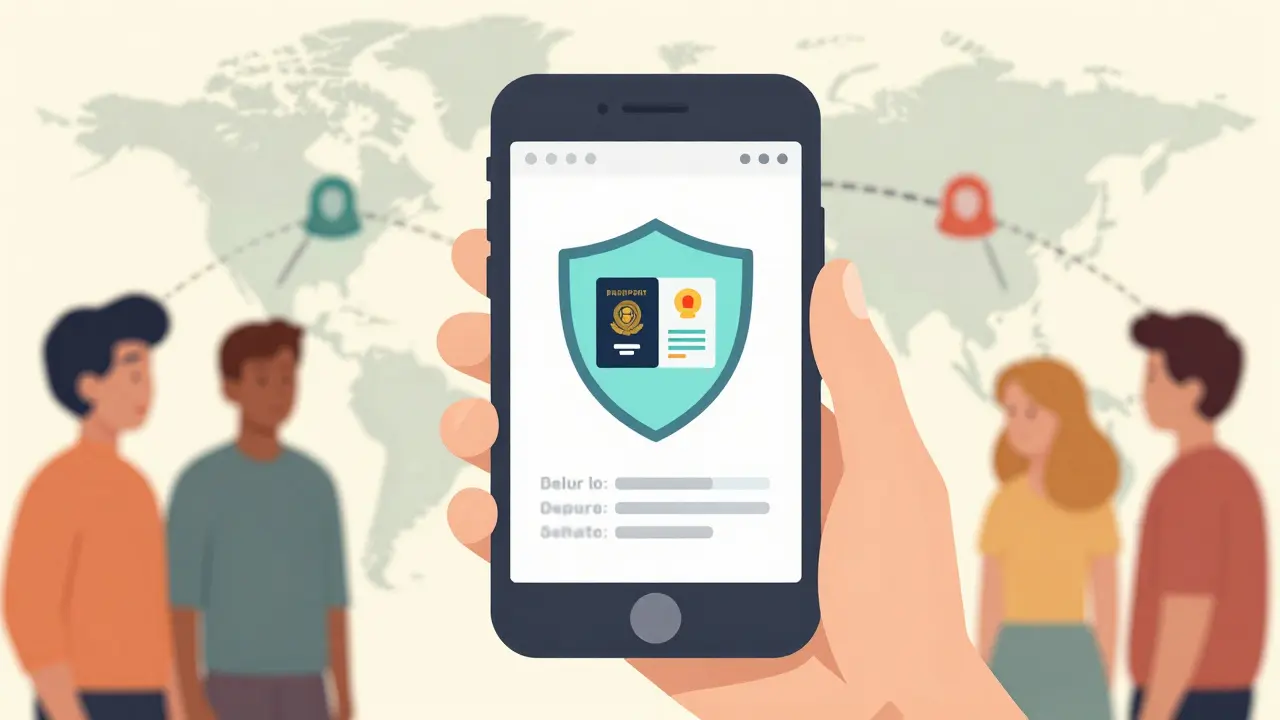
Future developments will likely focus on improving scalability and interoperability. Standards bodies are working to ensure that different systems can communicate seamlessly. A DID issued by one country should ideally be verifiable by a service provider in another. This global interoperability is essential for a truly connected digital economy.
Moreover, advancements in Homomorphic Encryption and Differential Privacy will expand the capabilities of these systems. Homomorphic encryption allows computations to be performed on encrypted data without decrypting it first. This opens doors for secure data analysis and machine learning applications where privacy is paramount. Differential privacy adds noise to datasets to prevent re-identification of individuals, further strengthening privacy guarantees.
We are moving towards a future where your identity is yours alone. No central authority holds the keys. No hacker can steal your entire life in one breach. Privacy-preserving identity verification is the foundation of this new era. It combines the security of blockchain with the flexibility of modern cryptography to give us back control over our digital selves.
What is privacy-preserving identity verification?
Privacy-preserving identity verification is a method that allows individuals to prove specific aspects of their identity, such as age or citizenship, without revealing unnecessary personal information. It uses cryptographic techniques like Zero-Knowledge Proofs to ensure that verifiers only see what is strictly needed for validation.
How does Zero-Knowledge Proof work in identity verification?
A Zero-Knowledge Proof (ZKP) allows one party to prove to another that a statement is true without revealing any additional information. For example, you can prove you are over 18 without showing your exact date of birth. The verifier receives a cryptographic confirmation of the truth value, but no underlying data.
What are Decentralized Identifiers (DIDs)?
Decentralized Identifiers (DIDs) are unique identifiers that allow individuals to manage their digital identities locally, without relying on centralized authorities. They are often anchored on a blockchain, providing a tamper-proof record of existence while keeping personal data off the main ledger.
Why is privacy-preserving identity verification important for GDPR compliance?
The General Data Protection Regulation (GDPR) emphasizes data minimization and user consent. Privacy-preserving verification aligns perfectly with these principles by ensuring that only necessary data is collected and processed. This reduces the risk of non-compliance and potential fines associated with data breaches.
Can privacy-preserving identity verification be used for banking?
Yes, banks and fintech firms use these technologies for Know Your Customer (KYC) and Anti-Money Laundering (AML) compliance. It allows them to verify customer identities securely without storing large amounts of sensitive personal data, thereby reducing fraud and enhancing security.





Comments (17)
Jan Gilmore
You are missing the forest for the trees here. This isn't just about bars, it's about the fundamental architecture of trust in a digital society. Centralized databases are single points of failure by design. When Equifax got hacked, millions suffered because one entity held all the keys. Decentralized Identifiers (DIDs) change the paradigm completely. You hold the credentials, not the bank or the government server. The cryptographic proof ensures validity without exposing the underlying data structure. It is mathematically superior to the current broken model.
Caique Muniz
yeah right. another buzzword soup article. zero knowledge proofs sound cool until you try to run them on a mobile device with a weak battery. its slow as hell and drains your phone. who cares if its secure if i cant even log in without waiting five minutes? typical tech bro fantasy. nobody wants this crap they just want their wifi password saved automatically.
Bradley Geldenhuys
Listen to me carefully. You are looking at this all wrong. The computational cost is dropping every year. We are moving towards a future where privacy is not a luxury but a basic human right. You think convenience is worth selling your soul to advertisers? Wake up! The aggressive push for centralized data is what gets us killed in cyber wars. We need to take control back. It is simple logic. If you don't understand the value of owning your identity, you are already compromised. Get with the program or get left behind.
robert Whitehead
The author presents a sanitized view of reality. In practice, regulatory bodies demand audit trails. Zero-Knowledge Proofs do not inherently solve the problem of accountability. If a transaction is anonymous, how do you trace illicit activity? The financial sector needs transparency, not obscurity. This technology enables money laundering and tax evasion under the guise of 'privacy'. We must be skeptical of systems that prioritize individual secrecy over collective security. The moral hazard here is significant.
Mike S
Oh please. Spare me the lecture on morality. You clearly haven't read the section on Selective Disclosure. It's not about anonymity; it's about minimal disclosure. Banks can verify creditworthiness without seeing your entire history. It's elegant, efficient, and frankly, the only way forward. Your fear-mongering is dramatic and unnecessary. The tech works. The laws will catch up. Stop crying about hypothetical criminals and look at the actual benefits for legitimate users.
H F
I am absolutely thrilled to see this discussion! It is such an exciting time for digital identity. The potential for interoperability between different countries' systems is huge. Imagine traveling abroad and being able to verify your identity instantly without filling out endless forms. It feels like we are on the brink of a major breakthrough. Let's keep pushing for these standards to align globally!
Michael Berggren
This is fantastic news for everyone concerned about data privacy 🌟. The concept of holding your own credentials in a digital wallet is empowering. It shifts the power dynamic from corporations to individuals. I love that healthcare providers can verify your status without storing your sensitive medical records. It reduces risk significantly. We should all be advocating for these technologies in our daily lives 😊.
Kiran CS
One must consider the profound implications of such a shift. The notion that a mere cryptographic signature can replace the solemnity of official documentation is somewhat quaint. However, the efficiency gains are undeniable. Perhaps the aristocracy of information will finally be democratized, allowing the masses to manage their own affairs with a semblance of dignity. A bold step, albeit fraught with technical pretension.
Bijan Das
look at you using big words. nobody reads that stuff anyway. its just fluff. the real issue is that these systems are too complicated for normal people. you need a degree in math to understand how it works. meanwhile the average joe just wants to buy groceries. stop making it hard.
Ashley Rodriguez
i think it is really important that we talk about this because privacy is something we all deserve but often forget about in our busy lives. when i sign up for services i always feel like i am giving away too much personal information which makes me uncomfortable. if there was a way to just prove my age or identity without sharing my address or phone number that would be great. i hope developers can make the user interface very simple so that older people like my parents can use it easily without getting confused by complex steps.
Bridget Coogle
It is so true that user experience matters. If the tech is hidden behind a confusing login screen it will fail. We need intuitive designs that guide users smoothly. I believe in the potential of this technology to protect us. Let us support initiatives that prioritize both security and ease of use.
Zara Zaman
American innovation leads the world in this space. Other countries lag behind due to excessive regulation. We should export these standards globally. Our approach to decentralized identity is superior. Do not let foreign entities dictate our digital sovereignty. Keep it local and secure.
Larry Port
I wonder how this scales for small businesses. They might not have the resources to implement complex cryptographic solutions. Is there a middle ground? Maybe third-party verification services could help bridge the gap. It seems like a logical next step for adoption.
Jocelyn Garcia
The interplay between DIDs and Verifiable Credentials creates a robust ecosystem. The key is ensuring that the issuers are trusted sources. Without proper attestation mechanisms, the system collapses. We need rigorous protocols for credential issuance to maintain integrity across the network.
Amit Varpe
India is leading in digital identity with Aadhaar. But privacy concerns remain. ZKPs could enhance this system significantly. We need to adopt global best practices while maintaining local relevance. Let us move forward together 🇮🇳.
Bronwen Butler
Everyone says blockchain solves everything. It does not. It adds latency and complexity. Traditional databases are faster and cheaper. Privacy preserving methods are nice in theory but impractical in reality. Stop hyping it up.
Pauline Larocco71
i agree with the idea of controlling our own data. it feels good to know we have options. maybe in the future we will not have to worry about hackers stealing our identities anymore. lets hope for the best.