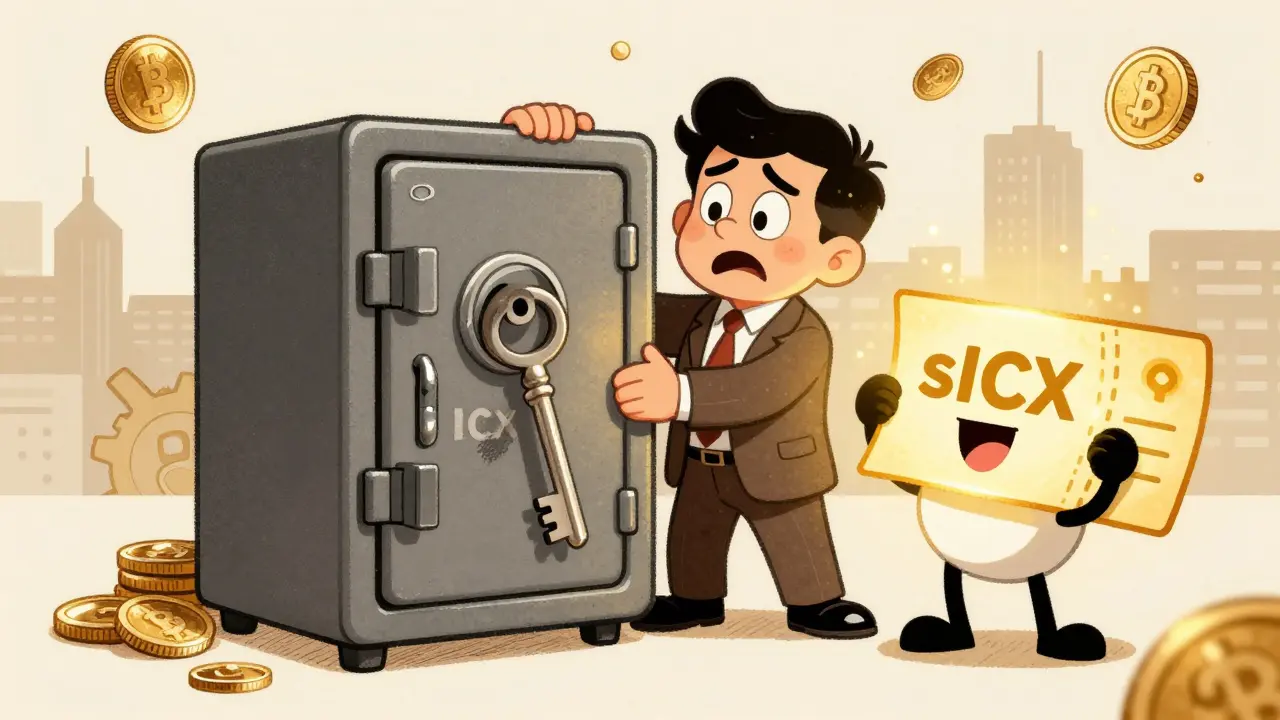
Imagine you own a rental property. You want the monthly rent checks, but you also need to sell the house next week because you found a better investment. In traditional finance, that’s a headache. You have to list it, wait for buyers, and hope the market holds up. Now imagine if you could just hand someone a receipt for that property. They get the right to collect future rent, and you walk away with cash instantly. That is exactly what Staked ICX does for your crypto.
If you are holding ICON (ICX), the native token of the decentralized network of networks designed for interoperability between blockchains, you probably know about staking. It’s how you earn rewards for helping secure the network. But normally, staking means locking your coins. You can’t move them. You can’t trade them. If the price drops, you’re stuck watching until the unbonding period ends. Staked ICX (sICX) is a liquid staking token on the ICON blockchain that represents delegated ICX, allowing holders to earn staking rewards while maintaining liquidity in DeFi protocols solves this. It turns your locked stake into a tradable asset.
How Liquid Staking Works on ICON
To understand sICX, you first need to understand the problem it fixes. ICON uses a Delegated Proof-of-Stake (DPoS) model. When you stake ICX, you delegate it to validators who produce blocks. In return, the protocol mints new ICX and sends it to you as a reward. This process is governed by the Incentives Scoring System (IISS) which dynamically calculates staking rewards based on network participation, transaction fees, and voting behavior within the ICON ecosystem. The IISS is smart. It adjusts yields so the network stays secure even if fewer people participate.
The catch? Your ICX is locked in the staking contract. It has zero utility outside of earning those rewards. Enter sICX. When you deposit ICX into a supported DeFi protocol (like Balanced), the system locks your ICX with validators behind the scenes. Instantly, you receive sICX tokens in your wallet. One sICX usually equals one ICX at the moment of deposit. But here is the magic: while your underlying ICX earns rewards, the value of your sICX relative to plain ICX slowly increases. Or, depending on the specific implementation, the rewards accrue to the pool, increasing the redemption rate.
You now hold sICX. You are still earning the staking yield. But you can also take that sICX and use it elsewhere. You can trade it. You can lend it. You can use it as collateral to borrow stablecoins. Your capital is working twice as hard.
The Economics: Why Yield Matters
Let's talk numbers, because that’s why we are here. The yield you earn from sICX comes directly from ICON’s base staking APR. According to official documentation, the average annual reward sits around 6-8%. However, the IISS makes this dynamic. If only 1% of the total ICX supply is staked, the reward skyrockets to incentivize security, potentially reaching over 300% APY. If 100% is staked, it drops to a conservative 3.06%.
So, when you hold sICX, you are exposed to these same rates. If the network is healthy and participation is moderate, you look at that 6-8% passive income. Since sICX is a derivative, there might be small fees taken by the protocol issuing the token (like Balanced or OMM) to cover operations, but generally, the bulk of that IISS-generated yield flows to you.
This creates a compelling loop. You don't have to choose between security (staking) and flexibility (liquidity). You get both. For long-term holders, this reduces the "opportunity cost" of holding a volatile asset. Even if the price of ICX stays flat, your sICX balance grows in value relative to the base currency.
Technical Details: Where Does sICX Live?
sICX isn't just an idea; it's code. Specifically, it operates as a smart contract token on the ICON platform. The primary contract address on the ICON network is `cx2609b924e33ef00b648a409245c7ea394c467824`. This contract handles the minting and burning of sICX when users deposit and withdraw their underlying ICX.
But ICON doesn't exist in a vacuum. To make sICX useful to a wider audience, developers created a bridge to other chains. There is a BEP-20 version of sICX on Binance Smart Chain (BSC) is a high-performance blockchain compatible with Ethereum Virtual Machine, enabling fast transactions and lower fees for decentralized applications. The address there is `0x33acDF0Fe57C531095F6bf5a992bF5aA81c94Acf`. This allows traders using MetaMask or Trust Wallet to interact with sICX without needing specialized ICON wallets like Hana or ICONex. This cross-chain compatibility is crucial for liquidity. It means you can provide sICX liquidity on BSC-based DEXs while still earning ICON staking rewards.
| Feature | Native ICX Staking | Staked ICX (sICX) |
|---|---|---|
| Liquidity | Locked (Illiquid) | Tradable & Transferable |
| Yield Source | IISS Protocol Rewards | IISS Protocol Rewards + DeFi Opportunities |
| DeFi Usage | None | Collateral, Liquidity Pools, Lending |
| Risk Profile | Validator Slashing Risk Only | Smart Contract Risk + Validator Risk |
| Unbonding Period | Required (Days) | Instant Sale (Market Dependent) |
Using sICX in the Ecosystem
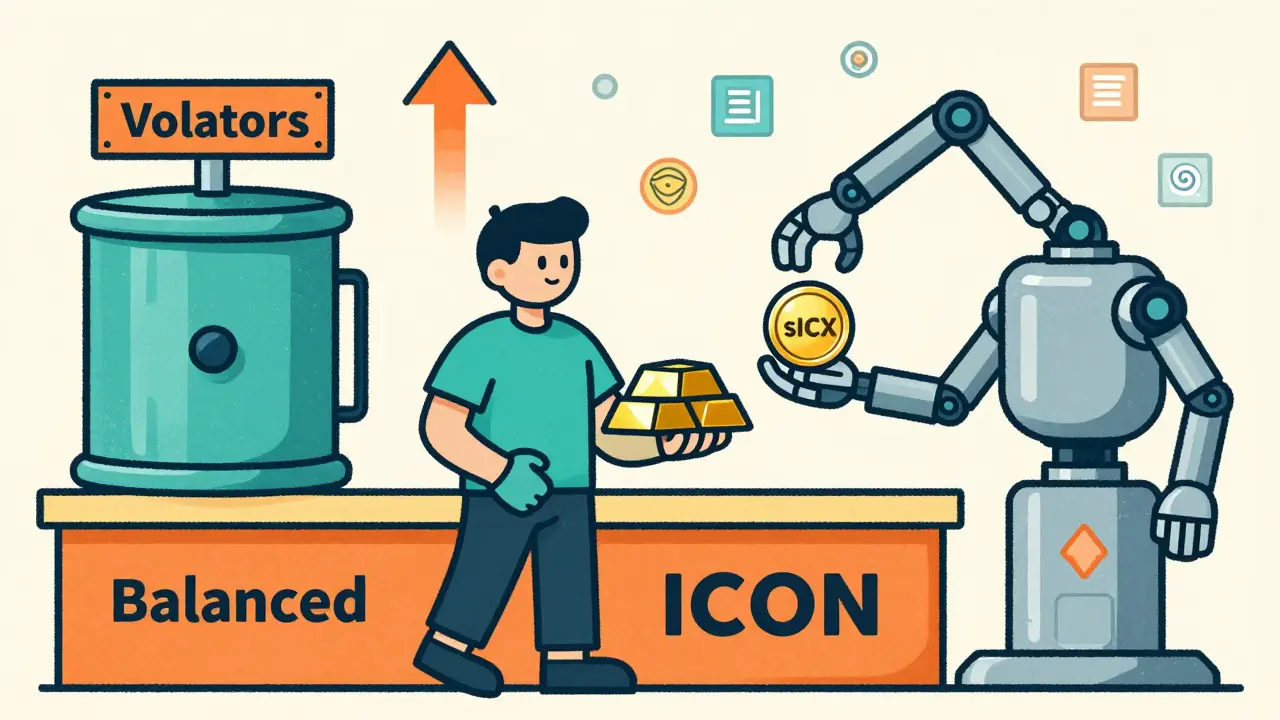
Why bother converting to sICX if you're just going to hold it? You shouldn't. The real power unlocks when you integrate sICX into the broader Decentralized Finance (DeFi) refers to financial services built on blockchain technology, eliminating intermediaries through smart contracts to enable lending, borrowing, and trading landscape on ICON. The main hub for this is Balanced is the leading automated market maker (AMM) and DeFi hub on the ICON blockchain, facilitating token swaps and liquidity provision.
Here is a typical workflow for an advanced user:
- Deposit: You send 1,000 ICX to Balanced. You receive 1,000 sICX.
- Collateralize: You deposit that 1,000 sICX into a lending protocol like OMM serves as an open money market protocol on ICON allowing users to lend assets for interest or borrow against collateral.
- Borrow: You borrow stablecoins (like USDC or KRW-backed tokens) against your sICX collateral.
- Earn: Meanwhile, your sICX continues to generate ~6-8% yield from the underlying ICON staking.
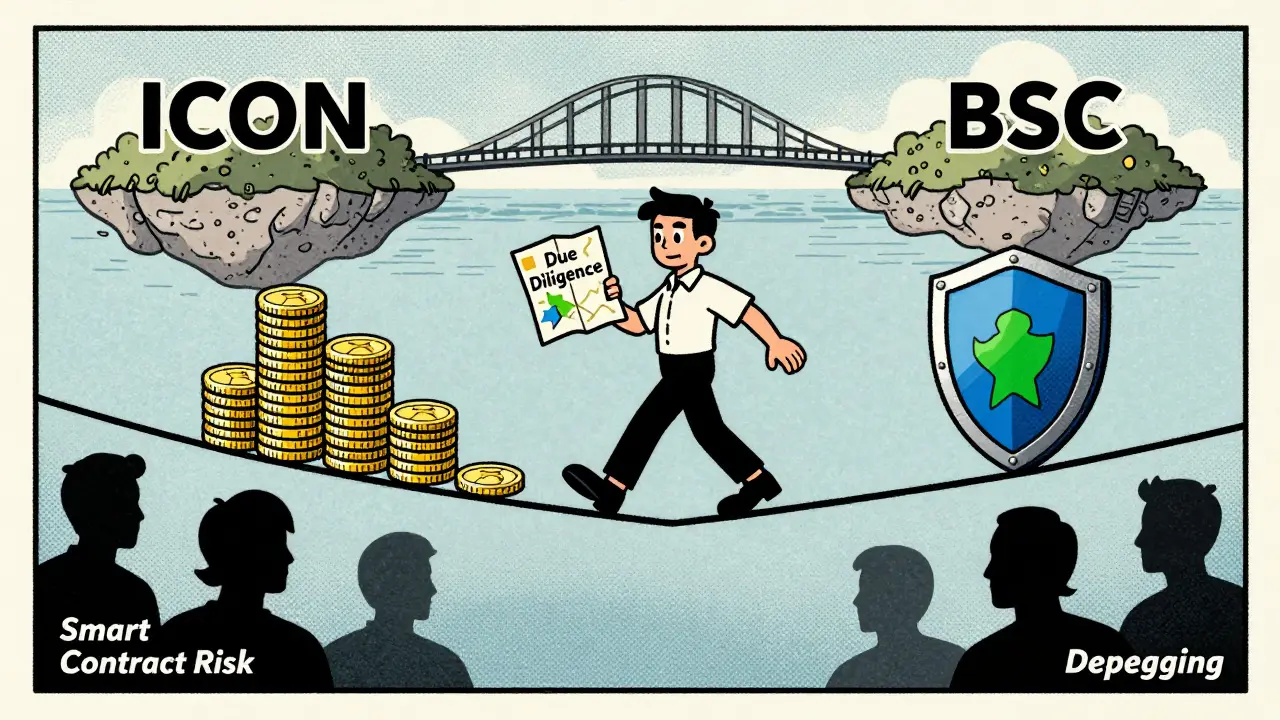
Risks and Realities
We need to keep our feet on the ground. sICX is not risk-free. In fact, it introduces new risks that native staking doesn't have.
- Smart Contract Risk: sICX relies on complex code. If there is a bug in the Balanced contract or the sICX wrapper, funds could be lost. Always check if audits have been performed by reputable firms.
- Depegging: Ideally, 1 sICX = 1 ICX (plus accrued rewards). But in a panic, people might sell sICX faster than they can redeem it for ICX. This causes the price of sICX to drop below the price of ICX. You’d have to buy back at a discount to redeem your principal.
- Liquidity Depth: Compared to Ethereum’s liquid staking giants like Lido (stETH) is the largest liquid staking protocol on Ethereum, managing billions in ETH deposits and providing stETH tokens, sICX is tiny. Its market cap ranking often hovers around #45,000+. This means large trades can slip prices significantly. Don't try to move millions of dollars worth of sICX in one go.
- Protocol Evolution: ICON is evolving toward a new economic model involving SODAX and the SODA token. How sICX interacts with this transition is still being defined. Keep an eye on official governance proposals.
Getting Started
If you want to try this, you don't need a PhD in cryptography. Here is the path of least resistance:
- Get ICX: Buy ICX on a major exchange like Kraken or Binance.
- Wallet Setup: Download an ICON-compatible wallet. Hana is the most popular mobile option. It integrates directly with Balanced.
- Connect to Balanced: Open the Balanced app within Hana. Navigate to the staking or liquid staking section.
- Swap: Select the amount of ICX you want to lock. Confirm the transaction. Wait for the block confirmation (usually seconds).
- Receive sICX: Check your wallet. You should see your sICX balance appear alongside your remaining ICX.
Is sICX the same as ICX?
No. ICX is the native coin used for gas fees and voting. sICX is a derivative token that represents a claim on staked ICX plus accrued rewards. While their values track closely, sICX is a separate asset class designed for liquidity.
Can I lose my money with sICX?
Yes. You face standard crypto volatility risks. Additionally, if the smart contract securing your sICX is hacked, or if the protocol fails to distribute rewards correctly, you could lose principal. Always do your own due diligence on the security audits of platforms like Balanced.
What happens to my sICX if ICON upgrades?
ICON is transitioning toward the SODAX ecosystem. Historically, during such transitions, legacy tokens like sICX may require migration or conversion to new standards. Always monitor official ICON community announcements for guidance on handling derivatives during protocol upgrades.
Do I need a special wallet for sICX?
For the native ICON version, yes, you need an ICON-compatible wallet like Hana or ICONex. However, if you are using the bridged version on Binance Smart Chain, any Web3 wallet like MetaMask will work.
How much yield does sICX actually pay?
The yield varies dynamically based on the Incentives Scoring System (IISS). Typically, it ranges between 6% and 8% annually under normal network conditions. During periods of low staking participation, it can spike significantly higher, but this is rare.